
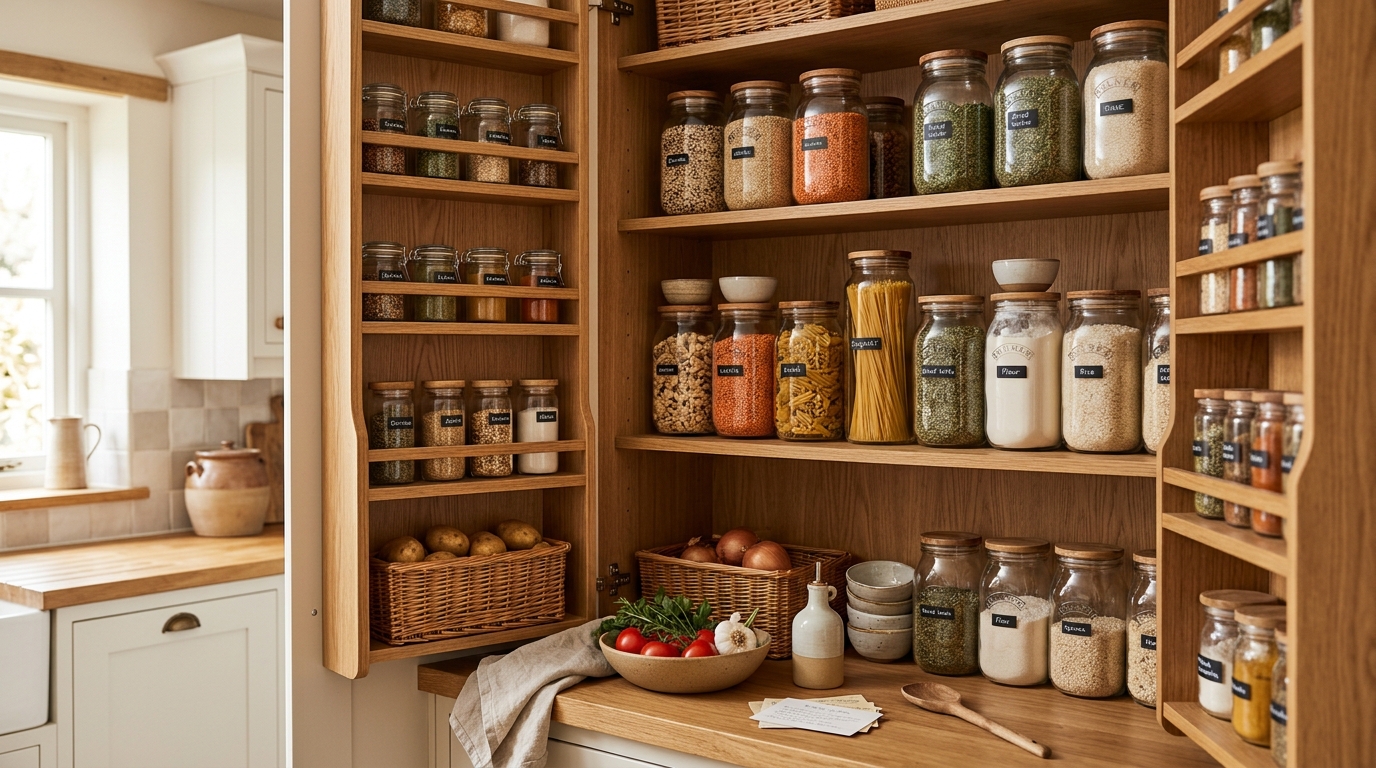
I opened the fridge at 6:47pm on a Tuesday, stared at a full shelf of ingredients, and declared there was nothing to eat. My partner laughed. There were eggs, bread, half a chicken, three kinds of cheese, two peppers, a whole lemon, and a bag of spinach about to turn. Technically, there was dinner for a week in there. Functionally, I had no idea how to turn it into food before we were both too hungry to cook.
That was the moment I realized my problem wasn’t groceries. It was my pantry — or specifically, that my pantry had no structure. It was a pile of well-meant purchases that never cohered into actual meals. The fridge contained fresh stuff, but without the dry goods, oils, acids, seasonings, and building-block staples to turn them into something, the fridge was just a cold warehouse.
I spent the next six months rebuilding my pantry from scratch, and it changed how I cook more than any cookbook or kitchen gadget ever has. A pantry that’s designed right does a shocking amount of the cooking for you. You stop thinking “what do I need to buy” and start thinking “what do I want to eat,” because the answer to “what do I need to buy” is almost always nothing, it’s already here.
The Fridge-Full, Stomach-Empty Problem
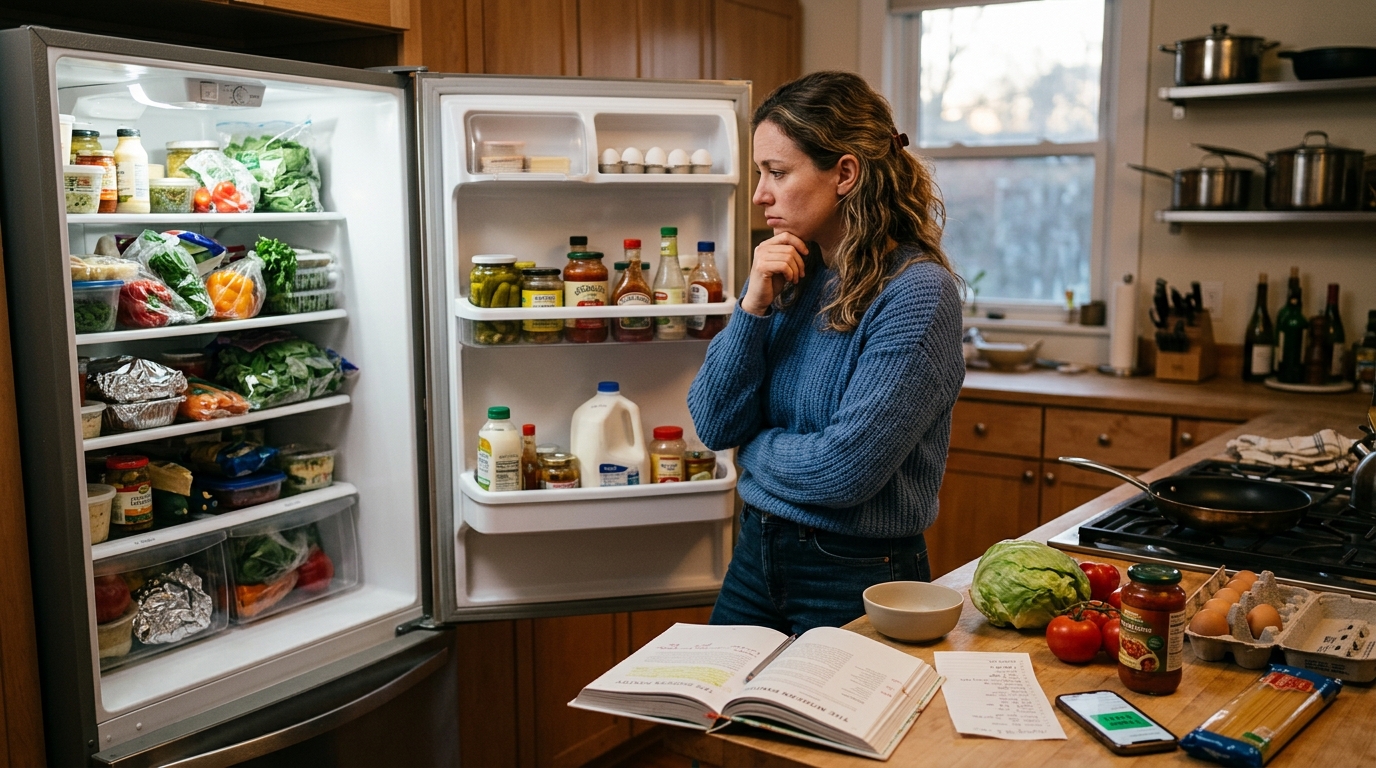
Before I rebuilt my pantry, I was a recipe-driven cook. Which is to say: I could make whatever dish I’d planned in advance, but I couldn’t improvise. If I hadn’t shopped for a specific recipe, I’d default to scrambled eggs, pasta with jarred sauce, or a takeout app.
The deeper issue was that I was thinking of cooking as executing recipes rather than composing meals. A recipe tells you exactly what to buy and what to do. It’s a set of instructions. You need the fridge-full-of-specific-ingredients to make it work. If the recipe calls for fennel and you don’t have fennel, you go to the store.
Experienced cooks don’t work like this. They have a mental map of what flavors, textures, and techniques go together. They look at what’s in the house and assemble a meal from the available pieces. The pantry is the piece that makes this possible. Without a deep, well-stocked pantry, you can’t improvise, because you’re always missing the thing that would tie a dish together.
My turning point was a conversation with a friend who cooks for a living. I told her about the fridge problem. She laughed and said, “Your fridge isn’t your kitchen. Your pantry is. Stop trying to cook with only fresh ingredients.” I remember that sentence verbatim because it immediately rearranged how I thought about groceries.
I went home that week and made a list of every cooking problem I’d had in the previous month that had been solved by a last-minute grocery run. Most of them — nine out of ten — weren’t fresh ingredients. They were oil. Vinegar. A specific spice. A can of tomatoes. A good mustard. A handful of dried pasta. Things I should have owned. Didn’t.
The Core 20 Ingredients That Build Everything
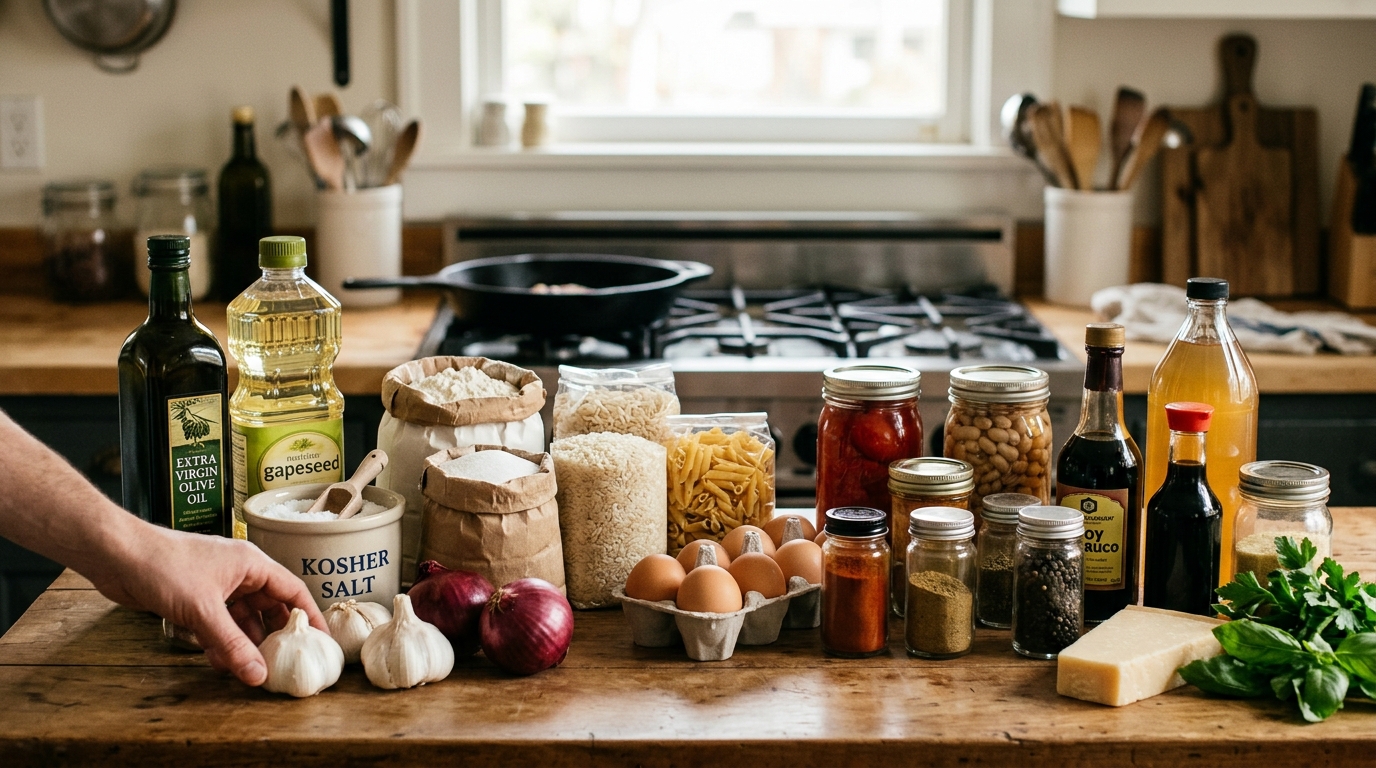
Here is the list I built, through trial and deletion, of pantry items that turn up in almost every meal I make. If I have all twenty of these, I can cook dinner without a grocery list. I’ve tested this claim by actually running it: with just these plus whatever’s fresh in the fridge, I’ve gone two full weeks without a supermarket trip and never eaten the same thing twice.
- A good extra virgin olive oil — for finishing and dressings.
- A neutral oil for high-heat cooking.
- Kosher salt in a pinch bowl by the stove.
- Flaky finishing salt like a box of Maldon for the moment before serving.
- Black peppercorns in a grinder.
- A decent vinegar — red wine, sherry, or apple cider.
- Dijon mustard. The backbone of nearly any vinaigrette.
- Soy sauce or tamari. Essential umami.
- Canned whole tomatoes. Better than diced. San Marzano if you can find them.
- Dry pasta — something long, something short.
- Rice — white short-grain, and brown or basmati.
- Dried beans or canned beans (I keep both).
- Onions and garlic. Always.
- Lemons. Always.
- A hard aging cheese — parmesan or pecorino.
- Eggs (I know, not technically pantry, but always).
- A good bouillon or stock concentrate — a jar of roasted chicken base changed my life.
- Dried chilies or red pepper flakes.
- Herbs you actually use: thyme, bay, oregano — dried is fine.
- Honey or another finishing sweetener.
This is not a fancy list. It’s not an aspirational list. It’s what’s in my pantry right now, at the moment I’m writing this. Every ingredient above earns its slot by being used multiple times a week. Anything I’ve tried to add beyond this list either got used twice and went stale, or gradually migrated onto the list when I found myself reaching for it constantly.
How I Store It So I Actually Use It
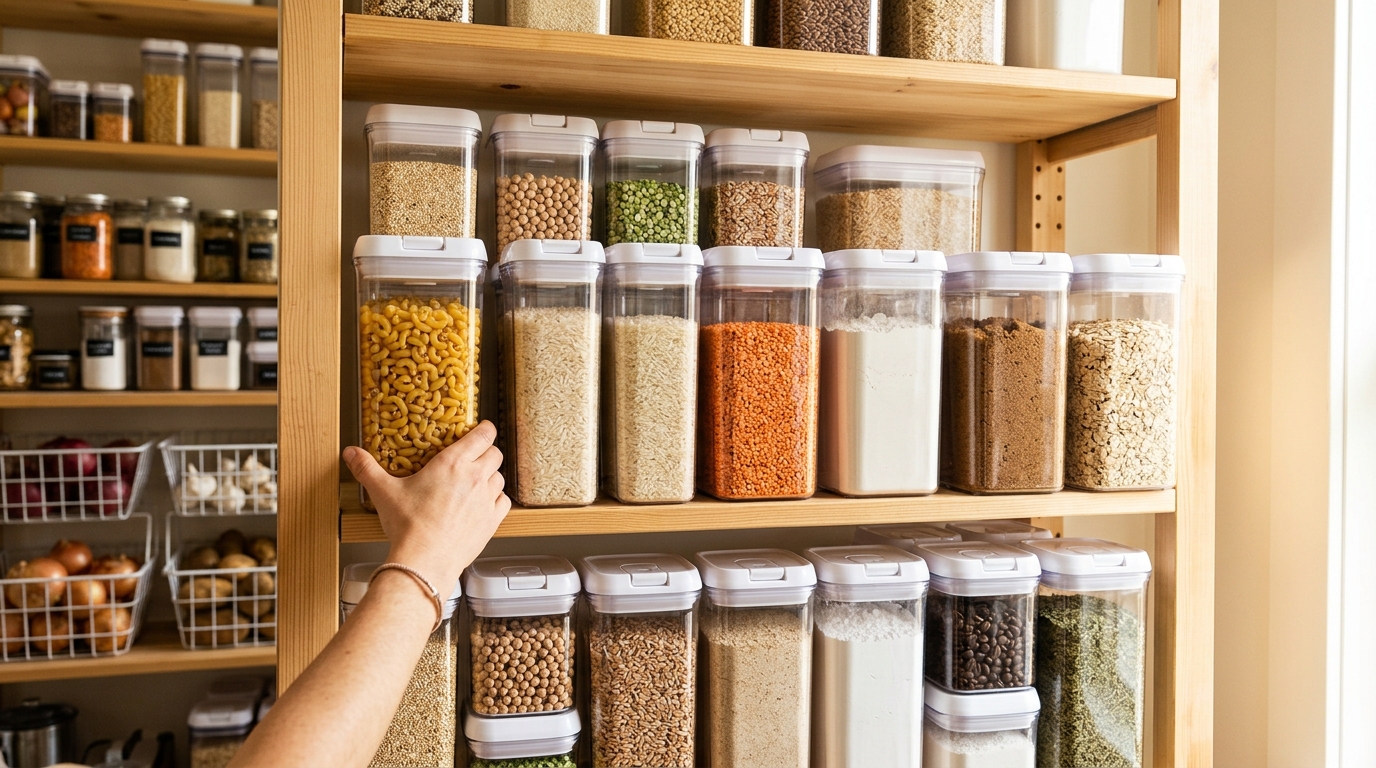
Here’s the secret about pantry staples: if you can’t see them, you don’t own them. I had most of those twenty ingredients before I reorganized, but half of them were buried behind other things, past their prime, or hidden in cupboards I’d forgotten about. Ownership is a function of visibility.
I made four changes, in order of impact:
Clear containers for dry goods. I transferred every bag and box into stackable clear jars. Pasta, rice, beans, flour, sugar, oats. A set of pop-top containers did most of the work. I can see exactly how much I have of everything in one glance. No more buying pasta because I wasn’t sure if we had any.
A pinch bowl of salt by the stove. Cheap, tiny, transformative. I stopped fumbling with salt containers mid-recipe. I started salting food more consistently and more correctly, because the salt was right there, in a shallow bowl, ready for fingers.
A “mise en place” drawer next to the stove. The most-used tools — wooden spoons, a microplane, tongs, a silicone spatula — live in a drawer directly under the stovetop. Everything else is in other places. The tools you use every time should be reachable without moving your feet.
Labeled jars with dates. When I transfer something into a jar, I put the purchase date on the lid with a label maker. This tells me, six months later, whether that flour or that bag of dried beans is still worth using.
One pragmatic addition that seems silly but isn’t: a lazy susan for the oil and vinegar corner. Instead of reaching past three bottles to get to the one I want, I spin. Small thing, used three times a day.
The 10 Meals I Can Make With Eyes Closed
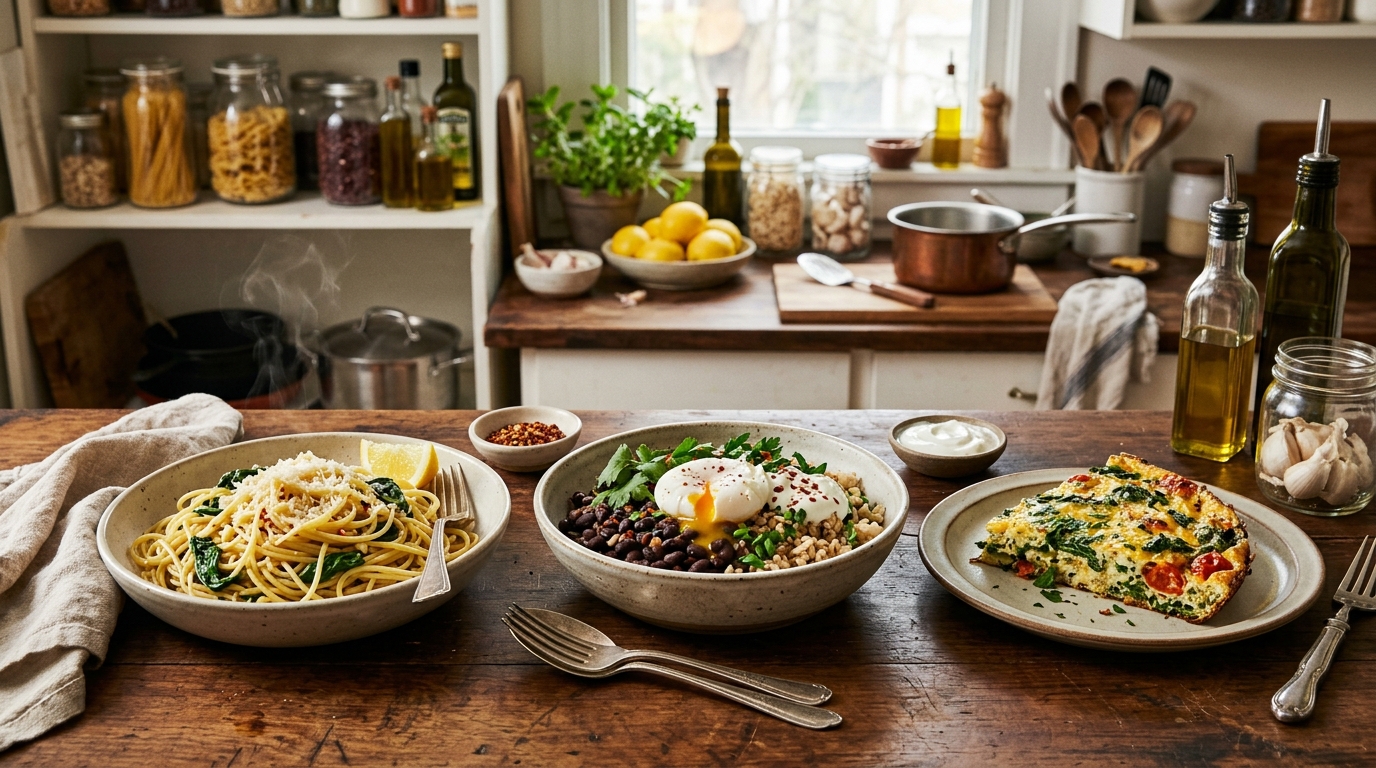
The real test of a well-stocked pantry is the five-minute-to-dinner test. Can you open your cupboards and fridge and produce a real meal in under five minutes of active thought? A few of mine, as proof that this isn’t an exotic project:
- Pasta aglio e olio with whatever greens are in the fridge — oil, garlic, chili, pasta water, lemon, parmesan. 15 minutes.
- Beans and rice with a soft-poached egg and herbs — satisfying, essentially free, infinitely variable.
- A cheese-and-egg frittata with whatever vegetable is wilting — eggs, oven, done.
- Any vegetable + olive oil + salt + 425°F — roasted into something good.
- Tuna, onion, lemon, olive oil, toast — a proper dinner.
- Chicken thighs salted and pan-roasted, finished with mustard and butter — the most reliable meal in the rotation.
- Tomato soup from canned tomatoes, onion, and stock base — better than any carton.
- Cacio e pepe — pasta, pecorino, pepper, pasta water. Four ingredients.
- Rice bowl: rice, soy, sesame, egg, a vegetable, chili.
- Pantry curry: onion, garlic, canned tomatoes, chickpeas, spice blend, rice.
None of these require a specific shopping trip. They require the pantry to be healthy. The fresh stuff — the onions, lemons, herbs, a vegetable or two, eggs, and a piece of protein — I pick up in routine grocery runs. The pantry does the rest of the work.
A digital kitchen scale is the tool that lets me cook recipes from a book now without the annoying conversion math. I use it almost every day for dough, pasta portions, and anything I want consistent.
What I Stopped Buying (And Why My Meals Got Better)
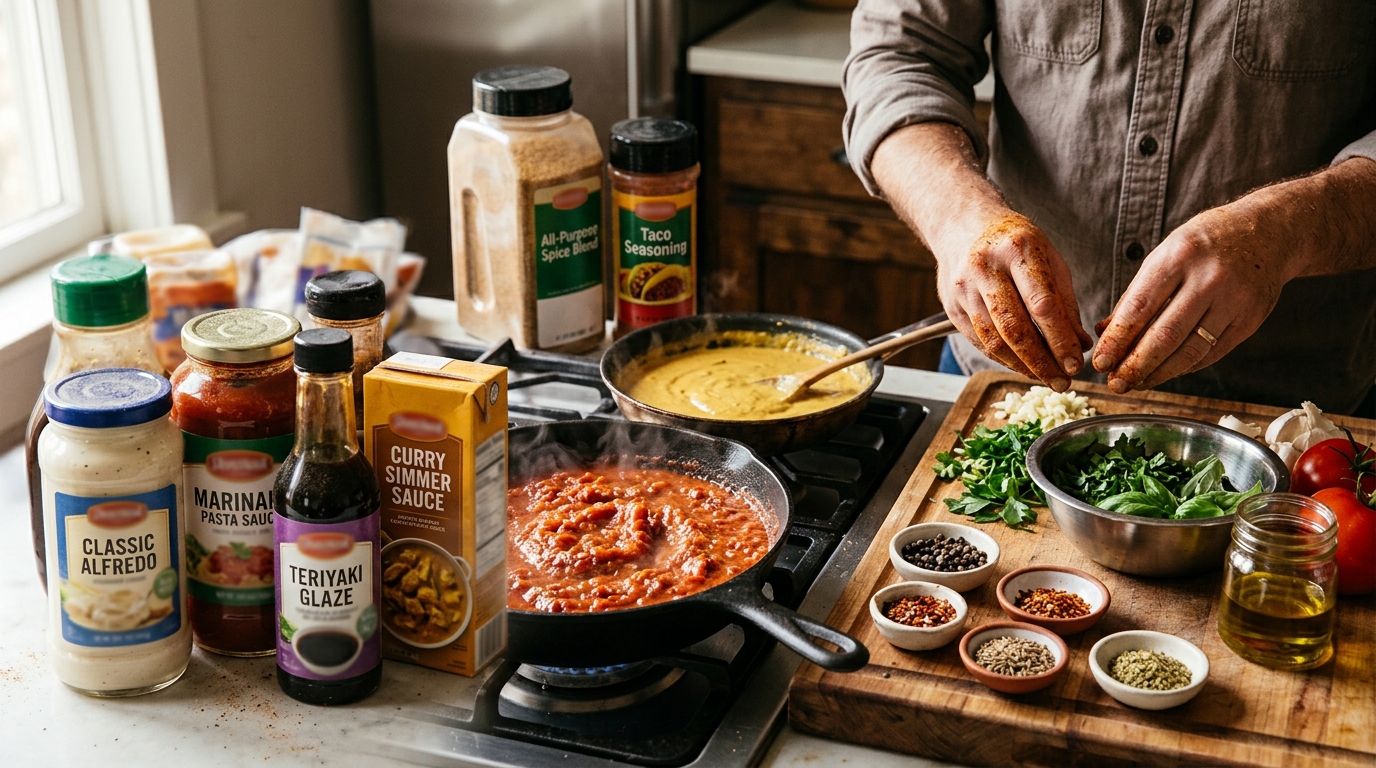
As much as this post is about what’s in my pantry, the inverse matters just as much. There’s a long list of things I used to buy that I stopped, and my cooking improved as a result.
- Pre-made sauces. Alfredo, pasta sauce, teriyaki, curry simmer sauces. All of these are worse than the versions I make in five minutes from pantry staples. Most contain more sugar and sodium than a homemade version needs.
- Spice blends. Most blends are mostly salt. I make my own, rough and imprecise, from actual spices. Better flavor, more control, less money.
- Bottled salad dressings. There’s no reason to own these if you have olive oil, vinegar, mustard, and salt. Takes 30 seconds to whisk one.
- Specialty ingredients for single recipes. The ones that sit for a year and go bad. If a recipe calls for a quarter cup of fish sauce and I don’t see how I’d use the other bottle, I skip the recipe or substitute.
- Bread most of the time. I’d been buying bread reflexively, eating a few slices, letting the rest go stale. Now I buy bread when I’m actually planning to eat bread.
The one I got wrong for a while: truffle oil. Bought a little bottle because a recipe called for a few drops. It sat in my pantry for two years. When I finally threw it out, the bottle was 95% full. That was my monument to buying ingredients I didn’t actually use.
The shift here isn’t about austerity. It’s about buying things because you’ll use them, not because you might need them. Every unused bottle is a small vote against the pantry’s utility.
Final Thoughts: A Pantry That Says Yes
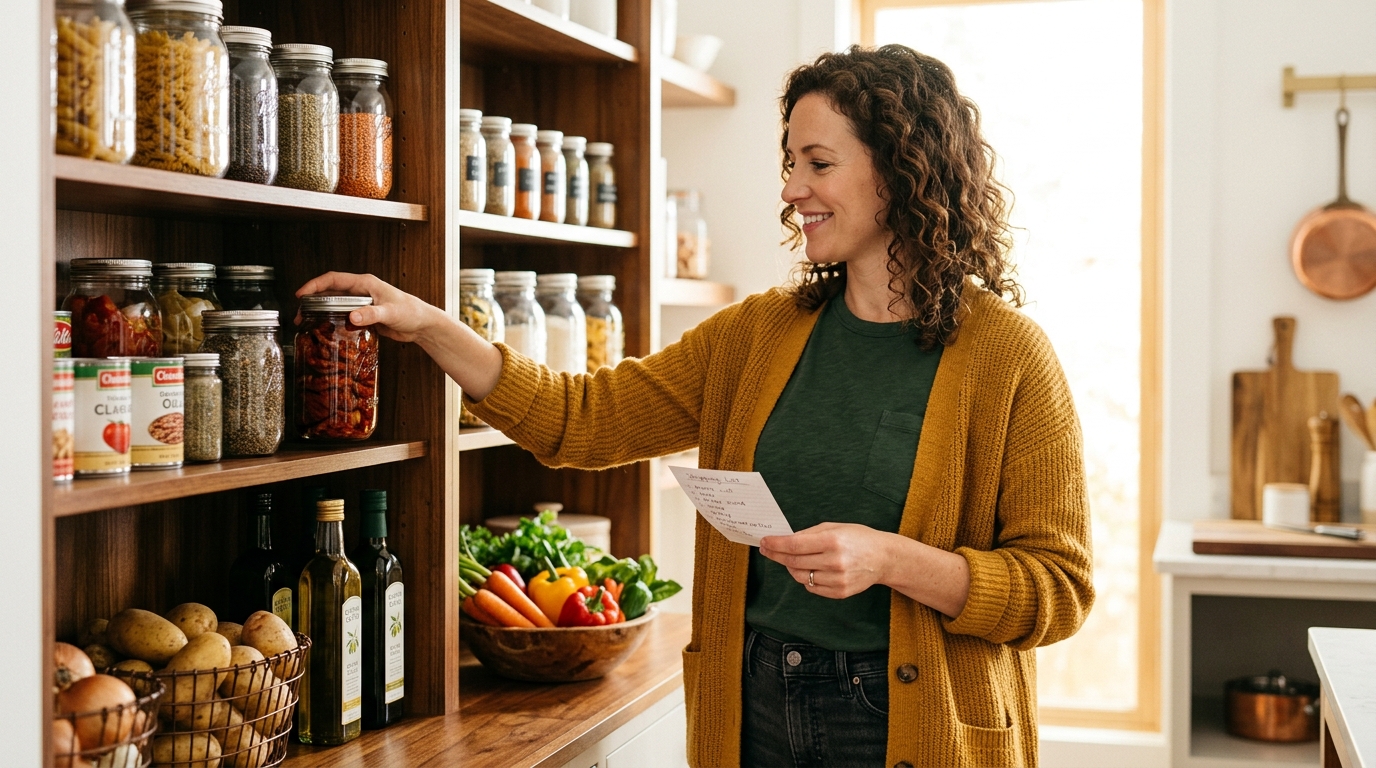
The surprising thing about building a real pantry isn’t how much work it is. It’s how quickly it pays off. I did most of the work in a couple of weekend shopping trips and one afternoon of reorganization. The payoff — not thinking about meals, not making last-minute grocery runs, not ordering takeout out of defeat — has compounded every week since.
I spend less on groceries now, which I didn’t expect. Not because I’m buying cheaper things, but because I’m buying fewer wrong things. I waste much less food. I eat more varied meals. I’m a better cook now than I was a year ago, not because I’ve learned new techniques, but because I’ve set up an environment that makes using the techniques I already know effortless.
A good pantry doesn’t make you a better cook. It makes cooking the path of least resistance. That’s enough.
If you want to start, don’t buy everything at once. Pick three ingredients from the core twenty that you know you’re currently missing. Buy the best version you can reasonably afford. Use them for a week. Next week, add three more. In two months, you’ll have a pantry that you actually trust to feed you, and the “what do I cook” decision will have quietly stopped being a daily battle.
My fridge still occasionally has the same spinach-and-peppers-and-cheese problem. But now, when it does, I open a cupboard and the answer is already there.






Leave a Reply