
It was 3:17 in the morning when I realized a breathing technique had done what a year of therapy, four different apps, and a bottle of prescribed something-or-other could not. I was sitting upright in bed, lights still off, heart pounding the way it did most nights that year, and I was breathing — slowly, through my nose — in a pattern I’d learned from a ten-minute video earlier that week. Within maybe four minutes, my heart had slowed enough that I could feel it slow. Within six, the crushing chest tightness had stopped. I lay back down. I went back to sleep.
I want to be clear upfront: I’m not a doctor, and nothing here is medical advice. If your anxiety is debilitating, please find a qualified professional. What follows is one person’s account of one technique that, over sixty days, cut my daily anxiety experience roughly in half. Your mileage may vary. Mine did, and that’s the story.
What surprised me most isn’t that breathing helped. It’s that the help came from something so small it seemed absurd. Five minutes. No app. No subscription. No hardware. Just a pattern of breath I now use several times a day, often without even consciously starting it anymore.
The Night My Chest Wouldn’t Stop Racing
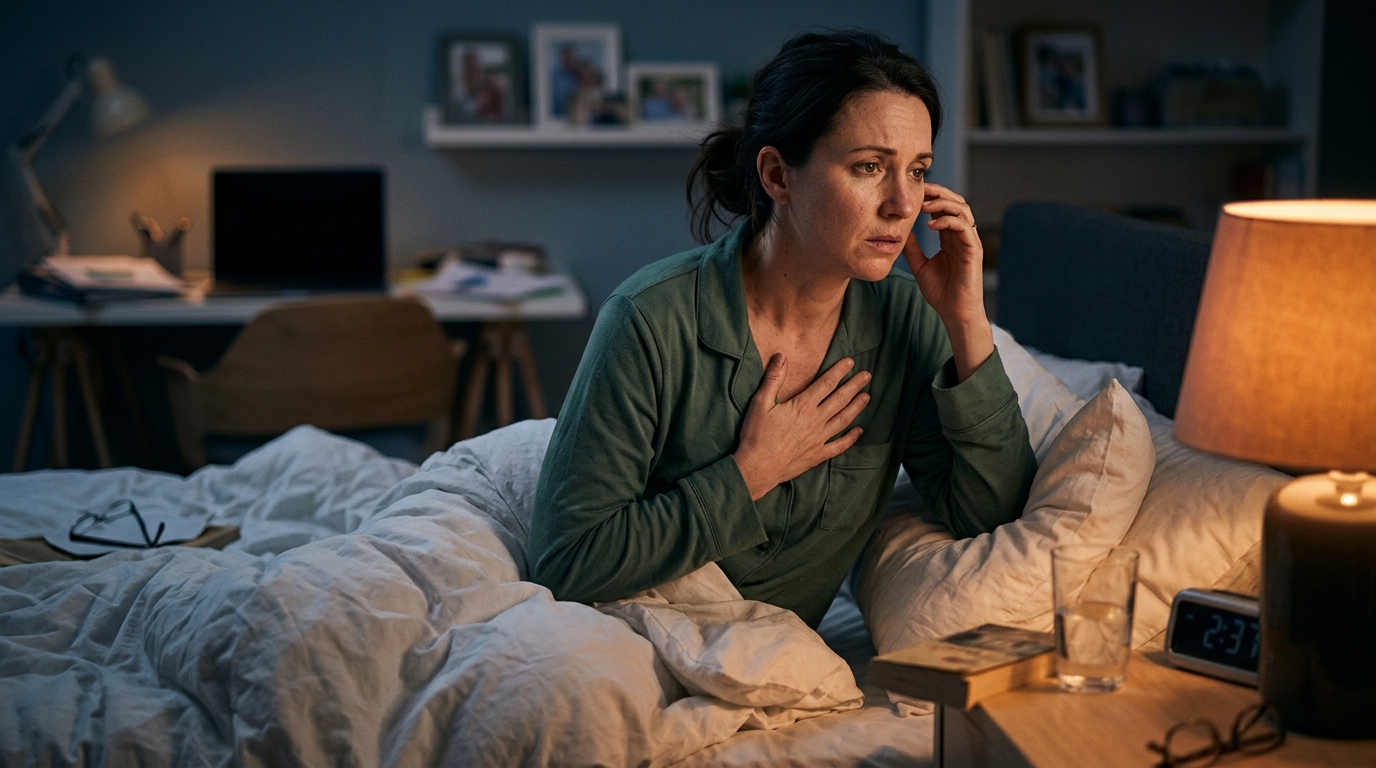
The anxiety had crept in gradually over about two years. Work pressure, a family situation, some biological predisposition I only half understand — it all converged, and by the time I recognized what was happening, I was waking up three or four nights a week with the same pattern: racing heart, tight chest, a catastrophic feeling I couldn’t trace to any specific thought.
Daytime was manageable but tiring. I was functional. I held meetings and showed up for my family and made dinner. Underneath all of it was a constant low-grade alarm, as if some part of my nervous system had decided I was in danger and refused to be told otherwise.
I tried the usual things. Meditation apps, which I dutifully used for about a month before slowly giving up on. A weighted blanket which genuinely helped with sleep but did nothing for the 3am wake-ups. Magnesium, which is supposed to help, and maybe did, marginally. Therapy, which helped a lot over time but didn’t help at 3am when I was already mid-episode.
The night I learned about box breathing, I was watching a video meant for something else entirely — a documentary on Navy SEAL training that mentioned, almost in passing, that operators used a specific breath pattern to stay calm under life-and-death pressure. Four seconds in, four seconds hold, four seconds out, four seconds hold. Repeat. That was it. I remember thinking, that can’t possibly be all, and going to bed.
Two nights later, when I woke at 3am with the usual storm, I tried it. Not because I believed it would work. Because I was so tired of being awake.
The Technique, Step by Step
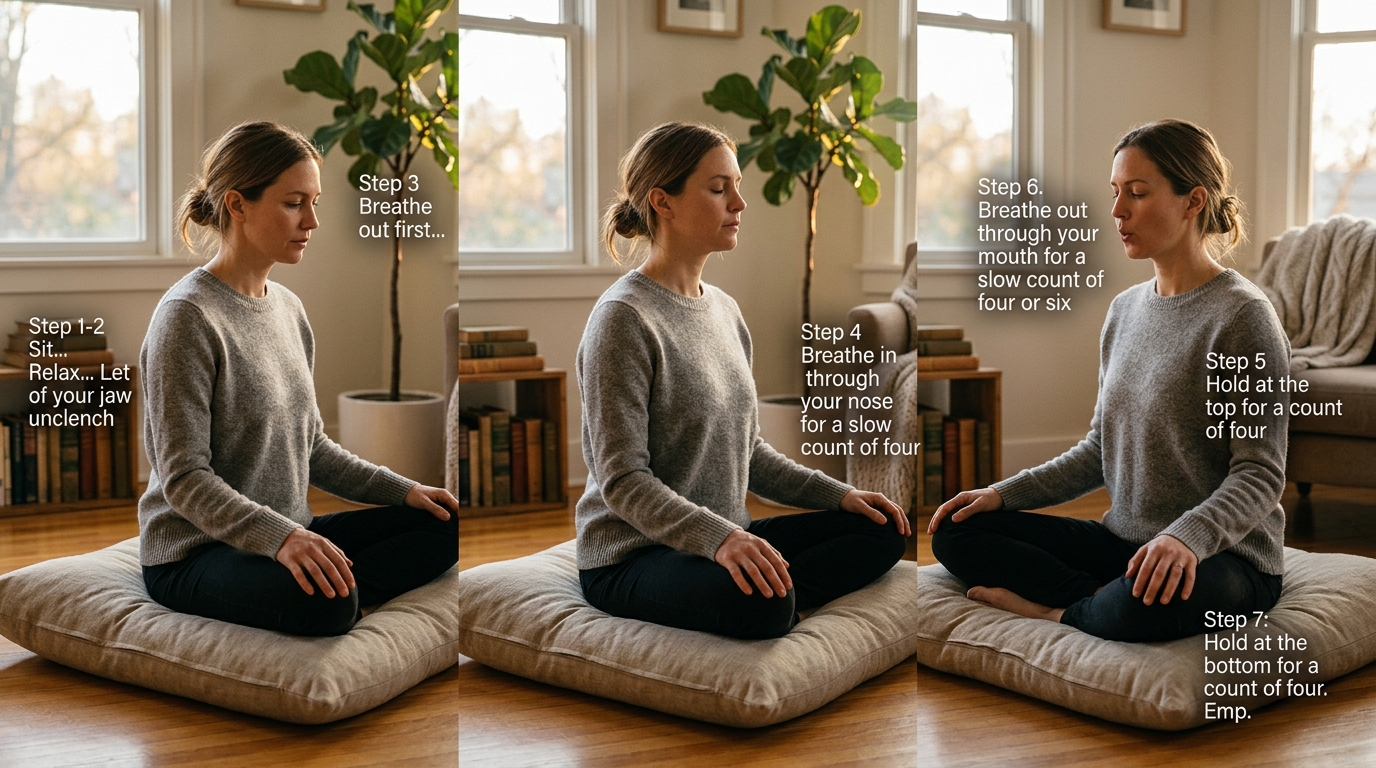
Here is exactly how I do it. I’ve refined it slightly over two months, but the core is unchanged.
- Sit or lie comfortably. Relax your shoulders. Let your jaw unclench.
- Breathe out first, emptying your lungs gently. Don’t strain.
- Breathe in through your nose for a slow count of four.
- Hold at the top for a count of four. Don’t clench. Just don’t breathe.
- Breathe out through your mouth for a slow count of four or six. (I prefer six — more on that below.)
- Hold at the bottom for a count of four. Empty lungs, relaxed body.
- Repeat. Five minutes, which is usually around 20-25 cycles.
The subtle refinement I’ve landed on: make the exhale longer than the inhale. The formal “box breathing” pattern uses equal counts (4-4-4-4). I drifted to 4-4-6-2 over time because the long exhale is where I feel the parasympathetic shift happen most clearly. The hold-at-bottom is abbreviated because, for me, it matters less than the long outbreath.
A few small things that made it work better for me:
- Breathe through the nose on the inhale. Mouth on the exhale is fine.
- Let the belly rise, not the chest. If you’re breathing into your shoulders, you’re still in fight-or-flight.
- Close your eyes, or soft-focus on one point. A wandering gaze is a wandering nervous system.
- Count silently. Don’t say “in, two, three, four” aloud. The inner count is part of what calms.
A pair of blackout sleep masks made a real difference for the 3am sessions. Total darkness and one clear count is a surprisingly peaceful combination.
Why It Works (The Non-Woo Explanation)
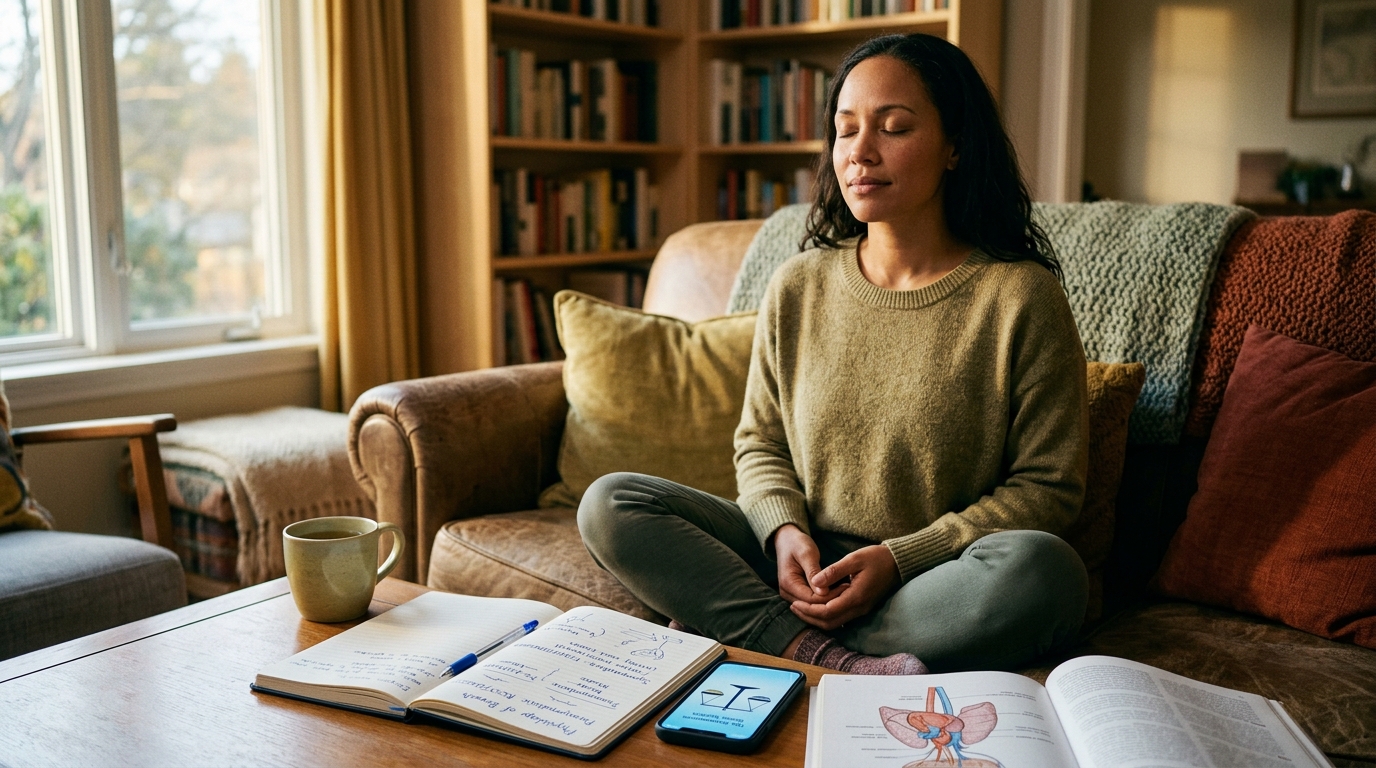
I was skeptical about the mechanism for a while, because “breathing” sounds like a wellness-industry fig leaf. But the physiology, when I looked into it, is straightforward enough that it demystified the technique for me.
Your nervous system has two modes: sympathetic (fight/flight/freeze) and parasympathetic (rest/digest). Anxiety is essentially a sympathetic state that’s gotten stuck on. Your heart rate is up. Your muscles are tensed. Your digestion has slowed. Your attention is narrowed. Your breath, importantly, is quick and shallow.
Breath is the one input into this system that you have direct voluntary control over. You can’t manually slow your heart rate. You can’t manually relax your intestines. But you can slow and lengthen your breath. And when you do — particularly with a long exhale — your body interprets that as a signal that you are safe. The parasympathetic system responds by downshifting everything else.
The specific reason the long exhale matters: exhaling is when your heart rate decelerates slightly within each breath cycle. Extending the exhale deliberately drives heart rate variability up, which is strongly correlated with a more regulated nervous system. This is why sighing (a quick double-inhale followed by a long exhale) is a spontaneous self-regulation move — your body does it naturally when it’s trying to calm itself.
I learned a lot about this from a book on the science of breathing which my partner handed me after the second week of my breathing experiment. It turned a technique I was using on faith into something I understood mechanically.
My 60-Day Results (The Good and the Messy)
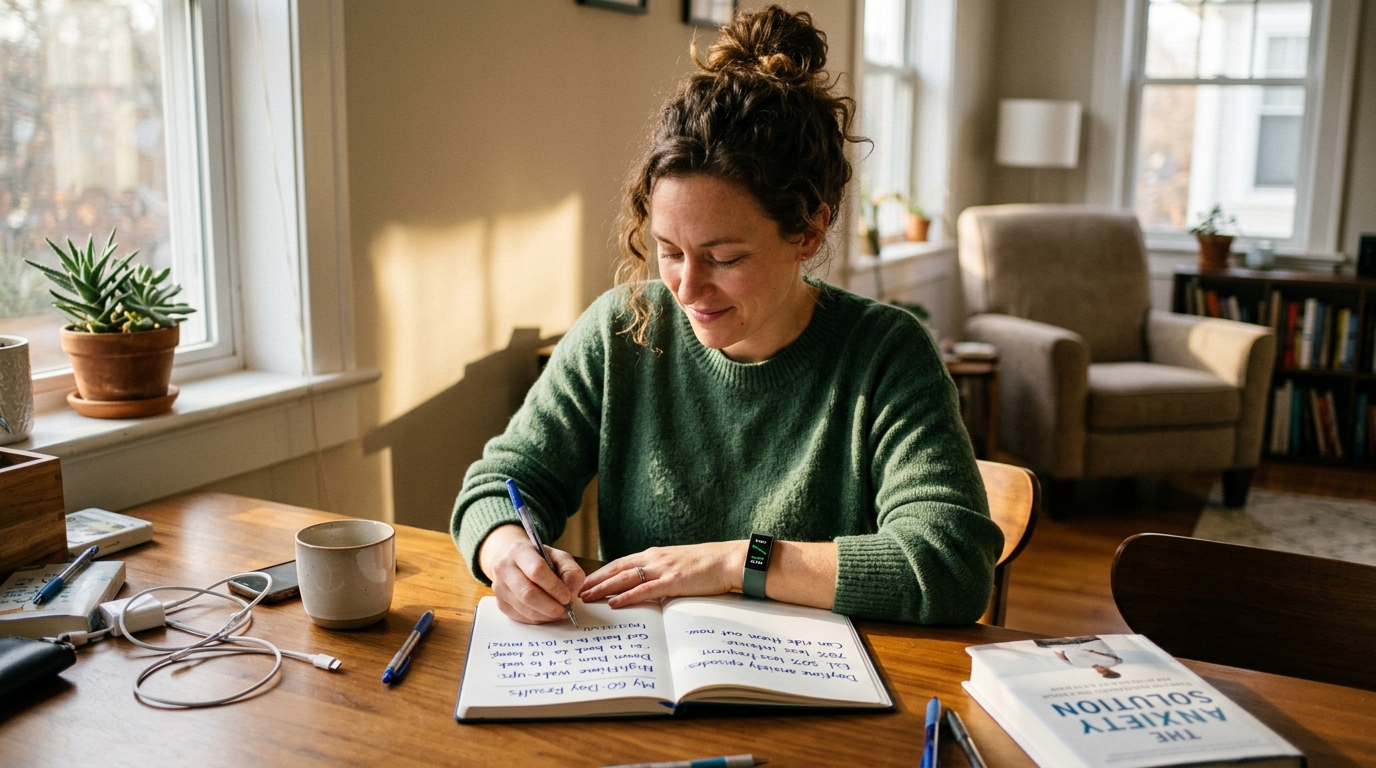
Let me give you the honest numbers, because I tracked them.
Nighttime wake-ups: Down from 3-4 per week to roughly 1 per week. When they happen, I can usually get back to sleep within 10-15 minutes instead of 1-2 hours.
Daytime anxiety episodes: Harder to count precisely. I’d estimate a 50% reduction in frequency and about a 70% reduction in intensity. The ones I still get, I can ride out in a way I couldn’t before.
Resting heart rate: Dropped by about 6 beats per minute over the two months. I tracked this with a continuous pulse oximeter that I wore overnight a few times a week. The pattern was clear and sustained.
Sleep quality: Measurably better. Deeper sleep, more of it. This alone has been enough to change how I feel during the day.
The messier side: there were days the technique felt useless. Days I’d do five minutes and finish more anxious than when I started. Days I forgot to do it at all. Days I did it mechanically and got nothing out of it. Probably one session in five was a waste. The other four saved me.
One surprise: the technique slowly generalized. In week one, I had to consciously start it when I noticed I was anxious. By week six, when something stressful happened, my breath was already lengthening without my deciding to start. The practice had trained a reflex.
When It Doesn’t Work — And What I Do Instead
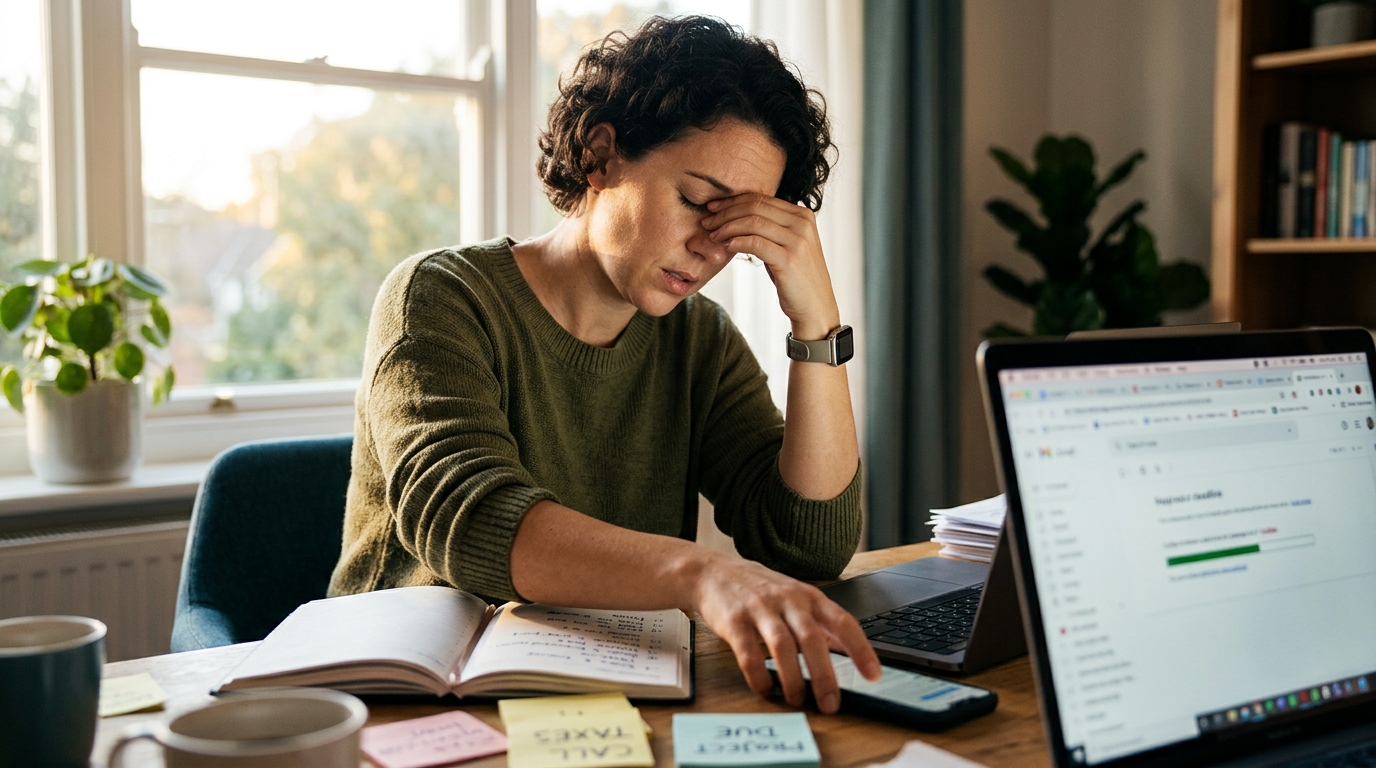
Being honest about what breathing can’t do is part of why I trust it for what it can.
Breathing doesn’t help me when the anxiety is rooted in an active, specific, actionable thing I’m avoiding. If I’m anxious about a deadline, breathing won’t fix the deadline. What works for that kind of anxiety is doing the thing. Breathing, applied to actionable anxiety, can even feel like escapism.
It also doesn’t help much during the first minute or two of an acute panic state, where the sympathetic activation is running so high that I can’t focus on counting. For those moments, I’ve had better luck with the “physiological sigh” — a quick double-inhale followed by a slow long exhale, three or four times. That seems to break the peak before I can settle into the slower box pattern.
Things that help me that breathing alone doesn’t cover:
- Morning walks. Thirty minutes before screens. The combination of light, movement, and time without stimulation has been as significant as the breath work.
- Caffeine discipline. I still drink coffee, but I stop by noon. Late caffeine was a silent contributor I didn’t connect to my 3am episodes for months.
- Journaling. Not every day; when something is weighing on me. A simple hardcover journal and ten minutes of writing does more for rumination than any app has.
- Therapy. Still. The breathing was a tool; the work of understanding why my nervous system learned to live on high alert is what reduced the underlying baseline.
I’d be lying if I said breathing alone fixed my anxiety. It didn’t. What it did was give me a reliable first move. Something I could always do, anywhere, without equipment, without waiting, without anyone noticing. That alone changed my relationship with the anxiety — less helpless, more resourced.
Final Thoughts: The Smallest Habit That Changed the Most
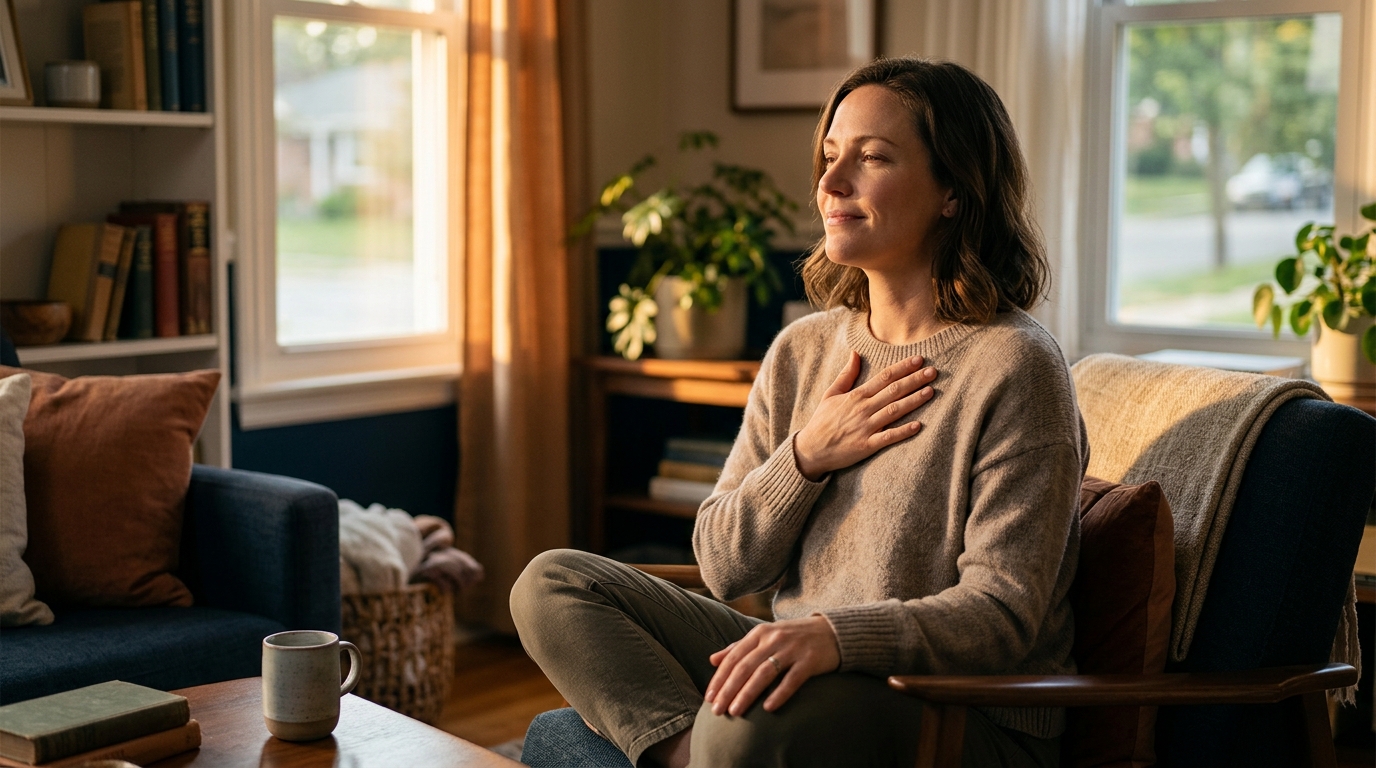
The thing I keep coming back to, two months in, is how small the intervention was. Five minutes. No app subscription. No expensive hardware. No therapist appointment that week. Just a breath pattern I’d learned in ten minutes of watching a video and then repeated until it became something my body could do on its own.
In a culture that sells us elaborate solutions to every problem, the smallest solutions often get dismissed as insufficient. I would have laughed if someone had told me, a year ago, that counting my breath would meaningfully reduce my anxiety. It sounded too simple. The simple ones usually do.
Your nervous system doesn’t care that the solution is cheap. It cares that the signal is clear. A slow, deliberate breath is about as clear a signal as you can give it.
If you’re going to try it, a few pieces of unasked-for advice. Don’t wait until you’re in crisis — practice it when you’re calm, so the pattern is already familiar when you need it. Don’t expect it to work perfectly the first time; the first week is the hardest because you’re counting deliberately and self-conscious. And don’t give up if one session goes nowhere. You’re training a reflex, not popping a pill.
Sixty days ago I was a person whose body had decided it was unsafe. Today I’m a person who still sometimes feels that alarm, but who has a tool that reliably turns the volume down. That shift — from unarmed to armed — is the real gift. The specific technique is interchangeable. What matters is finding one small thing you can reliably do for yourself in the middle of the night, and then doing it.





Leave a Reply