
I used to dread Sunday evenings. Not because the weekend was ending, but because I knew what Monday morning looked like: three kids awake at different times, lunches to pack, breakfast to make, and absolutely nothing prepped. I was reactive instead of proactive, and it showed — in the stress, in the fast food stops, in the sheer mental exhaustion of figuring out “what’s for dinner” at 6pm after a full workday.
Then one particularly chaotic Tuesday, I burned a pot of rice, forgot to defrost the chicken, and ended up ordering pizza for the third time that week. My youngest looked up at me and said, “Mom, why don’t we have real food?” And honestly? That hit hard. I knew something had to change.
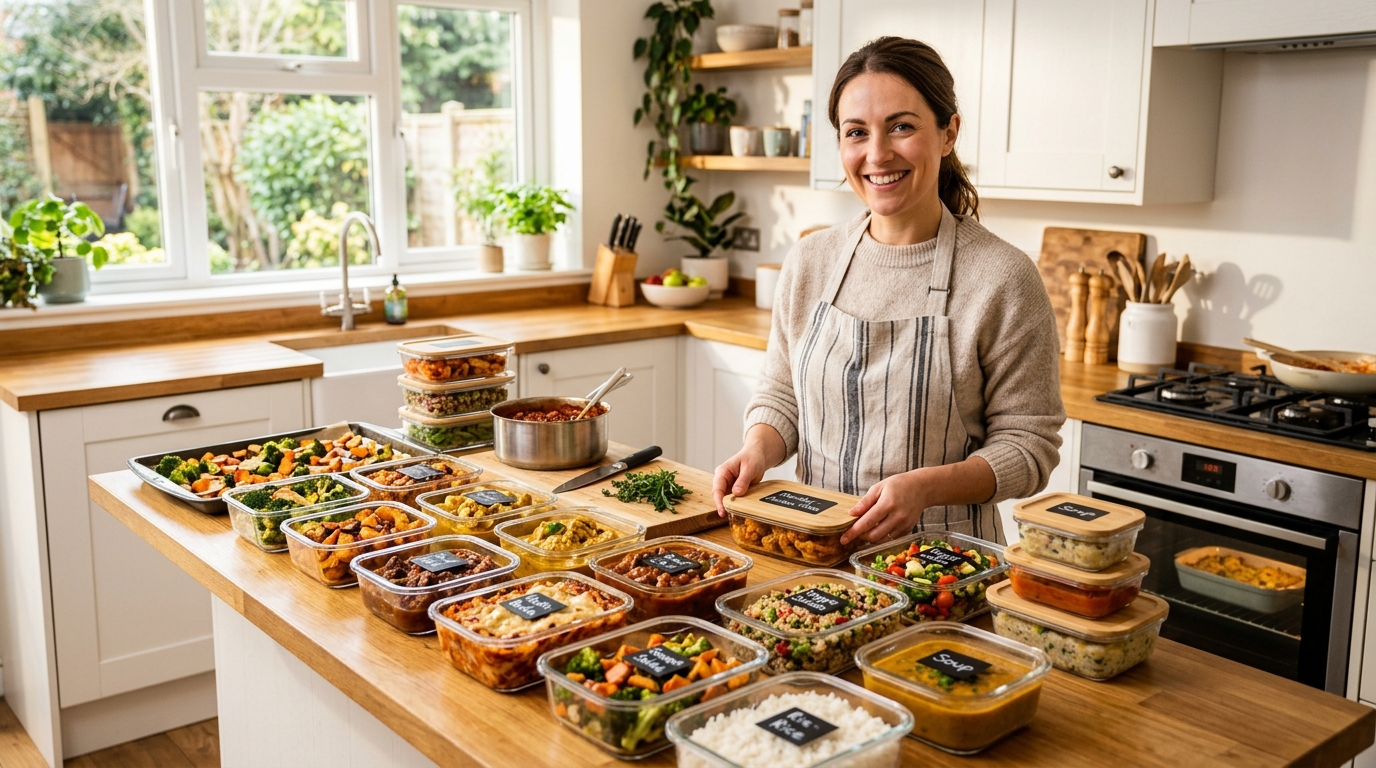
That weekend, I spent a Sunday afternoon in the kitchen with a loose plan, some containers, and a lot of determination. Three hours later, I had lunches for five days, two complete dinners, a big batch of grains, and snacks ready to grab. It wasn’t perfect. But Monday morning felt completely different — and I’ve never looked back. Here’s exactly how I do it now, every single week.
Why Batch Cooking Actually Works (When Everything Else Has Failed You)
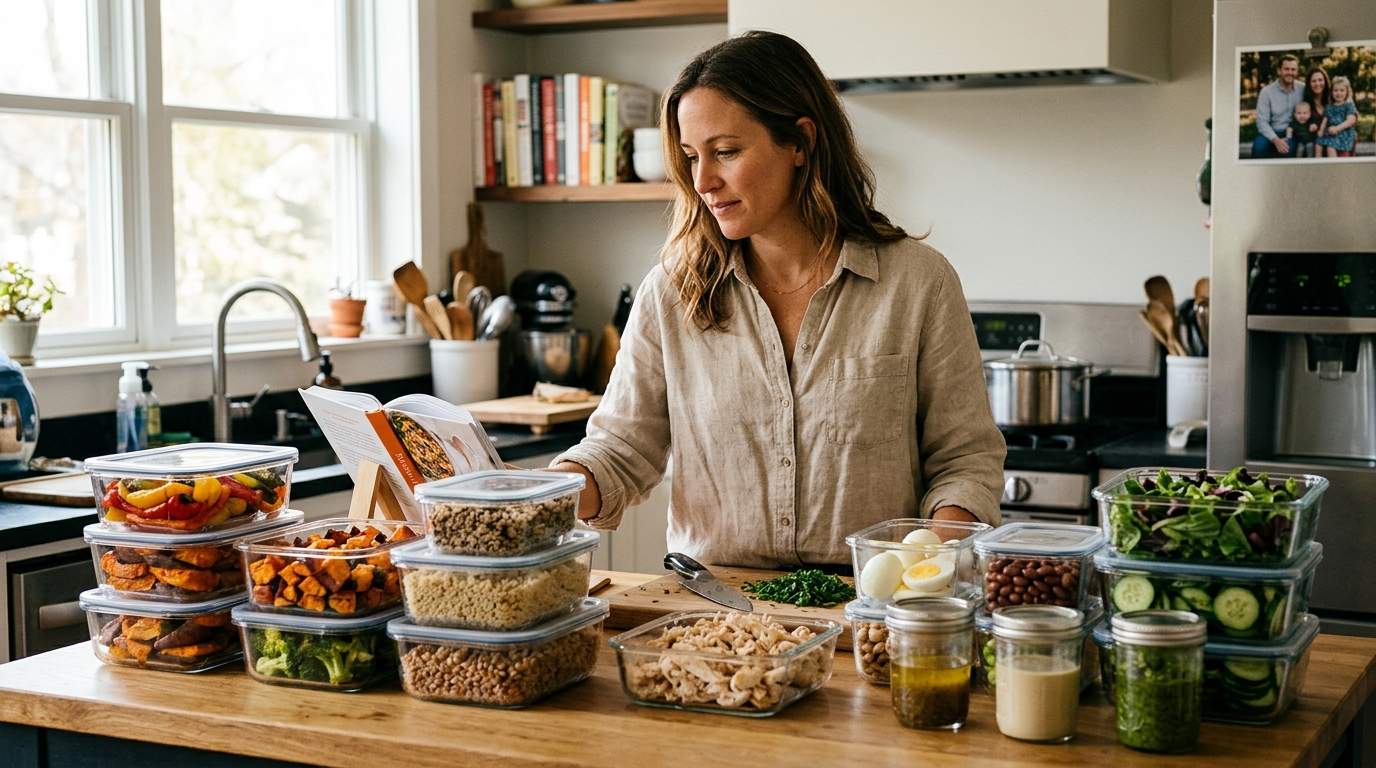
Let me be honest: I tried meal prepping before and failed spectacularly. I’d cook five identical chicken-and-rice bowls on Sunday, feel great about it — and by Wednesday, I’d be so bored I’d rather eat crackers for dinner. So when I say batch cooking works, I don’t mean the kind where you eat the same thing every day. I mean component cooking: prepping individual building blocks that you mix and match throughout the week.
The psychology behind it is simple. Decision fatigue is real. By the time 6pm rolls around on a Wednesday, your brain has made thousands of small decisions. The last thing it wants is to plan a meal from scratch. When you open your fridge and see cooked quinoa, roasted vegetables, marinated proteins, and washed greens — your brain relaxes. Dinner becomes assembly, not cooking.
There’s also the financial side, which I didn’t expect to matter as much as it does. When you batch cook, you buy in bulk, waste almost nothing, and stop impulse-buying convenience food. My grocery bill dropped noticeably in the first month — not because I was eating less, but because I stopped throwing away wilted produce and half-used ingredients.
And the health piece? When food is already prepped, you eat it. That’s it. The barrier between “I should eat something healthy” and “I am eating something healthy” collapses entirely. You’re not relying on willpower at 7pm — you’re relying on past-you, who made good choices at 10am on a Sunday when the pressure was off.
The key insight that changed everything for me: you’re not cooking meals in advance, you’re building a personal ingredient library. Once I shifted that mindset, batch cooking stopped feeling like a chore and started feeling like a superpower.
But here’s the thing — none of this works if your system is inefficient. And most people’s systems are quietly sabotaging them before they even start.
The 20-Minute Planning Session That Makes Everything Possible
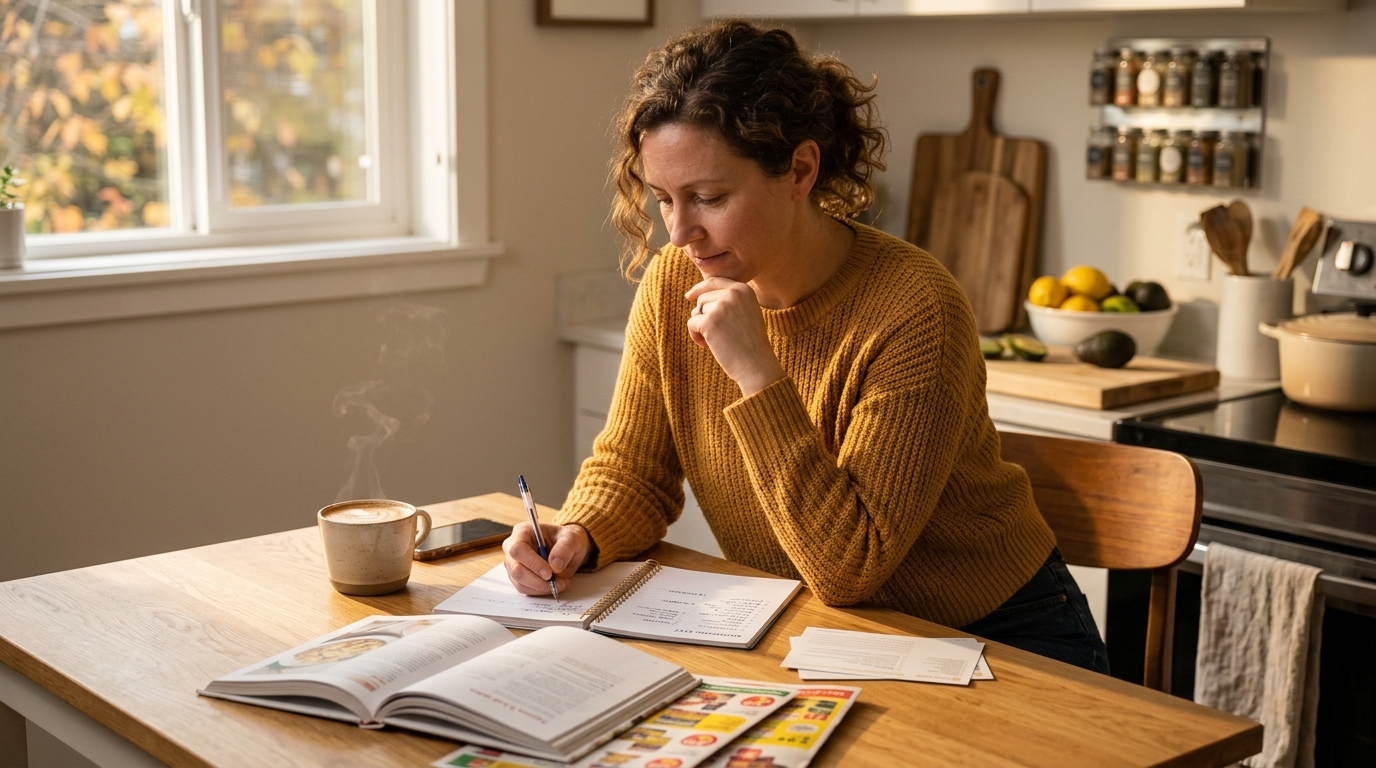
The actual cooking on Sunday is the easy part. The hard part — and the part most people skip — is the 20-minute planning session you do the night before or the morning of. Without it, you’ll stand in the kitchen staring at your fridge and lose an hour just figuring out what to make.
My planning ritual looks like this: I sit down with a coffee on Saturday evening and ask myself three questions. What proteins do I need this week? What carbs or grains will anchor my meals? And what vegetables are either in season, on sale, or already in my fridge? From those answers, I build a loose “ingredient map” — not recipes, just components.
A typical week might look like: one protein (chicken thighs), one legume (chickpeas), two grains (brown rice and farro), four to five vegetables (sweet potatoes, broccoli, zucchini, cherry tomatoes, spinach), one sauce base (tahini or a big batch of tomato sauce), and fresh herbs. That’s it. From those components, I can make at least twelve different meals without repeating anything.
I write it all on a simple notepad — nothing fancy, no apps, no elaborate systems. Then I check what I already have and write a focused grocery list. This takes twenty minutes max, and it eliminates every single “what should I make?” moment for the entire week.
One thing I do that sounds small but is enormous in practice: I always pick at least one “wild card” component — something that can go sweet or savory, hot or cold. Roasted butternut squash is a perfect example. It can be a side dish, go into a grain bowl, be blended into soup, or even be mashed into a quesadilla for kids. Versatile ingredients are your best friends.
I also keep a running list on my phone of my family’s “always yes” meals — the things everyone eats without complaint. On weeks when I’m tired or uninspired, I default to those. Batch cooking doesn’t have to be adventurous. Sometimes it just needs to work.
Once your plan is solid, the cooking itself becomes almost meditative. But only if your kitchen is set up right — and that’s where most people lose precious time they can’t afford to lose.
My Exact 3-Hour Kitchen Setup and Cooking Order
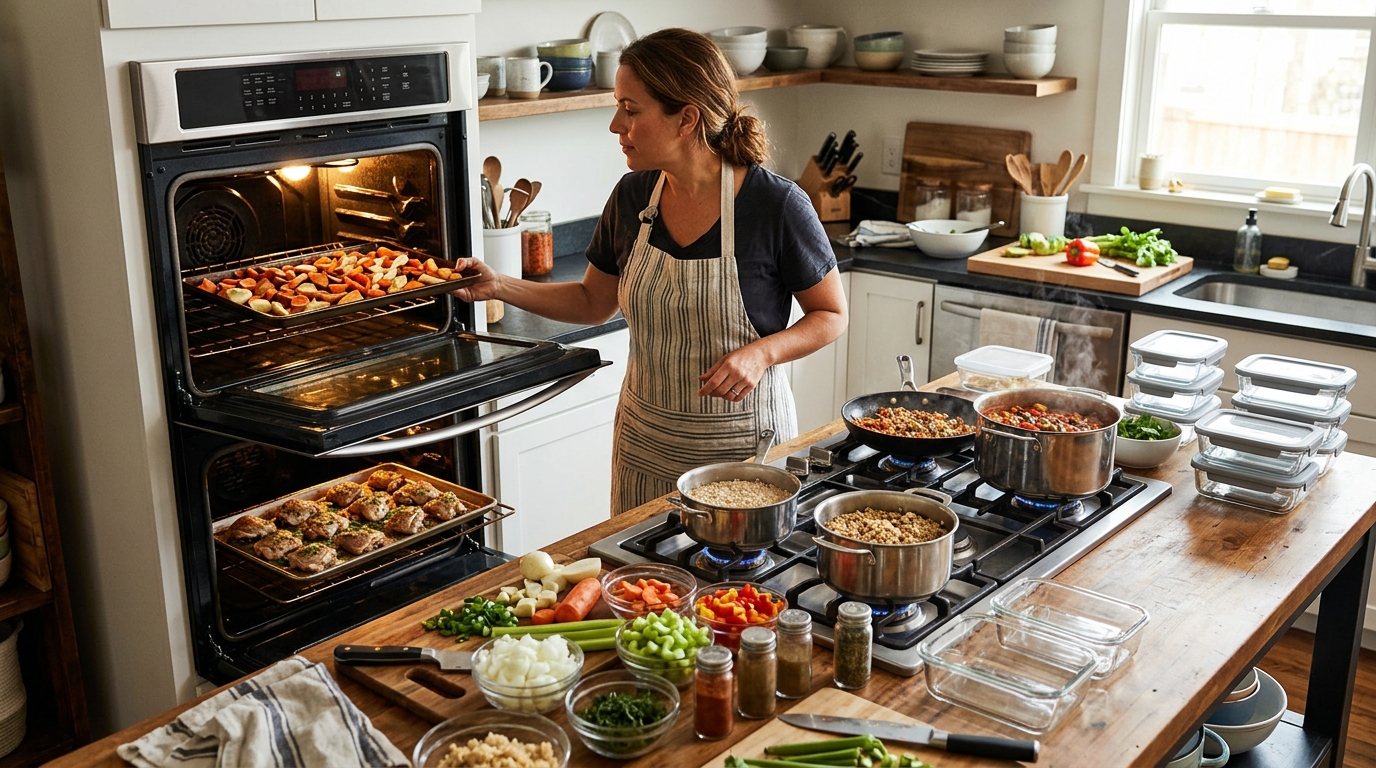
Three hours sounds like a lot until you realize how much you’re accomplishing. The secret is sequencing — starting with what takes the longest and filling the gaps with everything else. I’ve run this system enough times now that it flows almost automatically.
Hour One: Fire everything up simultaneously. The oven goes on first. I load it with whatever takes longest — usually a tray of roasted root vegetables and a sheet pan of proteins. While those are in the oven, I get grains going on the stovetop. Brown rice takes 40 minutes; I start it immediately. Then I prep everything that needs chopping: onions, garlic, herbs, any raw vegetables that will be used throughout the week.
Hour Two: Active cooking and monitoring. Legumes get their turn — if I’m using dried chickpeas or lentils, these go into a pot. Sauces get made. A big batch of tomato sauce takes about 25 minutes and lasts the whole week. I might make a marinade for a second protein that will cook later. This is also when I wash and dry all the salad greens and fresh herbs, storing them properly so they last.
Hour Three: Final cooking, portioning, and storage. The last protein goes on — maybe a stovetop item like salmon or eggs. I assemble any “ready meals” that my kids will grab for lunch. Everything gets portioned into containers, labeled, and stored. I do a full kitchen cleanup as things cool.
A few tools make this genuinely faster. I use glass meal prep containers instead of plastic — they’re oven-safe, microwave-safe, and you can see exactly what’s inside without opening them. Game changer. I also use a large sheet pan with a wire rack so I can roast proteins and vegetables at the same time without them steaming each other.
And my absolute non-negotiable: a digital instant-read thermometer. No more guessing if chicken is cooked through. No more cutting into things and losing juices. It takes two seconds and removes all anxiety from cooking proteins in bulk.
By the end of hour three, my counter looks like a small deli. And Monday through Friday, my family eats like we planned everything perfectly — because we did.
The Storage Strategy That Keeps Food Fresh All Week
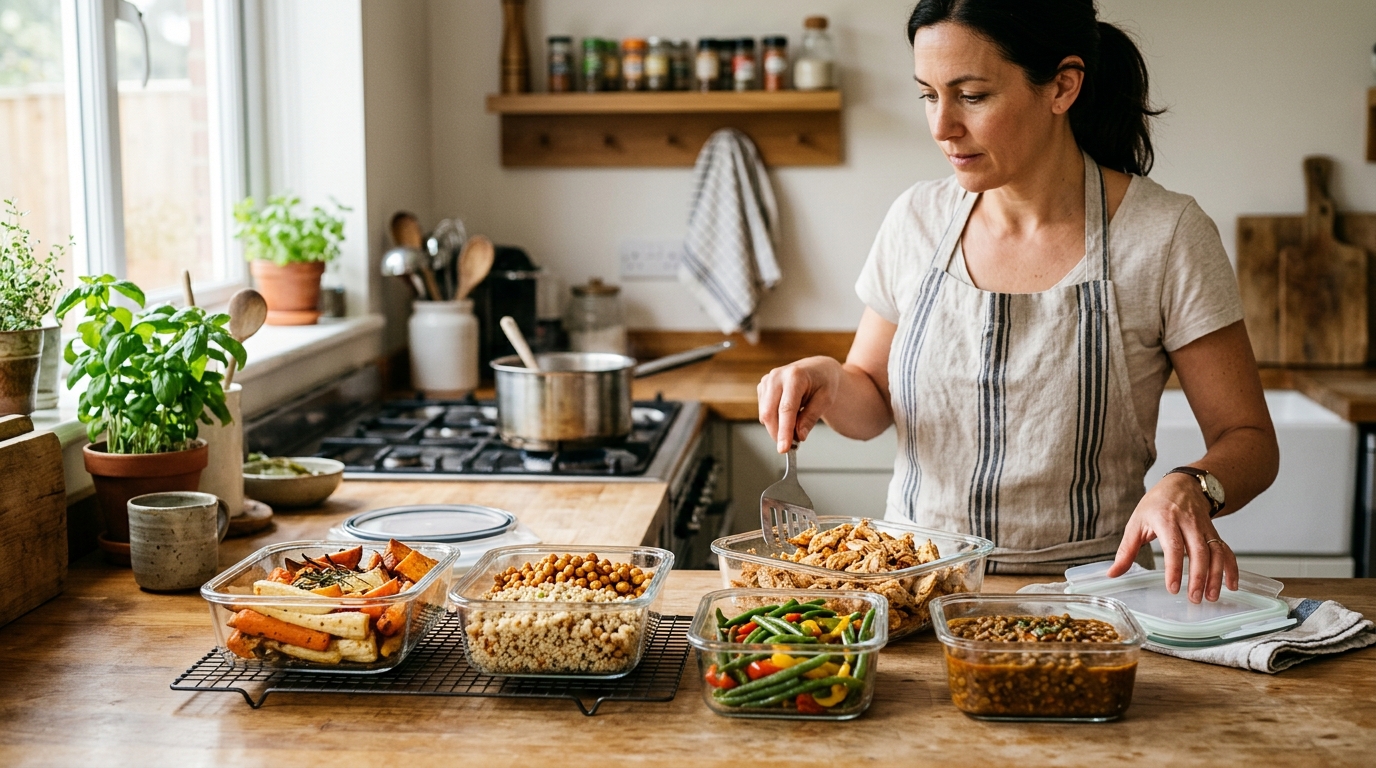
Here’s where so many batch cookers go wrong: they do all the work, then store everything carelessly, and by Wednesday the food tastes sad and limp. Proper storage isn’t an afterthought — it’s the difference between a system that works and one that quietly fails.
The first rule I follow is never store food while it’s still warm. Hot food in a sealed container creates condensation, which creates moisture, which leads to soggy textures and faster spoilage. I let everything cool to room temperature on the counter before sealing and refrigerating. This usually takes 20-30 minutes and I use that time to clean up.
The second rule: store components separately, not assembled. Grain bowls that are pre-assembled get soggy. Salads that are pre-dressed go limp. Instead, I keep the grains in one container, the vegetables in another, the protein in a third. Assembly takes 90 seconds at mealtime and the food stays infinitely better.
I organize my fridge by day and type. The front row is “use first” — anything more delicate like fresh fish or dressed items. The back row is “use later” — hardier items like roasted root vegetables or cooked legumes. I keep sauces and dressings in small mason jars, labeled with a piece of tape and a marker.
For anything that won’t be used by Thursday, I freeze it immediately on Sunday rather than waiting to see if we “get to it.” Cooked grains freeze beautifully. Most proteins freeze well. Sauces are perfect for freezing in ice cube trays, then transferring to a bag — you get individual portions without committing to a full batch.
A vacuum sealer has extended my fridge life noticeably for proteins and hard cheeses. It’s not essential when you’re starting out, but once you’re doing this consistently, it’s worth every penny. Foods that would last 3 days last 7 or 8. That alone reduces food waste dramatically.
One more thing nobody tells you: label everything with the date. Not just what it is — when it was made. You’ll thank yourself on Thursday when you can’t remember if that chicken was from this week or last week. A simple roll of masking tape and a permanent marker costs almost nothing and saves real stress.
Now that your food stays fresh all week, the next challenge is actually getting your family to eat it — which, if you have kids or a picky partner, might be the hardest part of this whole journey.
Getting Your Family On Board (Even the Picky Ones)
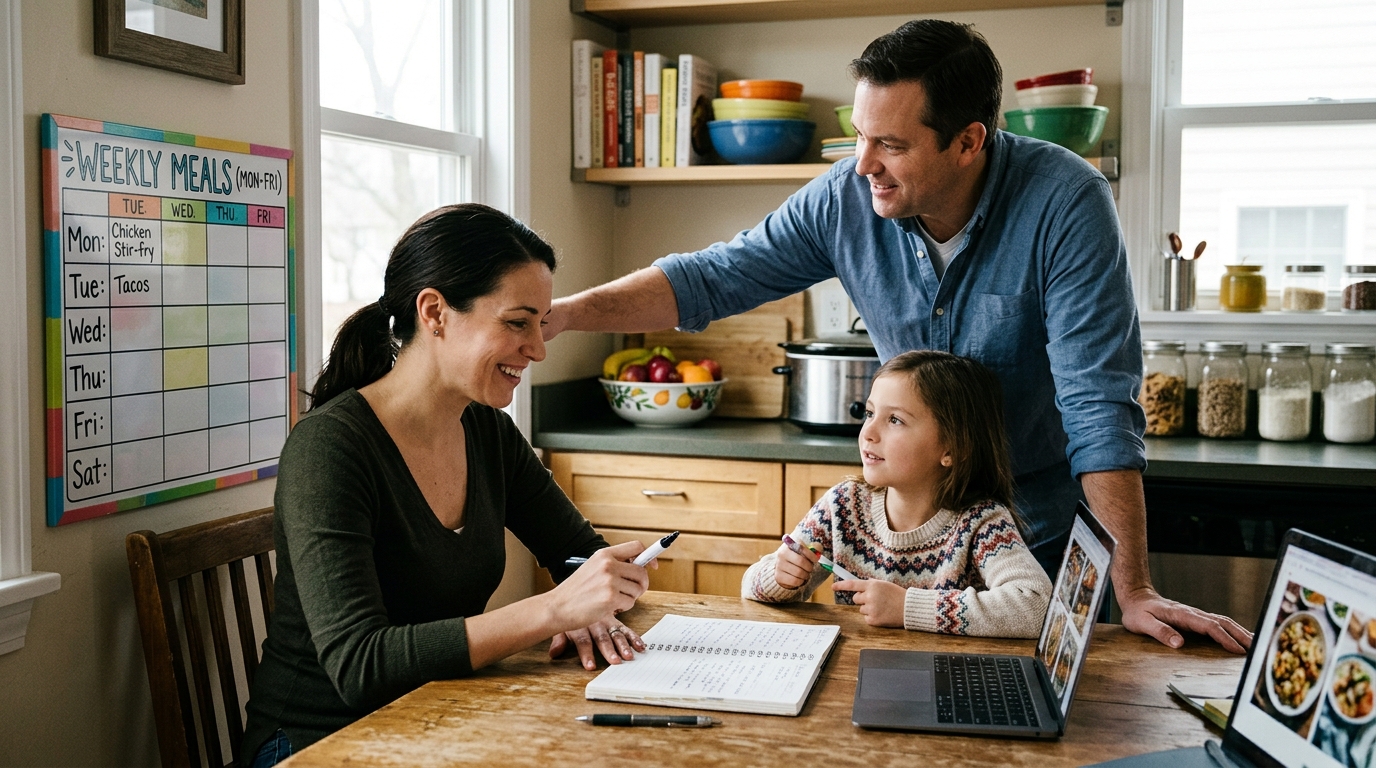
My husband’s first response to batch cooking Sunday was “so we’re just eating the same thing every day?” My daughter’s was to stare into a container of roasted broccoli like I’d handed her a punishment. Getting buy-in from a family is real work — but it’s absolutely achievable, and it’s changed our household dynamic in ways I didn’t expect.
The trick is involving people before Sunday, not presenting them with finished food. Now I ask everyone on Saturday: “Is there anything you specifically want this week?” My son always asks for something with pasta. My daughter usually wants soup. My husband wants something he can take to work that doesn’t require reheating. These requests go into my planning, and suddenly batch cooking becomes responsive to them rather than imposed on them.
For kids especially, presentation matters enormously. A container of components looks boring. But a “build your own bowl bar” in the fridge — labeled containers they can pull out and assemble themselves — feels fun and autonomous. My kids actually started looking forward to it because they got to choose their combinations. Control is everything to children.
I also never make everything “healthy” all at once. If I’m making a big batch of quinoa and kale, I’m also making something comforting — a pasta sauce, a bean soup, something that doesn’t feel like a wellness project. Balance keeps people from feeling like they’re on a diet and resenting the whole system.
One of my favorite hacks: I make a large batch of a “neutral base” like a simple tomato meat sauce. For kids, it goes over pasta. For adults, it goes over polenta or zucchini noodles or into a shakshuka. Same food, completely different meal, zero extra effort. One sauce, four applications. That’s the kind of efficiency that makes this sustainable long-term.
A set of stackable fridge storage containers also helped dramatically with family buy-in — everything looks organized and intentional instead of chaotic, and people are more likely to reach for something that looks appealing and accessible.
The moment I knew the system had fully taken hold? My teenager started batch prepping her own snacks on Sunday afternoons. She’d watched me do it enough times that it just became the household norm. That might be the thing I’m most proud of from this whole experiment.
What I’d Do Differently If I Were Starting Over Today
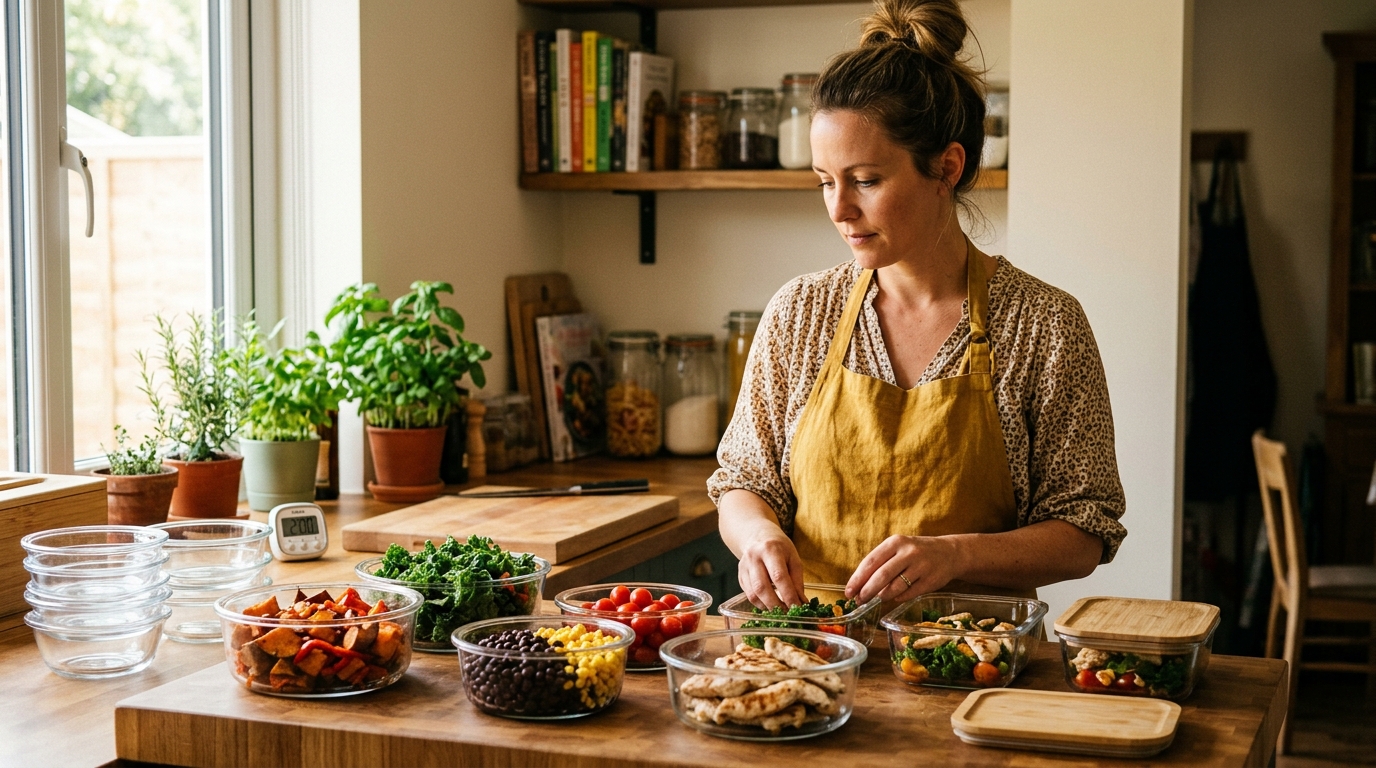
After two years of weekly batch cooking, there are things I wish someone had told me at the beginning. Not to save time — I was going to figure it all out eventually — but to save frustration, wasted food, and a few genuinely bad meals that could have been avoided.
Start with two hours, not three. When I first began, I overestimated what I needed and burned myself out trying to prep everything imaginable. Two hours and four components is a complete success. You can build up from there once the habit is established. Perfectionism kills consistency.
Don’t try to prep every meal. I prep lunches and dinners Monday through Thursday. Friday is leftovers or something easy. Weekends are flexible. Trying to cover every single eating occasion creates pressure that isn’t worth it and makes Sundays feel like a second job.
Invest in good tools early. I resisted buying a proper quality chef’s knife for two years and wasted so much time and energy with dull, cheap knives. A sharp, well-balanced knife makes prep work genuinely enjoyable instead of tedious. It’s one of those purchases where you immediately wonder how you ever lived without it.
Build a recipe rotation, not a new plan every week. I now have about 15 “component sets” that I rotate through. This means I’ve already figured out what works, what my family likes, and what combinations are versatile. I’m not reinventing the wheel every Sunday — I’m running a proven system with occasional variation for seasonality.
And finally: give yourself permission to have an off week. Some Sundays, I do a full three-hour prep. Some Sundays, I do an hour and call it done. Some Sundays, I buy pre-cut vegetables and rotisserie chicken and that’s my batch cooking. The goal is a better week, not a perfect Sunday. Flexibility is what makes this a lifestyle instead of a temporary project.
If you’re sitting there thinking “I could never do this” — I promise you, I said the exact same thing. I’m not a chef. I don’t have a fancy kitchen. I have a regular stove, regular pans, three kids who all have opinions, and about the same number of hours in a week as you do. What I have now that I didn’t have before is a system. And systems, once they’re running, mostly run themselves.
Start this Sunday. Make it small. Set a timer for two hours. Prep three things. See how Monday feels. That’s all it takes to begin — and once you feel that Monday-morning calm for the first time, you’ll never want to go back to the chaos.





Leave a Reply