
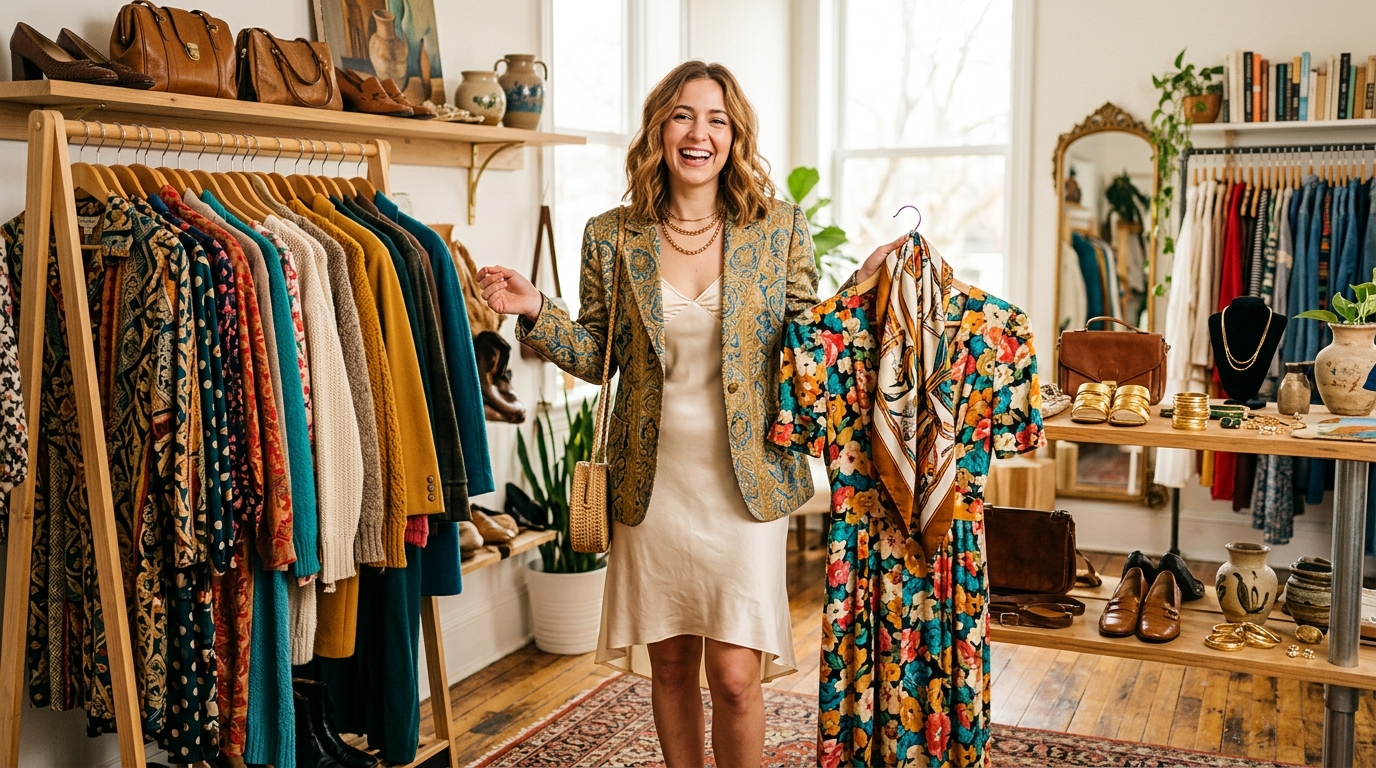
I still remember the exact moment I stopped being embarrassed about thrift shopping. I was at a dinner party, wearing what I secretly called my “mystery blazer” — a perfectly tailored camel-colored jacket I’d found crammed between a sequined Christmas sweater and a too-small windbreaker at Goodwill. I paid $4.99 for it. Halfway through the evening, a woman I’d just met grabbed my arm and said, “Okay, I have to know where you got that blazer. I’ve been looking for something exactly like that for months.” I told her the truth. Her jaw dropped.
That moment changed something in me. I went from treating thrift stores as a backup plan to treating them like the best-kept secret in my wardrobe. And over the years, I’ve developed a pretty sharp eye for what to grab and what to leave behind. Not everything thrifted is a treasure — but the pieces that are will get you more compliments than anything you bought full price at the mall. I know because it keeps happening to me, and I want to share exactly what those finds look like.
This isn’t a post about “how to thrift” in theory. This is about the specific categories of items I’ve pulled off the rack that have made people stop me, ask me questions, and occasionally refuse to believe me when I say where they came from. Let’s get into it.
The Blazers and Structured Jackets That Do All the Heavy Lifting
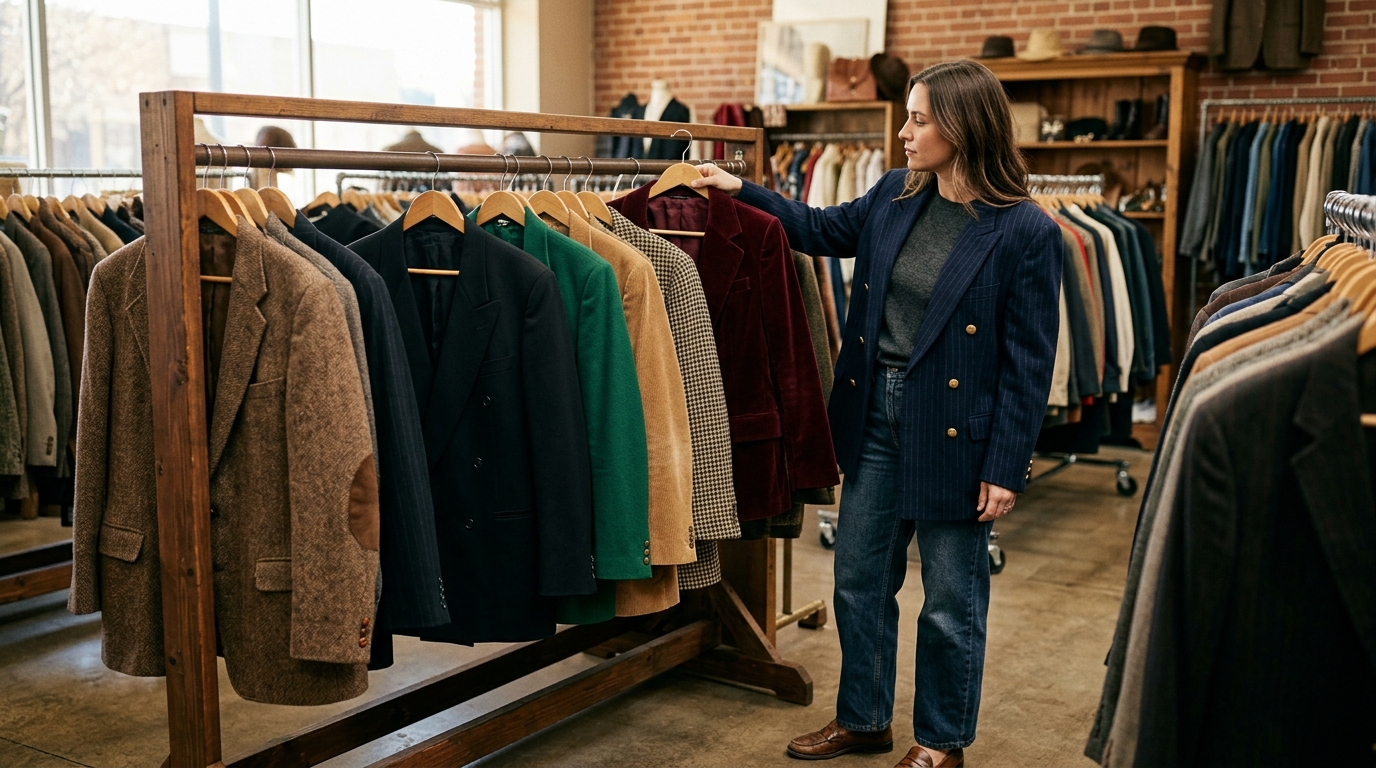
If I had to pick one single category that has earned me the most compliments over my entire thrifting life, it’s blazers. Hands down, no contest. And I think I understand why: a well-fitted blazer instantly elevates literally anything you wear underneath it, and the good ones were built to last decades. That’s exactly why they end up in thrift stores — someone cleaned out their closet, not because the blazer wore out, but because they got bored of it or it no longer fit. Their loss is absolutely your gain.
What I look for specifically: thick, structured shoulder pads (the subtle kind, not the 1980s linebacker kind), real button hardware, and clean lapels. I run my hand along the interior lining to feel for quality. Cheap blazers have that scratchy, thin synthetic lining that bunches up and wrinkles within an hour. A good blazer — even a 30-year-old one — will have a smooth, heavy lining that drapes beautifully. That’s the tell.
Color-wise, I’ve had the most luck with camel, navy, forest green, and classic black. These are the ones people respond to most. Loud patterns can work, but they’re harder to style consistently and that affects how many compliments you realistically get over time. The sleek, timeless colors photograph well, work across seasons, and can dress up or down depending on what you pair them with.
One thing I always do before wearing a thrifted blazer: I use a fabric steamer on it. This single step transforms a stiff, slightly musty, closet-crumpled piece into something that looks freshly dry-cleaned. You cannot skip this. A steamer gets into the fabric in a way that an iron sometimes can’t, and it refreshes the shape beautifully.
The blazer I’m wearing most this season? A forest green double-breasted one I found last fall for $6. I’ve worn it to work meetings, date nights, and a birthday party. Every single time, someone asks about it. Six dollars. That never gets old.
Vintage Denim That Fits Like It Was Made for You
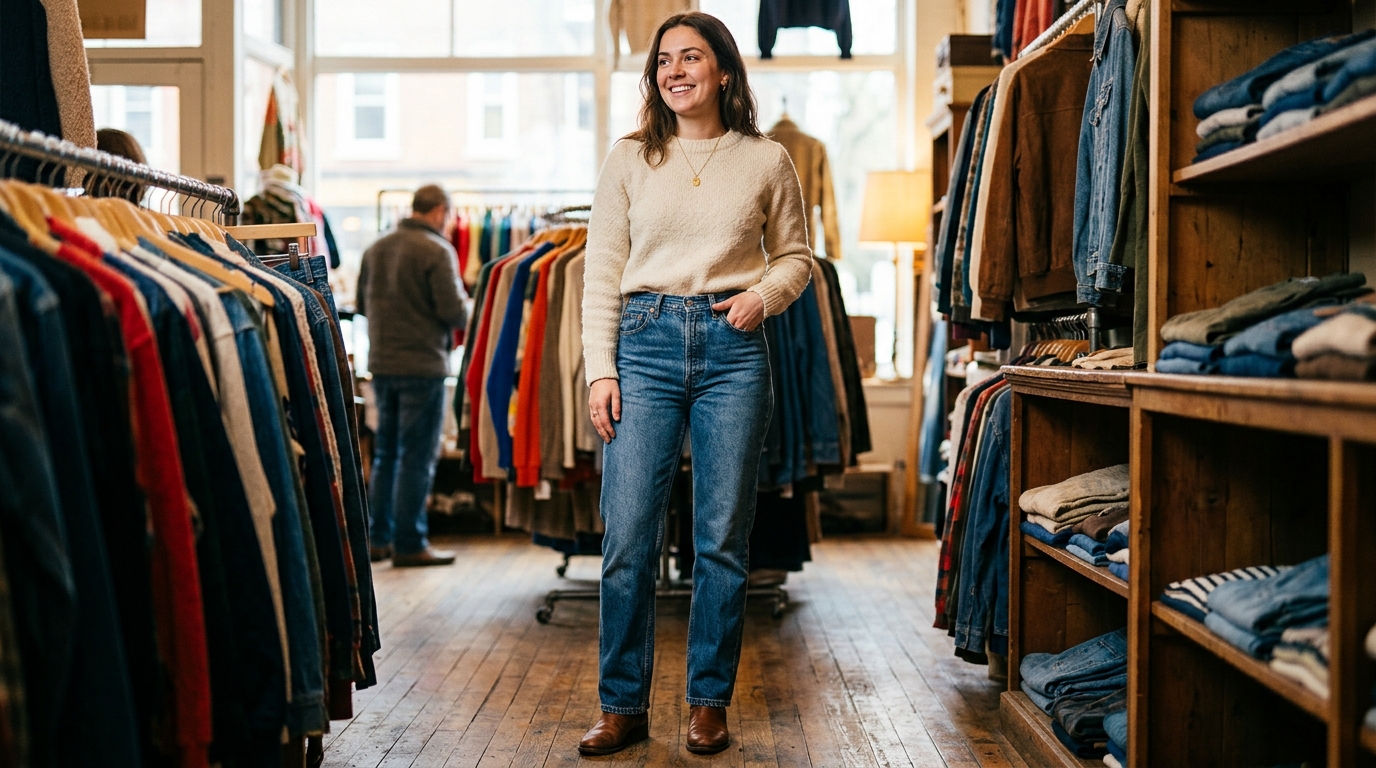
Modern denim has a problem. A lot of it is made with a high percentage of stretch fabric, which sounds comfortable but means it loses its shape by noon and starts bagging out at the knees and rear within a few wears. Vintage denim — the kind made with a much higher percentage of actual cotton — holds its structure all day. It sculpts differently. It fades more beautifully. And when you find a pair that fits you well, it becomes obvious to everyone around you that something is different about those jeans, even if they can’t name exactly what it is.
I’ve found some of my most-complimented jeans at thrift stores. A pair of high-waisted Levi’s 501s in a light wash that I had to pay $8 for. A pair of straight-leg Wranglers that somehow looked better on me than anything I’d tried in an actual store. The trick is patience and willingness to try on things that don’t look promising on the hanger. Vintage denim almost never looks right folded up on a shelf. It needs to be on a body to show what it can do.
My process: I go through every pair of denim in my size range (and a little outside it, because sizing has changed dramatically over decades). I feel the weight of the fabric first — heavier is usually better. Then I check for any damage around the inner thighs, the waistband, and the back pockets, which are the areas that wear out first. Small stains I can sometimes get out. Structural damage is usually a pass.
When I find a good pair, I always store them properly. I’ve started using garment bags for my best thrifted pieces — including denim — because they keep dust off and prevent the fabric from rubbing against other pieces in the closet. It sounds like overkill for jeans, but these are the pieces I genuinely treasure.
The compliments on vintage denim tend to come in the form of questions: “Where did you get those jeans?” and “Are those vintage?” People can tell. Something about the way the fabric sits is just different, and once you experience it you’ll understand why I can’t stop hunting for these.
Silk and Silk-Blend Blouses That Look Effortlessly Expensive
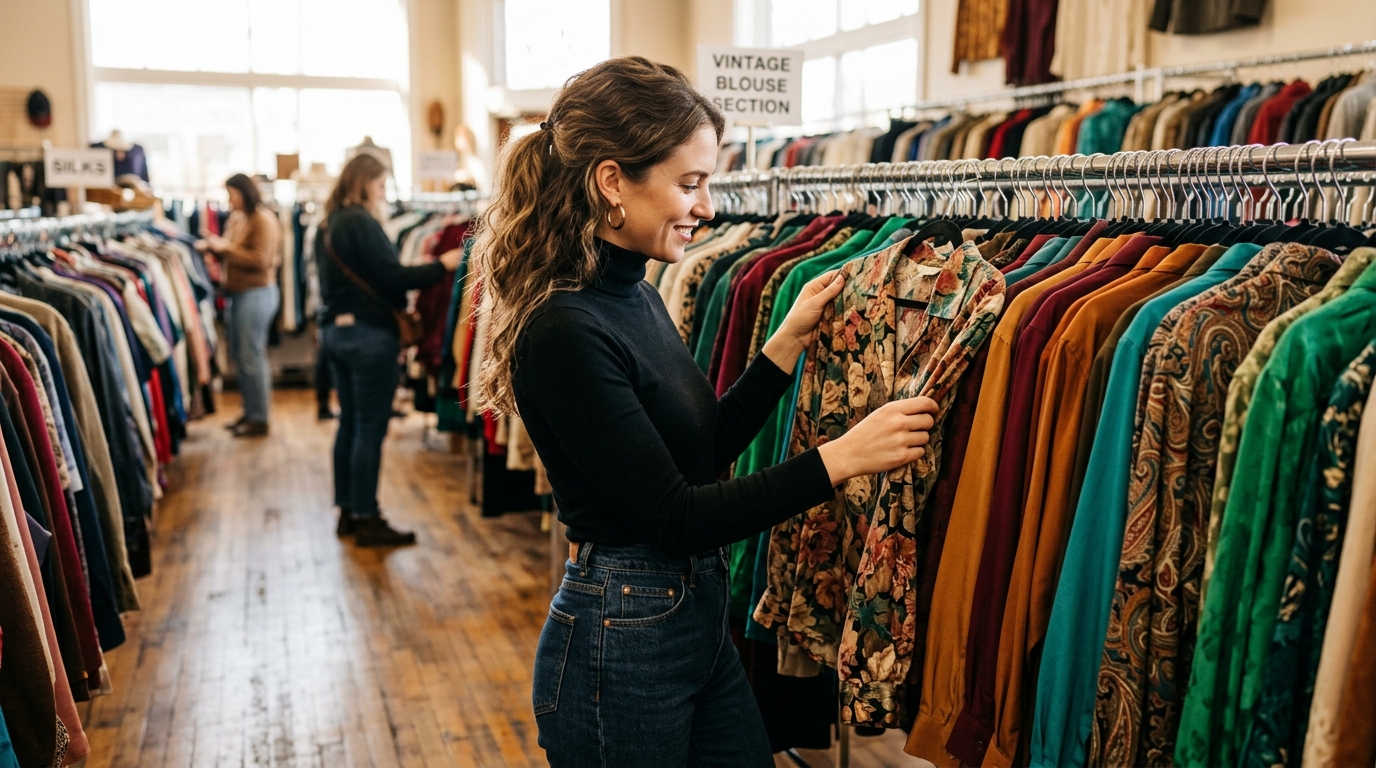
Here’s a category that took me a while to appreciate, and I’m genuinely a little sad it took me so long: silk blouses. These are everywhere in thrift stores. Absolutely everywhere. Because at some point in the 1970s, 80s, and 90s, women were buying high-quality silk blouses from department stores, wearing them for a few years, and then donating them as fashion changed. What they left behind is a gold mine.
A real silk blouse — or even a good silk-blend — has this particular kind of luminosity that synthetic fabrics simply cannot replicate. It catches light differently. It drapes differently. It makes you look put-together even when you’re wearing it with the most casual outfit. I have worn a thrifted silk blouse with plain jeans and white sneakers and had people assume I’d just come from somewhere fancy. That’s the power of the fabric.
How to identify silk at the thrift store: Look at the tag first, obviously, but also do the hand test. Real silk feels almost cool to the touch and warms up quickly when you hold it. It’s incredibly smooth but has a subtle texture if you look closely. Polyester satin tries to imitate it but tends to feel warmer and slightly sticky. When in doubt, I do a quick rub test — rubbing silk between my fingers generates a little warmth because of the natural protein fibers. Poly doesn’t do that.
Once I bring a silk blouse home, my first step is always checking for any small pulls or snags, which are common in older silk. This is where a basic sewing kit has saved me countless times — a snag hook tool can pull errant threads back through the fabric in seconds. Then I steam it (carefully, with a cloth between the steamer and the fabric) and it looks brand new.
The colors I’ve had the most compliments on: deep jewel tones like burgundy and emerald, classic cream and ivory, and dusty rose. These tones look rich in silk in a way they never quite do in synthetic versions. If you walk past the blouse rack at a thrift store without stopping, you are genuinely leaving money on the table.
Statement Accessories That Nobody Else Is Wearing
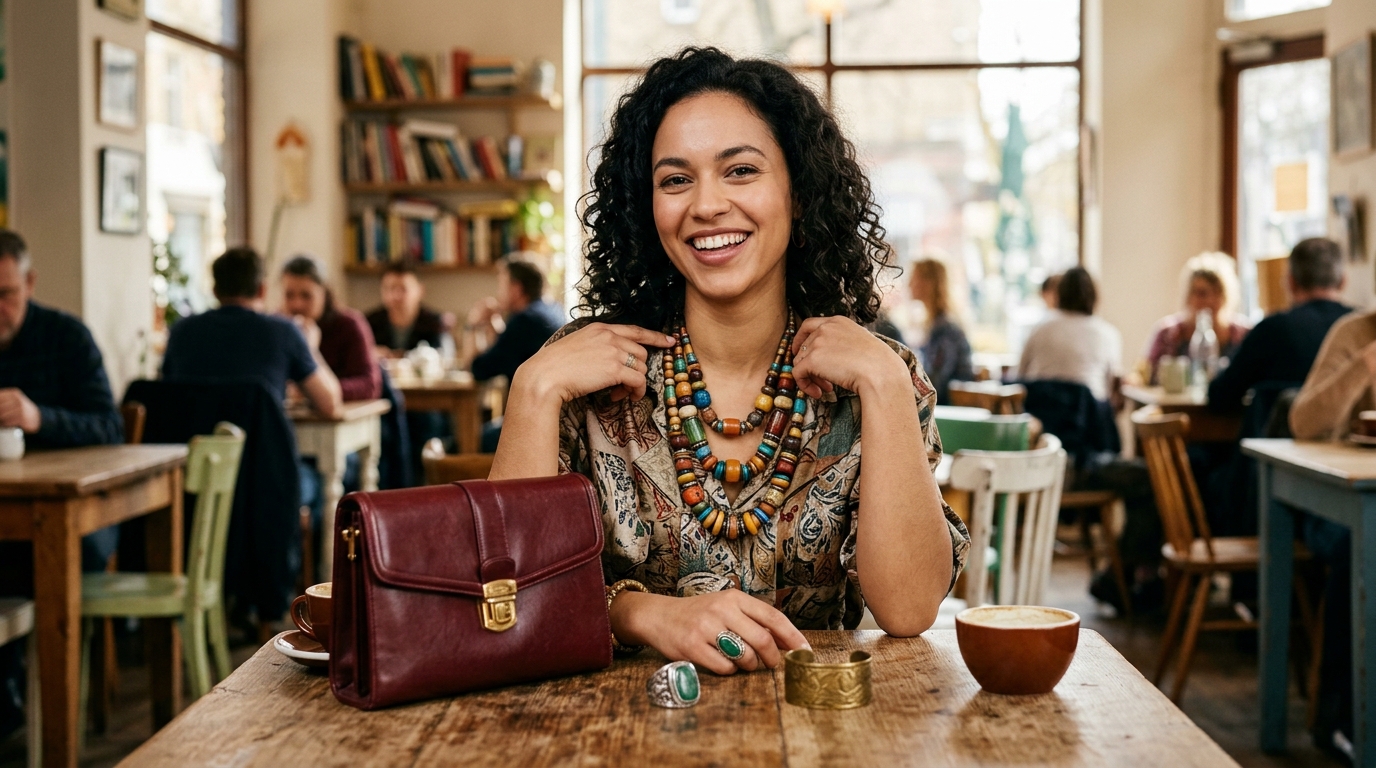
Fast fashion accessories are a trap. They’re cheap, which makes them feel like a deal, but everyone else who walked into that store also bought the same gold chain or the same rattan bag. You end up wearing the same thing as everyone else while paying for the privilege of being on trend for exactly one season.
Thrifted accessories are the opposite of that. When I find a vintage beaded necklace or a structured leather clutch from the 1980s, I know with complete certainty that nobody else at the party has one. That exclusivity — even if it was unintentional — is worth a lot in terms of the conversation it starts.
My most-complimented thrifted accessory of all time: a chunky amber-colored resin necklace I found for $2. It’s bold, it’s a statement, and it looks expensive in a way I still can’t explain. I’ve worn it with a white button-down, with a silk blouse (see above), and with a simple black turtleneck. Every time, without fail, someone says something.
“The best accessory you can wear is something nobody else has seen before. Thrift stores are where those pieces live.”
What to look for: belts with real metal hardware, leather bags (check the stitching and the corners — that’s where quality shows), silk scarves, vintage brooches, and heavy chain necklaces. Avoid anything with broken clasps, heavily tarnished metal that won’t clean up, or structural damage to leather bags like cracked or peeling coating. Surface dirt and scuffs can be fixed; those deeper issues usually can’t.
One thing I’ve started doing: keeping a lint roller in my bag specifically for fabric accessories like vintage scarves and small pouches. They pick up dust and fuzz before I wear something, making it look clean and intentional rather than like something I found on a rack (even if that’s exactly where I found it).
Knitwear and Sweaters With Actual Personality
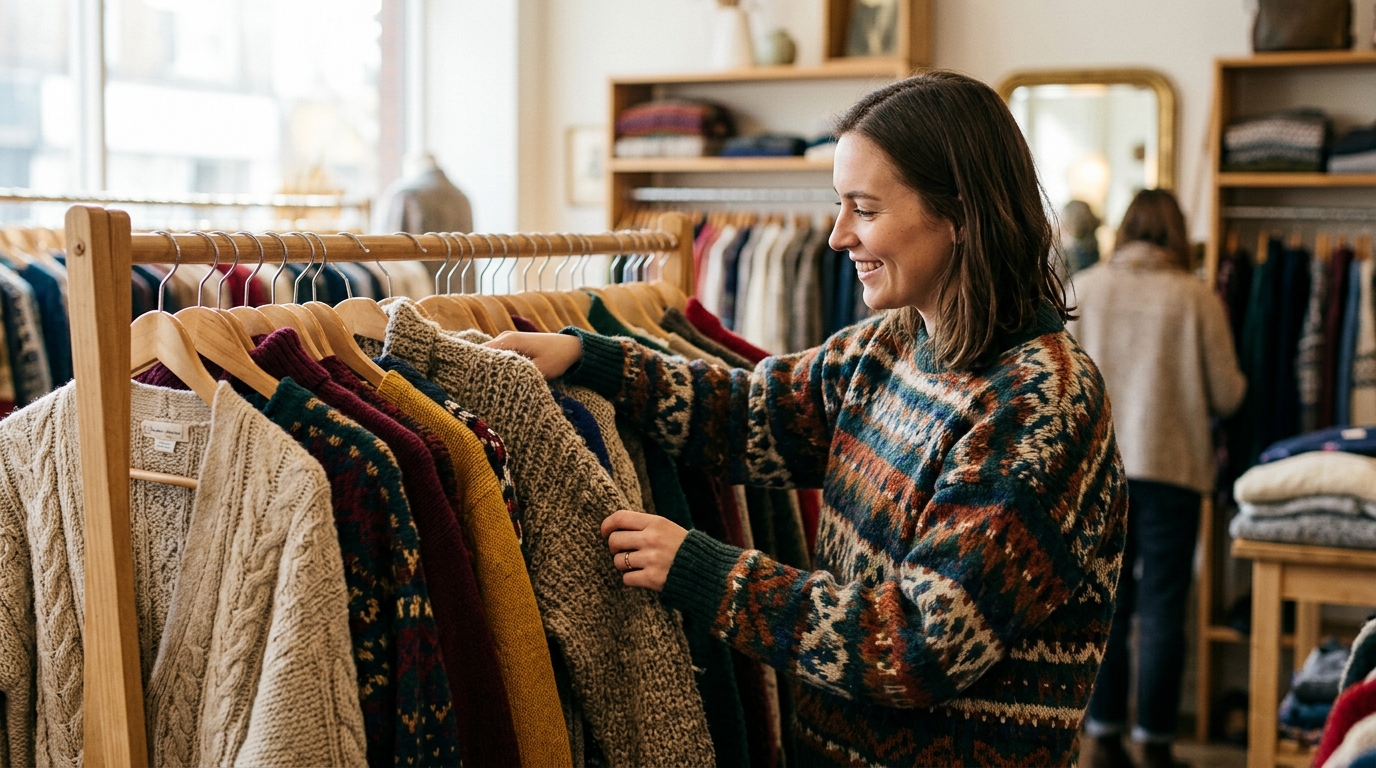
This section is my love letter to vintage knitwear, and I make no apologies for that. Modern sweaters — especially anything in the mid-price range — tend to pill within a few washes and lose their shape quickly. A vintage wool or cashmere sweater from a thrift store is often the opposite: already past its pilling phase, already broken in, and made from fibers that actually hold up over decades of wear.
The compliments I get on thrifted sweaters tend to be different from the ones I get on blazers or silk blouses. With those, people ask where I got them. With sweaters, people tend to say things like, “I love that color,” or “That looks so cozy,” or my personal favorite: “That sweater looks like it has a story.” It does. I just don’t always know what the story is, and I kind of love that.
The most important thing to check with thrifted knitwear: moth damage. Hold the sweater up to a light source and look for tiny holes, especially near the underarms and at the fold lines. Small holes that are isolated can sometimes be repaired, but if you see widespread damage, it’s a pass. Also check the cuffs and neckline for serious stretching — some of that can be corrected with careful washing and reshaping while damp, but badly distorted ribbing usually stays that way.
Colors I gravitate toward for maximum compliments: rich earth tones like rust, terracotta, olive, and chocolate brown. Oatmeal and cream if the texture is beautiful enough to carry the neutral. Occasionally a bold emerald or cobalt if the weight and knit structure are interesting. What I avoid: colors that are faded to the point of looking dingy, even if the fiber quality is good. A great sweater in a washed-out color just doesn’t land the same way.
I store my thrifted knitwear folded, never hung (hanging stretches the shoulders), and I keep them in garment bags with cedar blocks to protect against any remaining moth risk. Taking care of these pieces properly is what makes them last another few decades. That feels like the right kind of stewardship.
The Styling Secrets That Make Thrifted Pieces Look Intentional
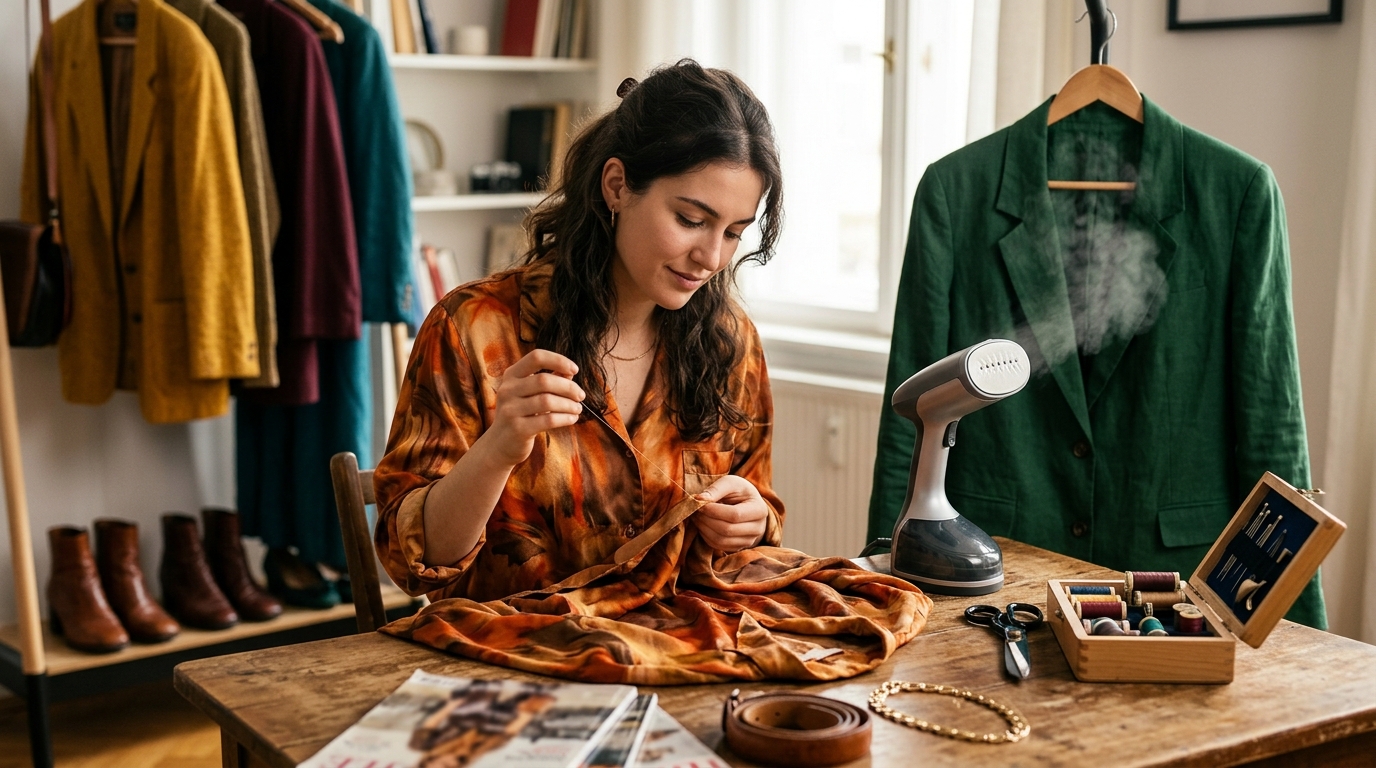
Finding the pieces is only half of the equation. The other half is presenting them in a way that looks curated rather than random. And this is something I’ve learned through genuine trial and error, including some outfits I put together in my early thrifting days that I now look back on and cringe at, lovingly.
The biggest lesson: a thrifted piece should never look like it’s trying to hide where it came from. If something is wrinkled, it looks thrifted. If it has loose threads or a faded collar, it looks thrifted. If it’s paired with other pieces that don’t speak to it in any way, it looks thrifted. The goal isn’t deception — it’s presentation. The same way a restaurant plates a simple dish beautifully, you’re plating your outfit so that the quality of the ingredients is obvious.
Practical things I always do: steam everything before wearing (seriously, the fabric steamer is the single most valuable tool in my thrifting toolkit), check for any small repairs needed and actually make them before they get worse, and style thrifted pieces with one or two things I know fit and look good so the whole outfit feels grounded.
I also pay attention to fit above everything else. A $200 blouse that doesn’t fit well will never get compliments. A $4 blazer that fits like it was made for you will get compliments every single time. Fit is the variable that matters most, and it’s also the most democratic thing about thrifting — you might find something that happens to fit your specific body perfectly, and that fit will do more for you than any designer label ever could.
One more thing: confidence. I know it sounds like something you’d read on a motivational poster, but it’s genuinely true that wearing something with assurance changes how it reads. When I stopped treating thrifted pieces as something to explain or justify, and started just wearing them the way I wear anything else I love, the compliments started coming more naturally. People respond to ease. They respond to someone who clearly just likes what they’re wearing.
If I could go back and tell my younger self one thing about fashion, it would be this: the stores with the best pieces aren’t the ones with the best marketing. They’re the ones that have been collecting the best of every decade for years, waiting for someone with a good eye to show up on a Tuesday afternoon and find something extraordinary for $6. That’s you. Go be that person. I promise the compliments will follow.






Leave a Reply