
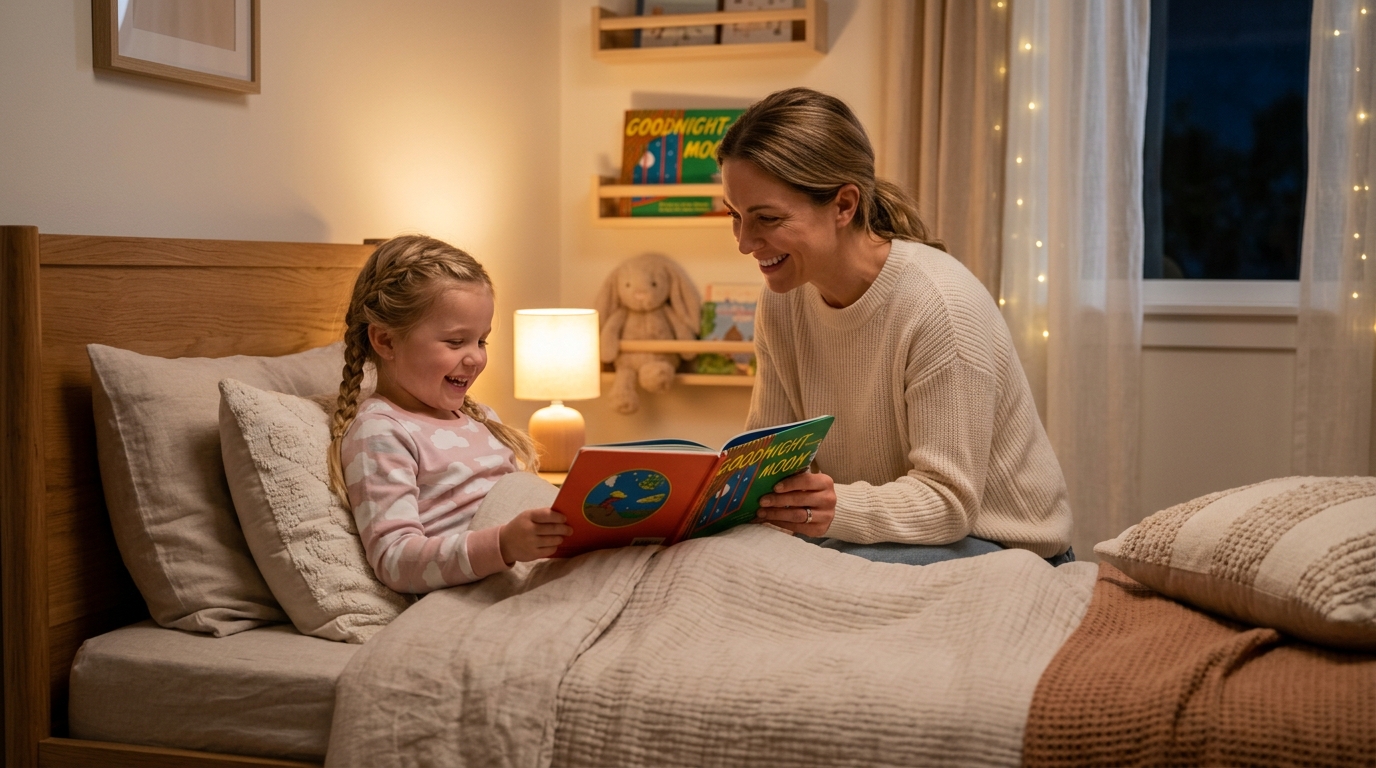
It was 9:47 PM on a Tuesday, and my son was on his fourth glass of water. Not because he was thirsty. Because he had discovered — with the precision of a tiny lawyer — that thirst was an airtight argument I could not legally deny. Before the water request came the “one more hug,” the mysterious stomachache, the sudden urgent need to tell me about something that happened at school three weeks ago, and a philosophical debate about whether our cat had feelings. I was exhausted. He was wired. And we had been doing this exact dance every single night for almost two years.
I remember sitting on the edge of his bed, staring at the ceiling, thinking: there has to be a better way. I had tried reward charts. I had tried consequences. I had tried the calm voice, the firm voice, the “I’m not angry, I’m just disappointed” voice. Nothing stuck. The bedtime power struggle had become such a fixture in our household that my husband and I started dreading evenings. The part of the day that should have been peaceful and connecting had turned into a nightly negotiation that left everyone frazzled.
What finally changed things wasn’t a punishment system or a parenting book (though a few did help). It was a shift in how I understood what was actually happening — and a handful of very practical, very specific changes that cost almost nothing to implement. I want to walk you through exactly what we did, because if your evenings look anything like mine used to, I genuinely believe this will help.
Understanding Why Bedtime Becomes a Battle in the First Place
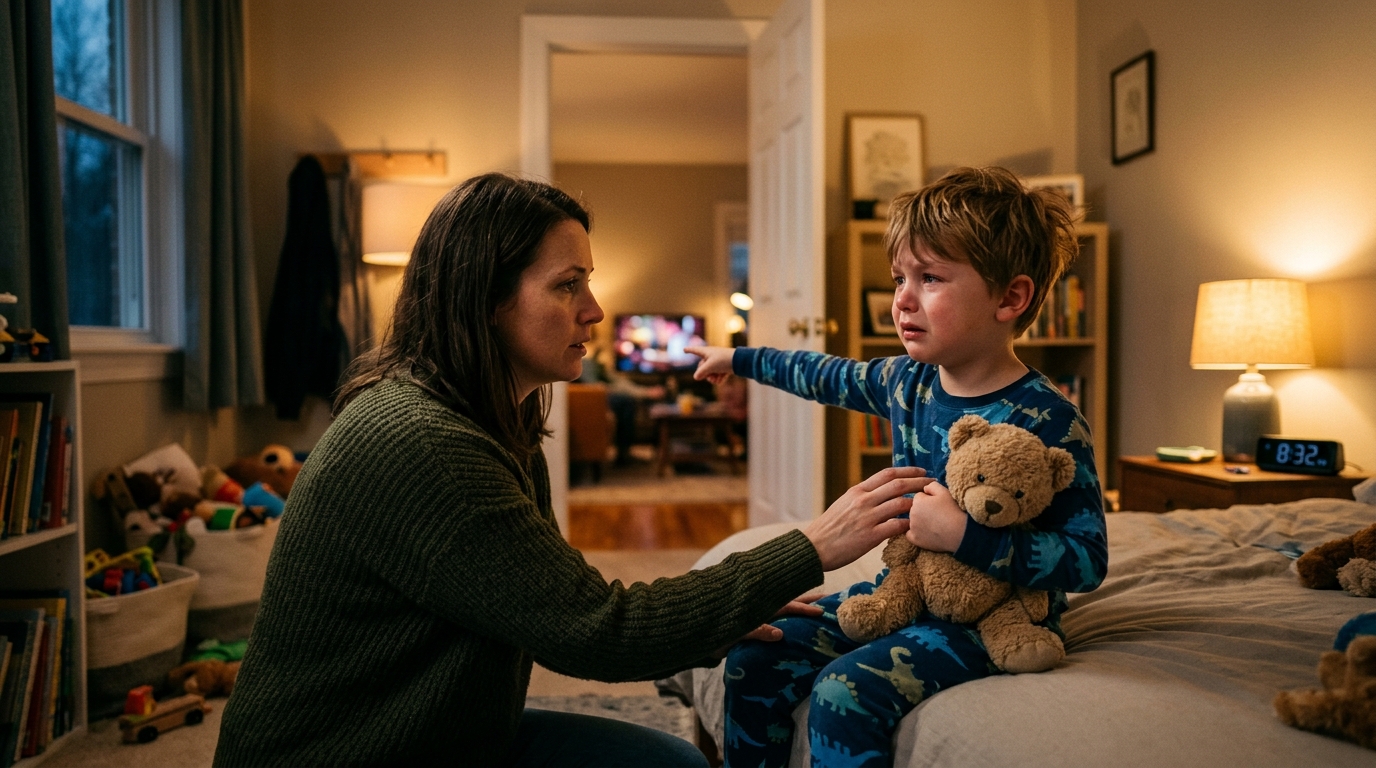
Here’s the thing nobody tells you: bedtime resistance isn’t just defiance. In most cases, it’s a combination of biological timing, emotional overflow, and — this one surprised me — a fear of missing out that is completely real to a child’s developing brain. When I stopped treating my son’s stalling as manipulation and started seeing it as communication, everything shifted.
Children, especially in the 4–10 age range, have a circadian rhythm that often runs slightly later than we’d like. Couple that with the overstimulation of screens, after-school activities, and the general noise of family life, and you’ve got a kid whose nervous system is genuinely not ready to power down at 7:30 PM — no matter how tired their body actually is.
I also learned that transitions are hard for kids. The shift from “active family time” to “alone in a dark room” is actually quite significant emotionally. Think about it from their perspective: everyone they love is still awake, presumably doing fun things, and they’re being sent off to a room by themselves. Of course there’s resistance.
Once I understood this, I stopped treating bedtime like a finish line I needed to drag him across and started thinking of it as a transition I needed to help him through. That reframe alone was worth more than any reward chart.
“Children don’t misbehave — they communicate in the only language they have available. Bedtime resistance is often just a child saying: I need more connection, more calm, more help winding down.”
I also started paying attention to what was happening in the hour before bed. Screen time, rough play, even exciting conversations — all of it was keeping his cortisol elevated right when it needed to be dropping. The battle wasn’t starting at 8 PM. It was starting at 6:30 PM, and I hadn’t noticed.
Do you recognize this pattern in your own home? Because once you see it, you genuinely cannot unsee it — and that’s where the real changes start.
The “Wind-Down Window”: Creating a Buffer Zone Before Bed
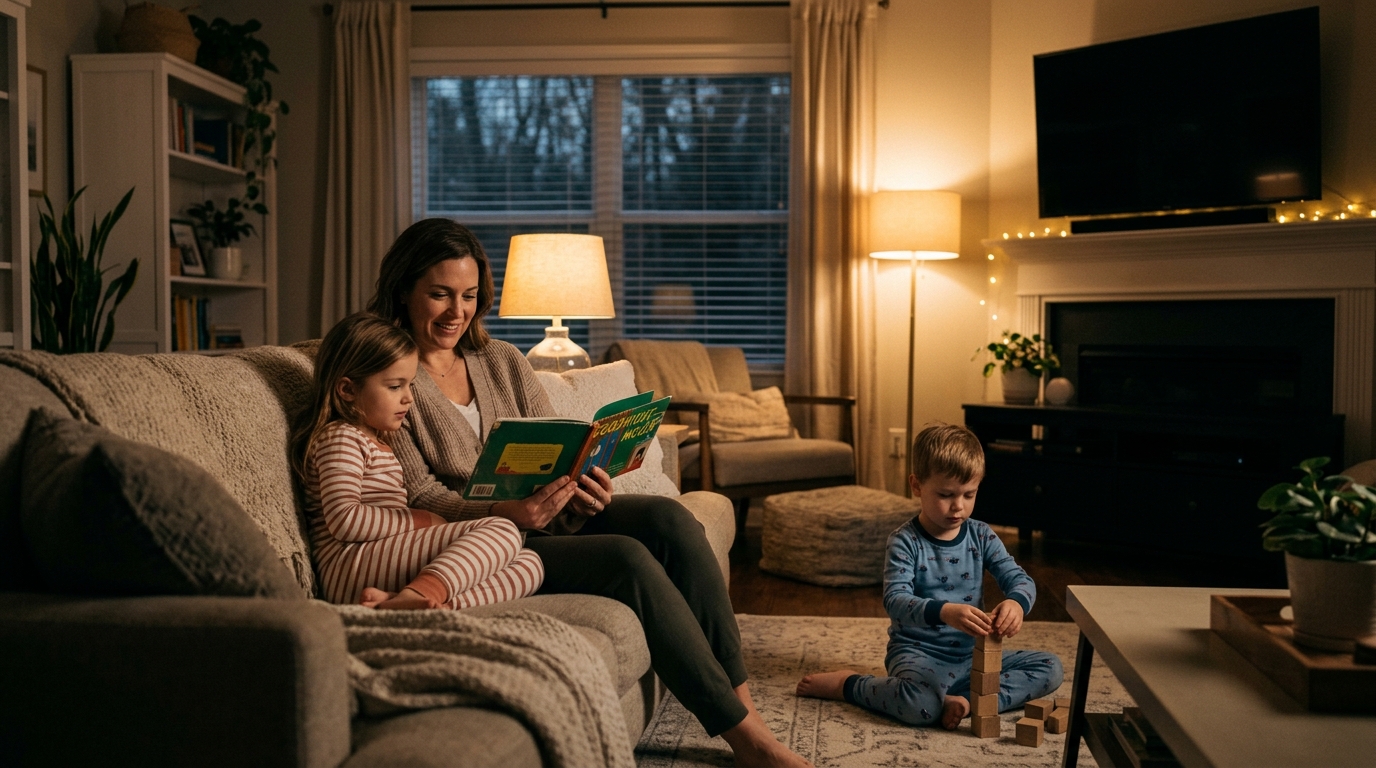
The single most impactful change we made was creating what I started calling the Wind-Down Window — a 45-to-60-minute period before lights out where we intentionally lowered the stimulation in our home. This sounds simple. It is genuinely harder than it sounds, and also more transformative than I ever expected.
Here’s what the Wind-Down Window looks like for us: screens off at least 45 minutes before bed (yes, including mine — kids notice everything), lights dimmed throughout the house, voices quieter, activities slower. We switched from overhead lighting to lamps and added a soft amber night light in his room that we turn on during this window. That small visual cue — the warm glow appearing — became a signal his brain learned to associate with “it’s almost time to sleep.”
During this time, we do calm things together. Puzzles. Drawing. Reading. Sometimes just sitting on the couch talking quietly. The key is that the energy in the room shifts, and kids are incredibly responsive to ambient energy. When I’m frantic and rushing, he’s frantic. When I slow down deliberately, he follows.
I also started running a white noise machine in his room during this window. This did two things: it masked the sounds of household activity (so he couldn’t hear the TV or us talking and feel like he was missing out), and it created another consistent sensory cue that sleep was approaching. Within two weeks, I noticed he would actually walk to his room voluntarily when the white noise came on. Pavlov’s bedtime, essentially.
Practical tip: Set a recurring alarm on your phone labeled “Wind-Down Starts.” It feels silly, but having an external reminder removes the mental load of tracking time — and it means the transition doesn’t feel like it’s your idea. “Oh, that’s the wind-down alarm” is somehow less argumentative than “okay, screens off now.”
- Screens off 45–60 minutes before target sleep time
- Dim lighting throughout the house
- Lower voices and activity levels
- Introduce a consistent sensory cue (night light, white noise, specific music)
- Engage in calm, connected activities together
The resistance doesn’t disappear overnight (pun intended). But within a week or two of consistency, you’ll start to see the edges soften. And that’s when you know the next piece matters even more.
Building a Routine That Your Child Owns (Not You)
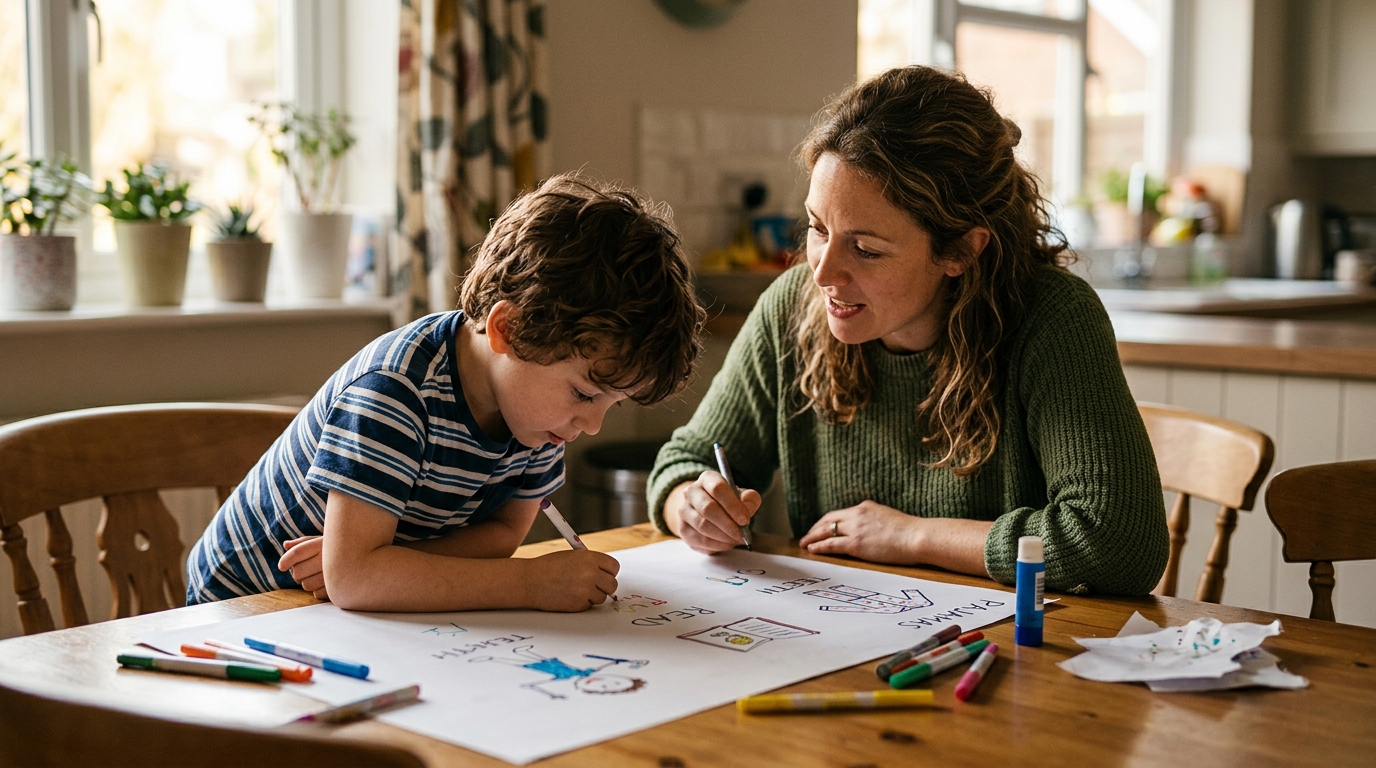
Here’s the part that changed the dynamic more than anything else: I let my son help design the routine. This felt counterintuitive. He’s seven. What does he know about sleep hygiene? But it turns out he knew exactly what he needed — he just needed to be asked.
One Saturday morning, I sat down with him and a piece of paper and said: “Hey, bedtime has been really hard lately. I think we need a new plan. Can you help me figure out what would make it easier?” He looked at me like I’d offered him a pony. And then he got serious, because kids take being consulted incredibly seriously.
His list included: two books (not one), a special handshake, a “feelings check-in” where he got to tell me one good thing and one hard thing from his day, and — his crowning request — a little flashlight he could keep in bed for “emergencies.” We negotiated the flashlight (agreed, but only for five minutes after lights out). Everything else, I said yes to.
Then we wrote the routine on a card and posted it on his wall. Not as a rule imposed by me — as a plan that was his. The difference was immediate and almost comical. When I tried to skip the handshake one night because I was tired, he insisted on it. He had become the enforcer of the routine. That is the goal.
The feelings check-in turned out to be the most valuable part of the whole thing. So many of his stalling behaviors, I realized, were attempts to get connection — to be seen and heard before the long dark stretch of night. When I built that connection in intentionally, the need for it to come out sideways disappeared.
This also works because children have a deep need for autonomy and predictability. A routine that they helped create satisfies both. They know what’s coming, and they feel ownership over it. That combination is powerful beyond what I can fully explain.
“When children feel heard in the design of the routine, they stop fighting the routine. You go from enforcer to teammate — and that changes everything.”
If your child is old enough to negotiate (and trust me, they all are), try this conversation. You might be surprised what they tell you they actually need.
The Reading Ritual: Why This One Thing Earns Back Your Evenings
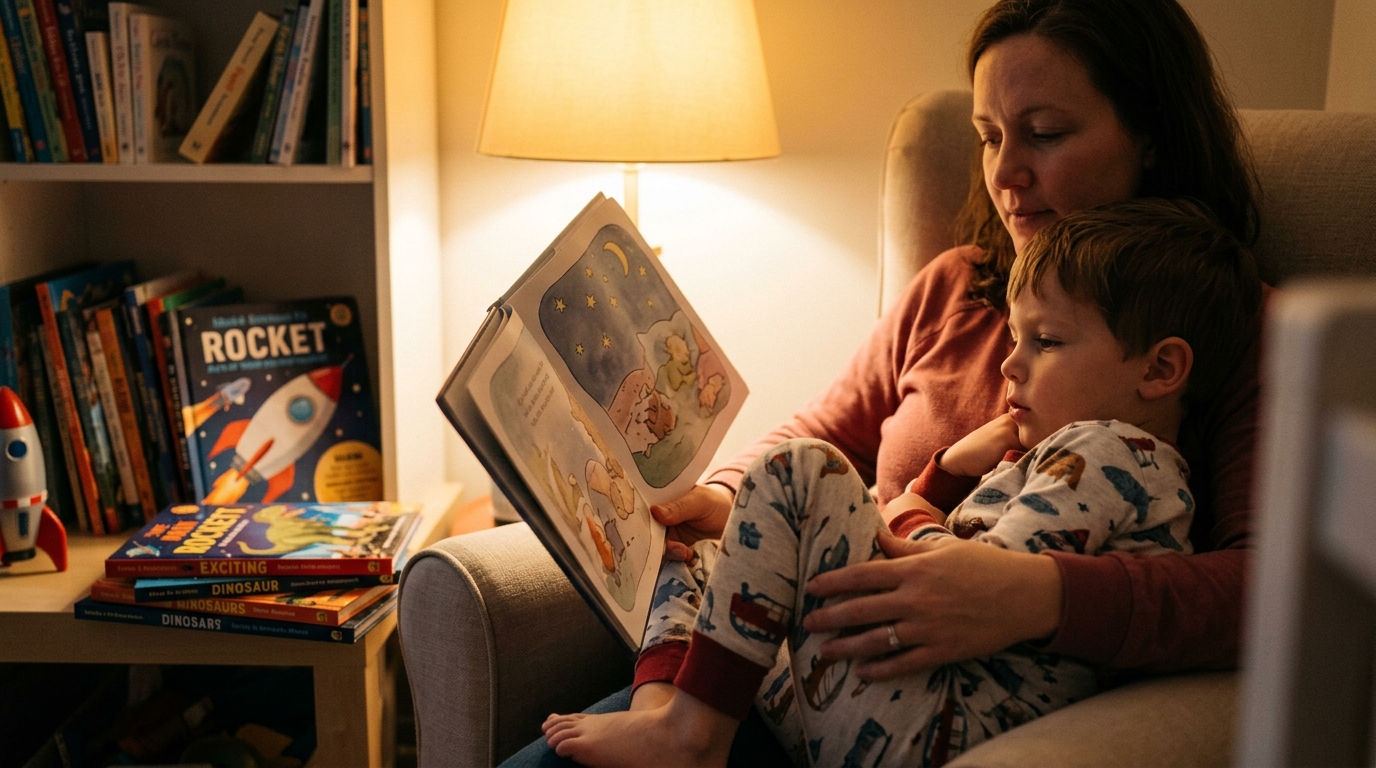
I know, I know — everyone says read to your kids. But I want to make a more specific argument here, because reading at bedtime isn’t just about literacy or bonding (though it’s both of those things). It’s a physiological wind-down mechanism that works remarkably well, and the specific books you choose matter more than you’d think.
We went through a phase where my son was obsessed with books about rockets and dinosaurs — factual, exciting stuff. Great books. Terrible bedtime books, because they’d get him animated and asking questions and suddenly very much not sleepy. When I switched to slower, more atmospheric stories — quieter narratives, dreamlike language, gentle resolutions — the difference in how he settled was noticeable within nights.
Some of our favorites have been the classic picture books with gentle, repetitive language (even for older kids, these work as calming tools), and a few specifically designed children’s sleep books with calming narratives. One of them actually walks through a simple body-scan relaxation in narrative form, and my son started doing it himself without being prompted. That book alone was worth its weight in gold.
For older kids who want to read independently, giving them a clip-on reading light and a “you can read for 20 minutes after lights out” policy does something magical: it makes bedtime feel like a privilege, not a punishment. The power struggle flips entirely. Now he wants to be in bed, because bed is where the reading happens.
- Choose books with slower pacing and gentler language for bedtime specifically
- Read in a calm, slightly slower voice than your normal speaking pace
- Let the child choose between two options (not unlimited choices — that’s overstimulating)
- If they’re old enough, give them independent reading time after as a “treat”
- Use this time for connection, not performance — it doesn’t have to be animated
Reading also naturally bookmarks the end of the day. There’s a “once upon a time” quality to it — a sense of closure, of wrapping up. When the book ends, the day ends. That psychological closure matters more than we give it credit for.
But here’s what surprised me most, and what I think is the most underrated piece of the whole puzzle…
The Five-Minute Rule That Stopped the Curtain Calls
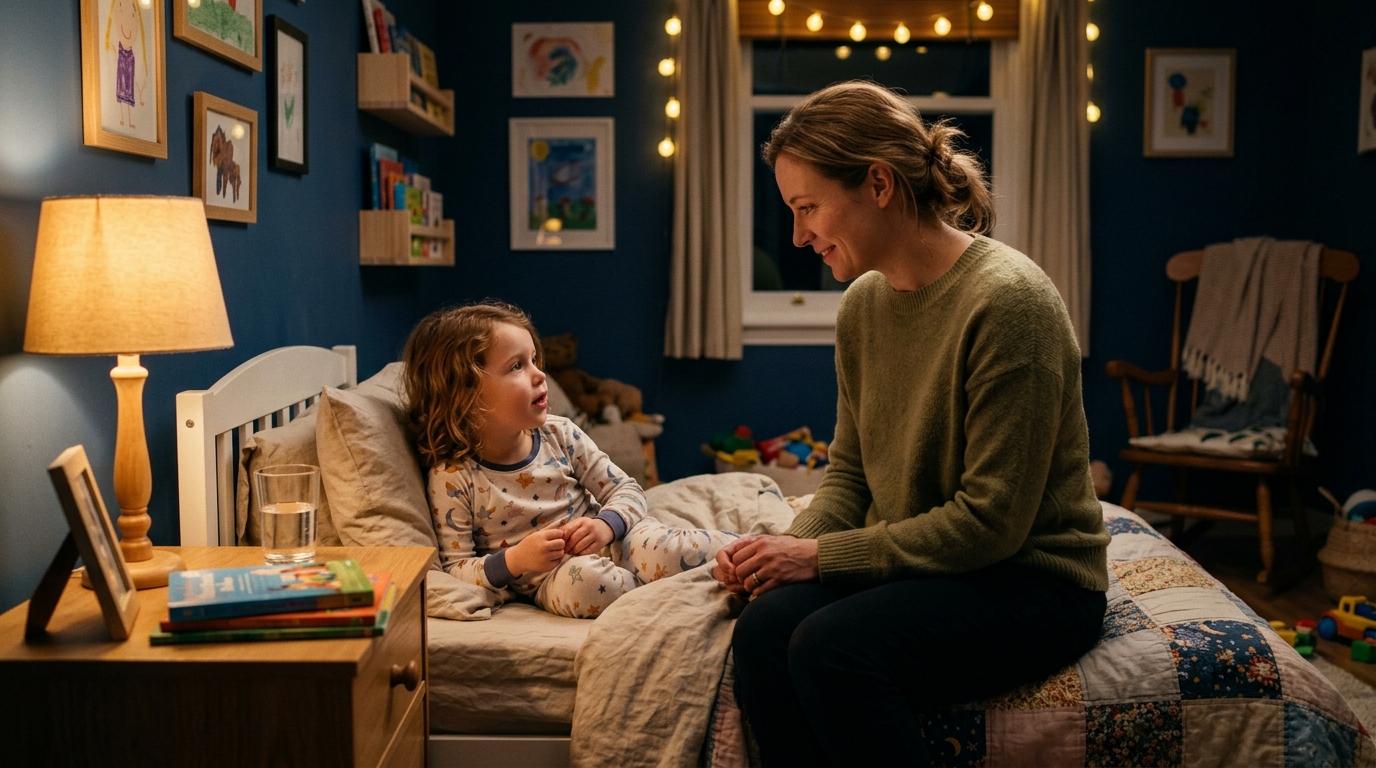
Even with a great routine in place, we still had curtain calls. That’s the technical parenting term for the parade of post-bedtime needs: water, hugs, “I forgot to tell you something,” the phantom stomachache, the questions that are suddenly urgent at 9 PM. Sound familiar?
What finally ended this was something I call the Five-Minute Rule, and it’s so simple I almost feel embarrassed it took me so long to figure out. Before I leave the room at the end of our routine, I ask: “Is there anything you need before I go? We have five minutes.”
Then I actually sit there, present and unhurried, for five minutes. No phone. No eye on the door. Just there. We talk, he asks whatever he needs to ask, we do another hug, we check that water is in reach, we confirm the night light is on. I address everything proactively. And then I say: “Okay, we used our five minutes. I love you, I’ll see you in the morning. If you need something, call once from your bed and I’ll come check.”
The number of curtain calls dropped by about 80% within the first week. Because here’s what was really happening: he was coming out of his room not because he needed water, but because he needed to know I was still there. He needed to recalibrate the connection before sleeping. When I gave him that proactively — intentionally — he stopped searching for it in the form of fake stomachaches.
The second piece of this was giving him permission to call for me once. Not unlimited times, but once. This is crucial: when kids feel like they have no recourse if something goes wrong, the anxiety of separation spikes. But when they know “I can always call once and Mom will come,” the anxiety doesn’t build the same way. They have a safety net, and knowing it’s there means they rarely need it.
Some nights I sit on the edge of the bed for our five minutes and he barely says anything. He just wants me there. And I’ve learned to recognize that for what it is — not manipulation, just love. A kid who loves you wants more of you. That’s not a problem to solve. It’s a thing to honor while also holding a reasonable boundary.
The goal is never to eliminate connection — it’s to give it a shape that works for everyone.
Six Months Later: What Our Evenings Look Like Now
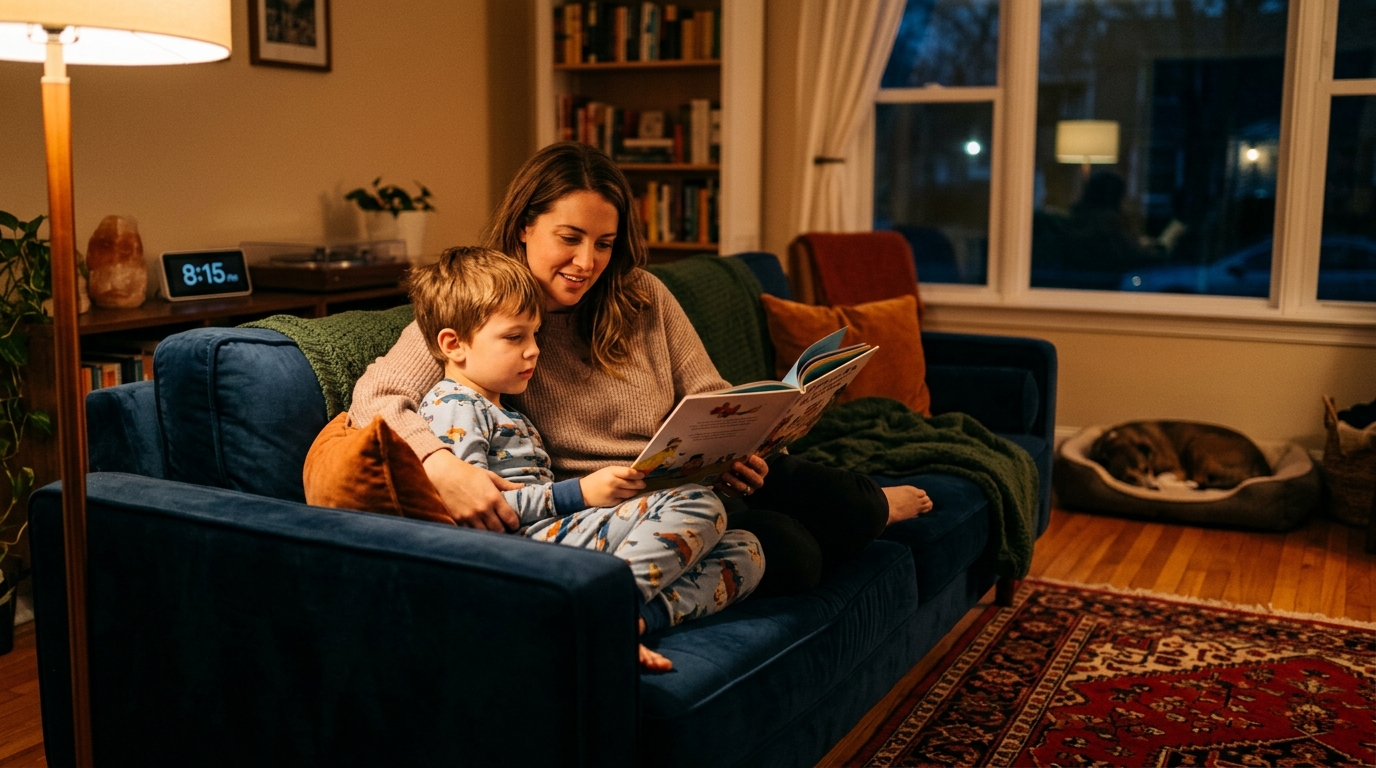
I want to be honest with you: this wasn’t a one-week fix. Building a real routine took about three weeks of consistency before it felt natural, and there were nights in there that were still hard. Sick nights, overtired nights, nights when the day had been difficult and emotional. Routines aren’t magic spells. They’re infrastructure — and infrastructure takes time to build.
But six months in? Our evenings are genuinely peaceful. My son goes to bed at 8:30 PM on school nights, usually asleep by 9:00, with almost no resistance. We spend about 30–35 minutes on the full routine — Wind-Down Window, bath, jammies, feelings check-in, two books, handshake, five minutes, lights out. It’s become the best part of my day, and I say that as someone who used to dread it.
A few things I’d do differently if I were starting over:
- I’d start the Wind-Down Window earlier. We started at 7:45 PM for an 8:30 bedtime. I’d now start at 7:00 PM. The extra 45 minutes of decompression makes everything smoother.
- I’d invest in the environment sooner. The night light and white noise machine felt like optional add-ons at first. They were actually essential tools, not extras.
- I’d drop my expectations of perfection. Some nights the routine takes 50 minutes. Some nights there are still tears. That’s okay. Consistency over time matters more than perfect execution every night.
- I’d have the “design the routine” conversation sooner. I waited months before asking my son to help. The day I did was the day things actually changed.
The nightly power struggle, I now understand, was never really about bedtime. It was about connection, control, and transition — three things that are hard for small humans who are still figuring out how to exist in the world. When I addressed those underlying needs directly, the behavior that had been driving me crazy simply… stopped.
If you’re in the thick of it right now, I want you to know: it gets better. Not because your kid magically becomes compliant, but because you find a rhythm together that actually works for both of you. And the evenings you reclaim on the other side of that — quiet, connected, calm — are some of the best ones you’ll have.
Start with the Wind-Down Window tonight. Just that. Dim the lights 45 minutes before bed and see what happens. You don’t have to overhaul everything at once. One small shift, consistently applied, is how this whole thing starts to turn.
And if nothing else — the next time your kid asks for a fourth glass of water at 9:47 PM, know that somewhere out there, I see you completely.






Leave a Reply