
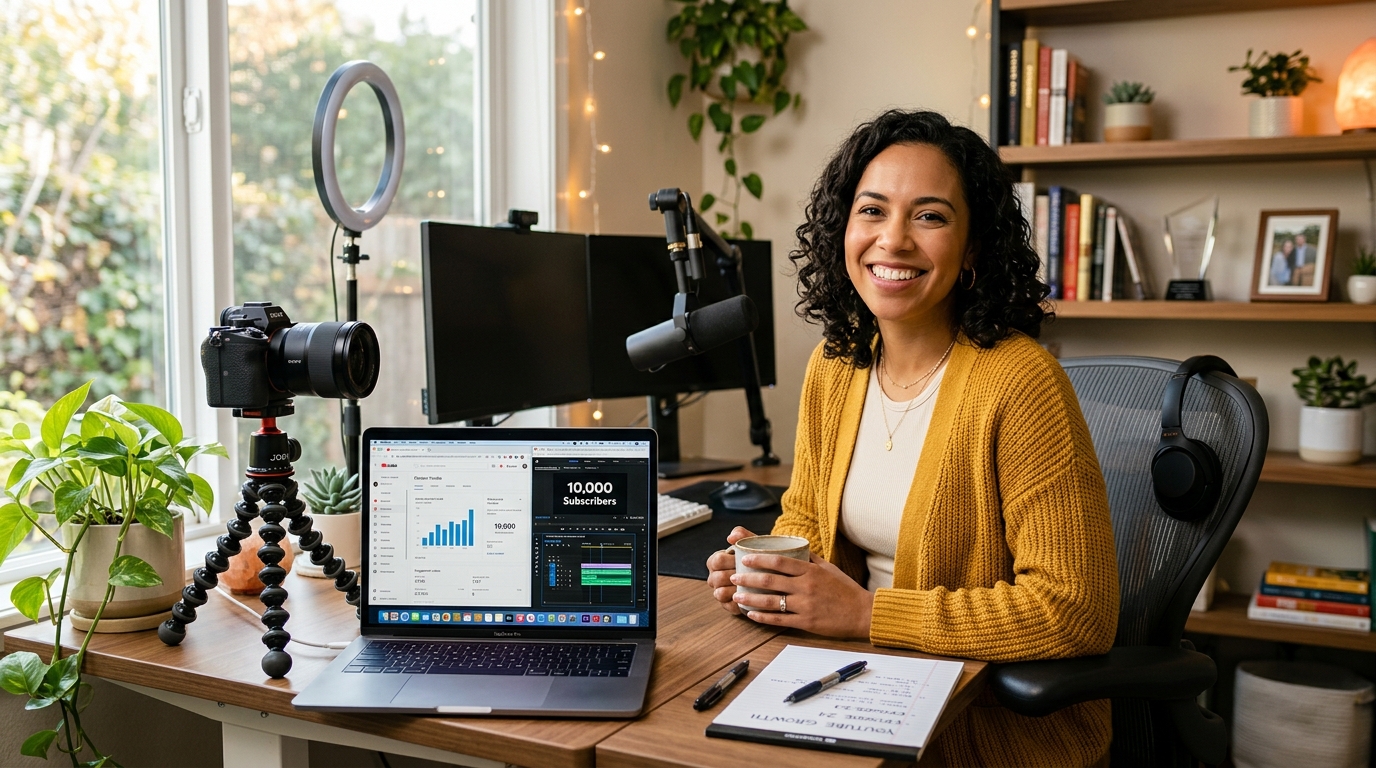
It was 11:47 PM on a Tuesday when I hit publish on my very first YouTube video. I had spent three weeks filming it in my cramped apartment using my phone propped against a stack of books, and the audio sounded like I was recording inside a tin can. I told exactly four people about it — my wife, my best friend, and two coworkers who were too polite to say it was bad. By the end of that first week, it had 23 views. Twelve of them were me.
That was two and a half years ago. Today, my channel sits at just over 11,000 subscribers, generates a modest but real side income, and has turned into something I genuinely look forward to after long days at my day job in project management. I’m not a full-time creator. I’m not quitting my job anytime soon. But I built something from absolutely nothing while working 45+ hours a week, and I want to tell you exactly how I did it — including the embarrassing mistakes, the turning points, and the one thing I wish someone had told me at the start.
This isn’t a story about overnight success. It’s a story about 11 PM filming sessions, slow growth that felt invisible for months, and a stubbornness that eventually paid off. If you’re thinking about starting a channel — or you already have one and it feels like you’re shouting into a void — this is for you.
Why Most People Quit Before the Algorithm Even Notices Them
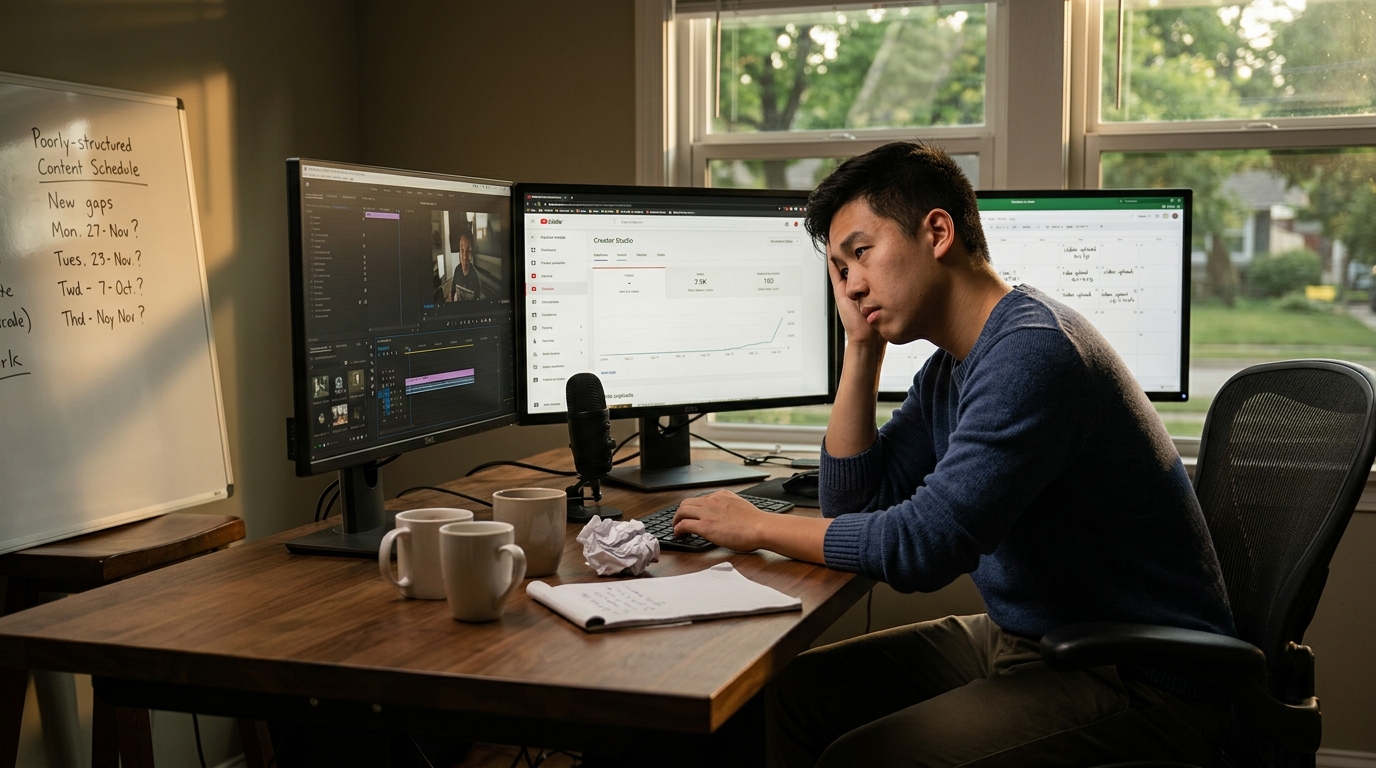
Here’s the uncomfortable truth I had to learn the hard way: YouTube doesn’t reward talent. It rewards consistency over time. I spent the first four months uploading sporadically — one video, then nothing for three weeks, then two videos in a row, then another gap. My subscriber count hovered between 30 and 80 for what felt like an eternity. I almost quit twice.
What I didn’t understand then is that YouTube’s recommendation algorithm essentially needs a body of work before it can figure out who you are and who to show you to. It’s pattern recognition at scale. If you upload once a month with no consistency, the algorithm has nothing to learn from. You’re invisible.
The shift happened when I committed to a schedule I could actually keep — one video every ten days. Not weekly, because I knew I couldn’t sustain that with my job. Not biweekly, because that felt too slow. Every ten days was achievable without burning me out. Sustainable beats ambitious every single time.
I also had to stop comparing my channel at month two to other creators at year three. That comparison is poison. Instead, I started tracking my own metrics week over week. Even tiny progress — 5 new subscribers, a video that got 200 views instead of my usual 80 — started to feel meaningful when I stopped looking sideways.
If you’re in those early months right now, I want you to hear this clearly: the first 100 subscribers are the hardest thing you will ever do on this platform. The jump from 100 to 1,000 is faster. From 1,000 to 10,000 is faster still. The algorithm rewards momentum, and momentum takes time to build. The people who make it are simply the ones who didn’t quit before it clicked.
“The first 100 subscribers teach you everything. The next 9,900 prove you learned it.”
But none of that consistency matters if you’re not also doing something that very few new creators bother to do — and it has nothing to do with production quality.
The Research Habit That Changed Everything for My Growth

At around month five, still stuck under 200 subscribers, I stumbled onto a video about keyword research for YouTube. I had always treated video topics like diary entries — I made what I felt like making that week. The idea that I should research what people were actually searching for felt weirdly corporate to me. It felt like selling out.
Reader, I was an idiot.
I spent one weekend going deep on YouTube SEO. I learned how to use the search bar’s autocomplete to find real queries people were typing. I learned about search volume, about competition, about how to find the sweet spot between “people are searching for this” and “not every big channel has made this video yet.” I rewrote my next three video titles and thumbnails using what I’d learned.
Those three videos became my three best performers. One of them still brings in new subscribers every week, more than a year after I published it. That is the compounding power of searchable content — it works for you long after you’ve moved on.
My process now looks like this:
- Start with a broad topic I know well from my niche
- Type it into YouTube’s search bar and note every autocomplete suggestion
- Check the top results — if they’re all from channels with 500K+ subscribers, I move on
- Look for an angle with under-served search intent
- Write my title to match the search query as closely as possible while still sounding human
This approach doesn’t mean you should only make search-driven content. Some of my most meaningful videos were passion projects that didn’t rank for anything. But they didn’t grow the channel either. Search-driven videos bring in new viewers; passion videos convert them into loyal subscribers. You need both, but when you’re small, search-driven content is your growth engine.
Now, here’s where I have to be honest about something that might surprise you — because good research means nothing if what you film looks and sounds amateurish. And fixing that doesn’t have to cost a fortune.
Upgrading My Setup Without Spending Like a Full-Time Creator
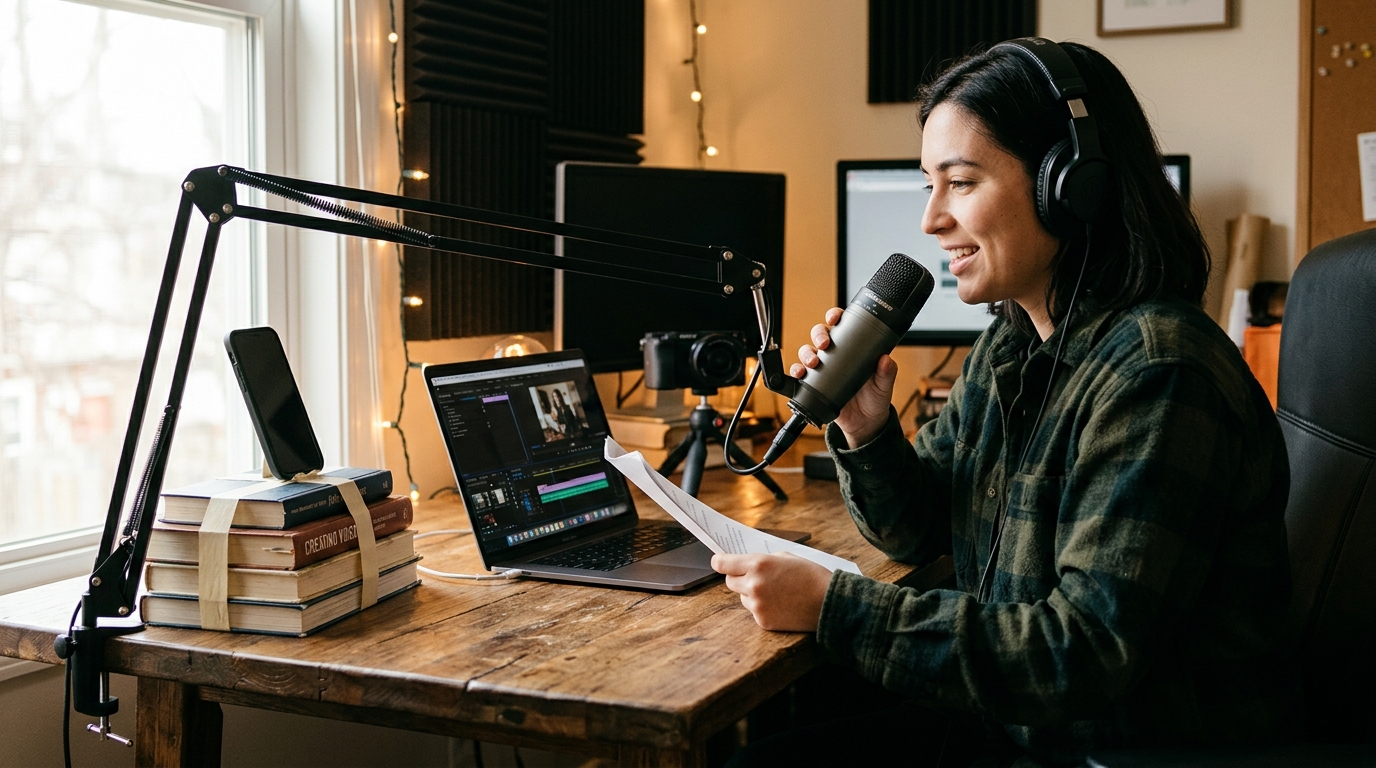
My phone-propped-on-books era lasted about six months. The video quality was passable, but the audio was genuinely bad — and bad audio is the one thing viewers will not tolerate. You can get away with mediocre visuals. Terrible audio makes people click away within 30 seconds.
My first real investment was a decent microphone. I picked up a USB condenser mic for around $100, and the difference in my videos was immediate and dramatic. Viewers noticed. Comments about audio quality went from complaints to compliments almost overnight. If you take one piece of gear advice from this entire article, it’s this: fix your audio before you fix anything else.
After that, I upgraded incrementally. I moved from my phone to a dedicated mirrorless camera, which gave me that slightly blurred background look that signals “this person takes their content seriously” to new viewers. Was it strictly necessary? Probably not. Did it make me more confident on camera, which made my delivery better, which improved watch time? Absolutely.
Lighting was my third investment, and honestly it might have been the highest ROI of all three. A simple key light positioned correctly can make a $300 camera look like a $2,000 setup. I film in my home office after dark, and without good lighting I’d look like I was shooting from a cave.
Here’s my full “minimum viable setup” recommendation if you’re starting out:
- Audio: A decent USB microphone — this is non-negotiable
- Camera: Your phone on a tripod is genuinely fine to start — upgrade when audio is solved
- Lighting: One good key light, positioned at 45 degrees to your face
- Backdrop: A clean, uncluttered wall beats any virtual background
The total I spent in my first year on gear was under $600. I know creators spending $5,000 on equipment whose channels never took off. Gear is a tool, not a shortcut. The best camera is the one you actually use consistently.
How I Filmed and Edited Around a Full-Time Job Without Losing My Mind
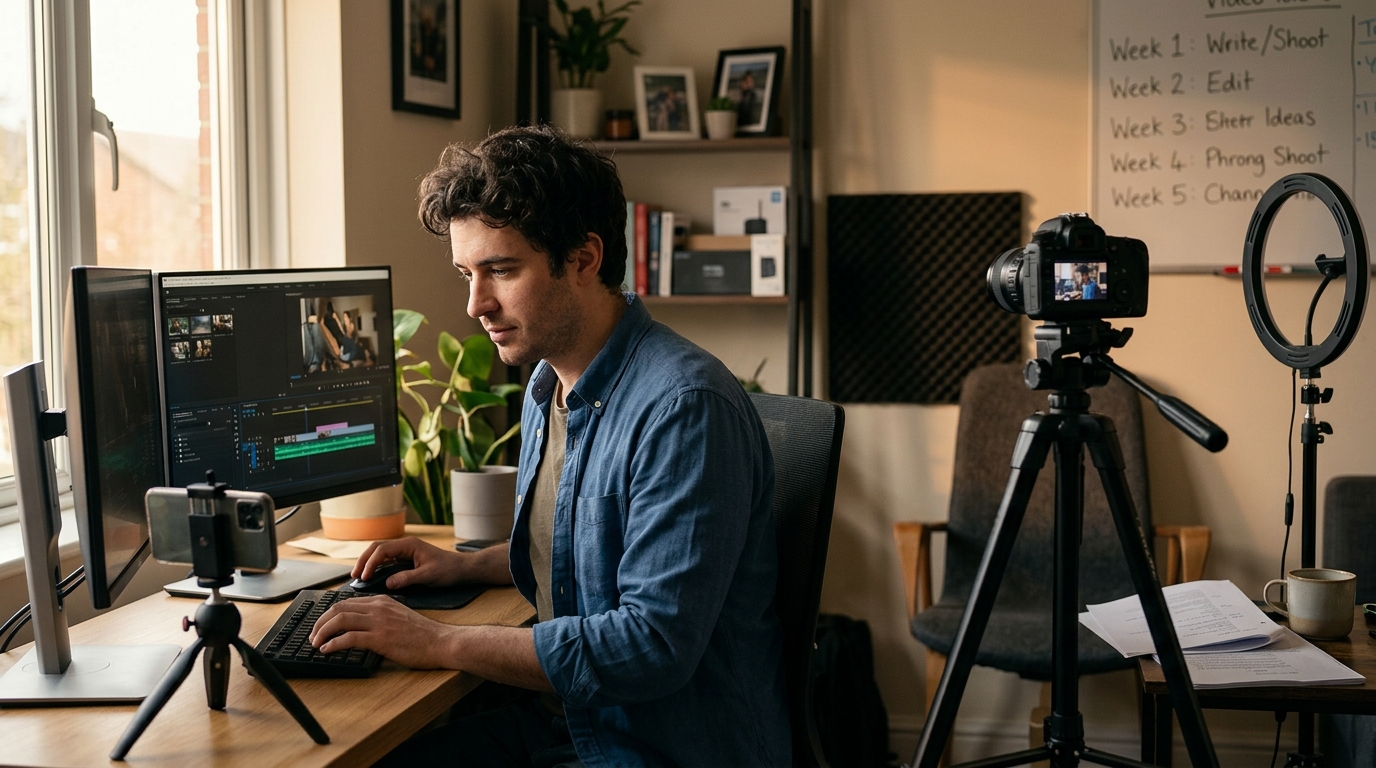
This is the section I wish existed when I started, because the time management piece is what actually makes or breaks a part-time creator. Every system I tried in the first year was unsustainable. I’d batch film on Saturdays, then spend all of Sunday editing, then be exhausted all week, then film again the next Saturday. I burned out completely twice before I found something that worked.
The breakthrough was separating filming from editing into different weeks.
Week one: I write the script (usually during lunch breaks — I keep a notes app open on my phone), film the video on Thursday or Friday evening after my daughter is asleep, and do nothing else. Week two: I edit in two or three 45-minute sessions spread across weekday evenings, then schedule the video for Thursday morning.
This means I’m always one video ahead, which removes the pressure entirely. Pressure is the enemy of good content. When you’re scrambling to publish something by tomorrow, you cut corners on the script, you rush the editing, and it shows.
On editing: I kept it deliberately simple for the first year. Cut the dead air, add a lower-third for my name at the start, color grade with a single preset, export. That’s it. I’ve watched creators spend eight hours editing a ten-minute video and wonder why they can’t maintain a schedule. Editing perfection is not the goal. Published and improving beats unpublished and perfect.
For audio post-processing, a good clip-on wireless mic can save you enormous editing time because you capture clean audio at the source rather than trying to fix it afterward. I switched to one for any video where I’m moving around, and it cut my audio editing time in half.
The final piece of my workflow that made everything sustainable: I batch my scripting. On the first Sunday of each month, I outline four to six video topics based on my research, write rough bullet-point scripts for all of them, and put them in a folder. When Thursday filming night comes around, I never have to ask “what am I making this week?” That decision is already made. And decision fatigue is real — eliminating it from your creative process is a superpower.
The Thumbnail and Title Lessons That Took Me Way Too Long to Learn
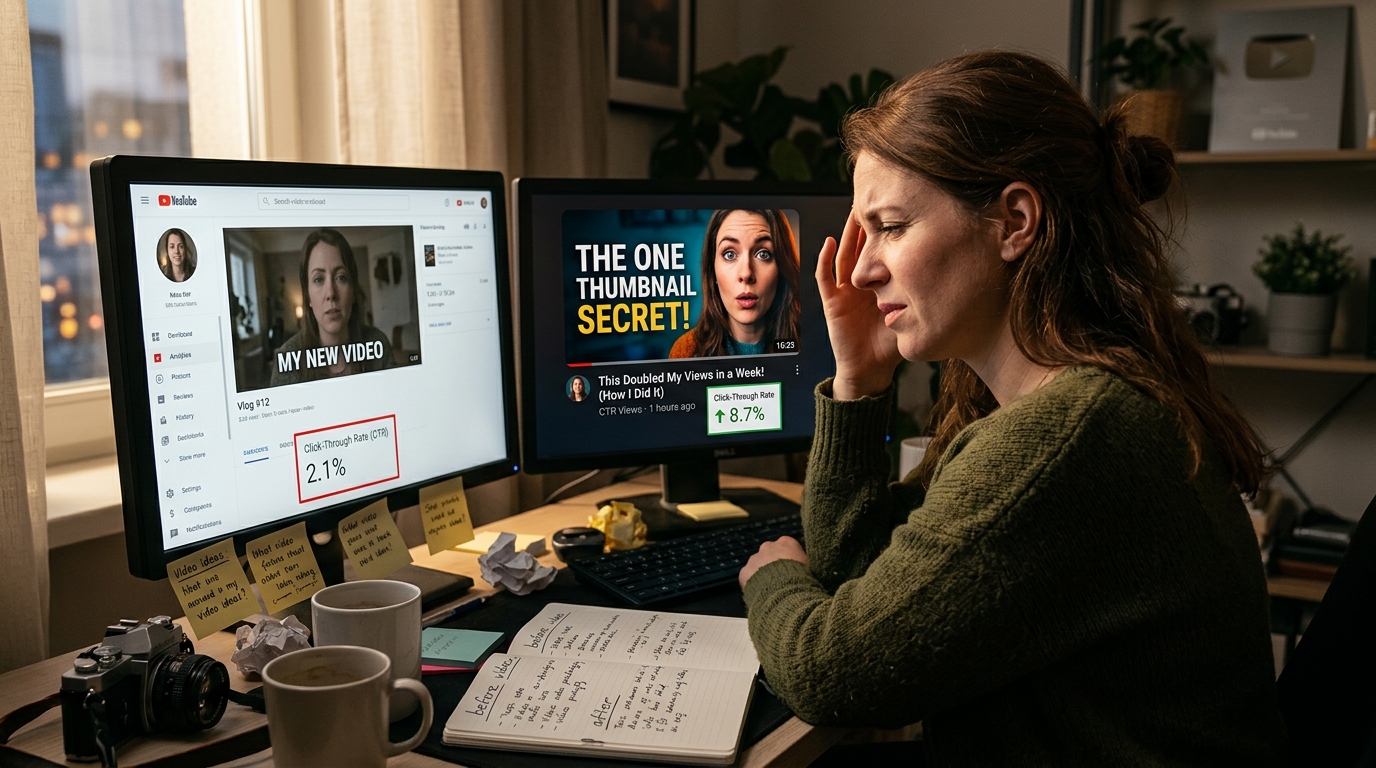
Nobody told me that a video’s thumbnail and title together are basically a billboard on a busy highway. You have about one second to catch someone scrolling. One second. After that, they’re gone.
For the first eight months, I treated thumbnails like an afterthought. I’d use a screenshot from the video with my channel name slapped on it and call it done. My click-through rate (CTR) — the percentage of people who see your thumbnail and actually click — was around 2%. Industry average is somewhere between 4% and 10% for healthy channels.
I spent one afternoon studying thumbnails from the ten most successful creators in my niche. I noticed patterns immediately:
- Faces that show clear, exaggerated emotion perform best
- Bold, minimal text — usually three to five words max
- High contrast between the subject and background
- A visual element that hints at the video’s payoff without giving it away
- Consistent branding so loyal viewers recognize your thumbnail instantly while scrolling
I redesigned all my existing thumbnails using a free design tool over one weekend. My CTR went from 2% to 5.8% within a month. Same videos. Same content. Just better thumbnails. That is one of the most powerful optimization levers available to you, and it costs nothing but time.
Titles follow a similar principle. The best YouTube titles either promise a specific result, create genuine curiosity, or combine both. “My YouTube Journey” is a bad title. “How I Got My First 1,000 YouTube Subscribers in 90 Days” is a good title. The difference is specificity and relevance to the viewer’s own goals.
A/B test your titles when you can. Put your real title in and watch the CTR for 48 hours. If it’s below 4%, change it. YouTube gives you this data for free in YouTube Studio — use it aggressively, especially in a video’s first week when the algorithm is deciding whether to push it further.
What 10K Actually Feels Like — And What I’d Do Differently

I hit 10,000 subscribers on a random Wednesday morning. I was in a meeting at work when I got the notification on my phone. I stepped out, looked at the number, and felt — honestly? — a little anticlimactic. Not because it wasn’t meaningful, but because by then I was already so focused on the next milestone that the current one almost snuck past me.
What 10K actually brought me, practically: a small but consistent monthly revenue from ad money, a handful of brand partnership inquiries (most of which I’ve turned down), and an audience of real people who occasionally send me messages saying my videos helped them. That last part never gets old.
What I’d do differently if I was starting over tomorrow:
- Fix audio on day one. I wasted six months with bad audio that was costing me subscribers I’ll never get back.
- Pick a niche and commit to it earlier. I spent the first three months making videos on three different topics before settling on one. Those scattered early videos confused the algorithm and confused potential subscribers.
- Study thumbnails and titles before publishing a single video. This is the highest-leverage skill in YouTube and nobody talks about it enough in beginner guides.
- Build the batch-ahead workflow from week one. The stress of creating without a buffer is real and unnecessary.
- Ask for comments explicitly. In your videos, ask your viewers a specific question and invite them to answer below. Comment velocity is a ranking signal. I didn’t understand this for almost a year.
The biggest thing I’d tell my past self, though, is simpler than any of that: your first 20 videos are practice, not content. Make them, publish them, learn from them, and don’t be precious about them. The creator you’ll be at video 50 is unrecognizable compared to the one who made video one. You can’t skip to video 50 — you have to make all the ones in between.
If you’re sitting on a channel idea right now, or you’re three videos in and feeling invisible, I want to leave you with this: the window for building an audience on YouTube is not closed. It never closes. But it does reward the people who start earlier rather than later, who stay consistent when growth feels impossible, and who treat it like a long game — because it is one.
Start tonight. Film something imperfect. Hit publish. That’s the only step that matters right now.






Leave a Reply