
Three years ago I sat in a crumbling cafe in southern Albania, sipping the best espresso I’d ever tasted, staring at a turquoise coastline that could rival anything in Greece. The Wi-Fi password was scribbled on a napkin, there wasn’t another tourist in sight, and my entire lunch — grilled fish, salad, homemade wine — cost me six euros. Six. I remember thinking, why does nobody talk about this place?
That trip changed the way I travel forever. I stopped Googling “best places to visit in Europe” and started asking locals, reading obscure travel forums at 2 a.m., and booking flights to cities I couldn’t pronounce. Some of those gambles flopped spectacularly. Most of them, though, handed me the kind of memories you can’t manufacture at an overbooked resort in Santorini.
So here’s my list — ten destinations that genuinely blew my mind, that most people still haven’t heard of, and that I’m half-reluctant to share because I selfishly want them to stay empty. But that’s not fair, is it? Good things deserve to be known.
1. Gjirokaster, Albania — A Stone City Frozen in Time

Albania keeps popping up on “next big thing” lists, yet most visitors stick to Tirana or the beaches near Saranda. Gjirokaster is different. It’s a UNESCO World Heritage town built almost entirely of stone — stone roofs, stone streets, stone walls thick enough to survive Ottoman sieges. Walking through the old bazaar feels like stepping into a black-and-white photograph that someone colorized with wildflowers.
I stayed in a converted Ottoman house for about twenty dollars a night. The owner, a retired teacher named Ilir, insisted on cooking me dinner every evening and refused extra payment. “You are a guest in Albania,” he said, like that settled it. The hilltop castle offers views that stretch all the way to the Drino Valley, and in the evening the muezzin’s call echoes off the stone in a way that gives you honest-to-god chills.
Pro tip: Visit in late spring. The weather is perfect and the wisteria is in full bloom across every courtyard.

2. Colonia del Sacramento, Uruguay — Buenos Aires’ Quieter Cousin
Everyone flies to Buenos Aires. Hardly anyone takes the one-hour ferry across the Rio de la Plata to Colonia del Sacramento. That’s a mistake. This tiny Uruguayan town has cobblestone streets lined with bougainvillea, a lighthouse you can climb for sunset views, and a pace of life so slow it practically dares you to stop checking your phone.
I spent three days there doing absolutely nothing productive and it was glorious. Mornings were for wandering the Barrio Historico, afternoons for reading in plazas, evenings for long dinners with local Tannat wine that costs a fraction of what you’d pay across the river. If you need a digital detox wrapped in colonial charm, this is it.

3. Kotor, Montenegro — Fjords Without the Scandinavian Price Tag
Picture a fjord-like bay surrounded by dramatic mountains, a medieval walled town at the water’s edge, and cats — cats absolutely everywhere. That’s Kotor. I know it’s been gaining some attention lately, but compared to Dubrovnik just down the coast, it’s still blissfully under-touristed, especially if you visit outside July and August.
The hike up to the fortress of San Giovanni nearly killed me (1,350 steps, no guardrails, legs of jelly), but the view from the top was the single most breathtaking panorama I’ve seen in a decade of traveling. The old town itself is a maze of tiny piazzas, family-run konobas, and churches so old they make you feel like a footnote in history.
Budget win: Montenegro uses the euro but prices are roughly half of what you’d find in Croatia.

4. Oaxaca, Mexico — Where the Food Alone Justifies the Trip
I went to Oaxaca for a long weekend and stayed two weeks. That should tell you everything. The food scene here is legitimately world-class — I’m talking seven-course tasting menus using pre-Hispanic ingredients for thirty dollars, street-side tlayudas that rewire your brain, and mezcal tastings where the distiller is also the farmer is also the bartender.
Beyond the food, Oaxaca is an explosion of color and culture. The Zapotec ruins at Monte Alban sit on a flattened mountaintop overlooking the valley, and the markets in town sell handwoven textiles and black pottery made using techniques that predate European contact. I watched an alebrijes artisan carve a dragon from copal wood and paint it in neon colors over the course of an afternoon. He let me try. Mine looked like a sad dog. He was very polite about it.

5. Matera, Italy — The Cave City That Rose From Shame
Here’s a wild bit of history: in the 1950s, the Italian government evacuated Matera’s ancient cave dwellings — the Sassi — because living conditions were so dire. People were literally sharing caves with their livestock. Fast forward to today and those same caves house boutique hotels, candlelit restaurants, and wine bars that charge twelve euros for a glass of Primitivo. Gentrification works fast, apparently.
Jokes aside, Matera is hauntingly beautiful. Walking through the Sassi at dawn, before the tour groups arrive, feels almost sacred. The city was carved directly into limestone cliffs, and the layers of human habitation go back nine thousand years. It was named European Capital of Culture in 2019, and several Bond and biblical films have used it as a set. Visit now — it won’t stay this quiet.

6. Luang Prabang, Laos — Monks, Mekong, and Morning Markets
southeast asia travelers tend to ping-pong between Thailand, Vietnam, and Bali, skipping Laos entirely. Luang Prabang changed my understanding of what “slow travel” actually means. Every morning at dawn, hundreds of saffron-robed monks walk single-file through town collecting alms. It’s one of the most humbling things I’ve ever witnessed.
The town sits at the confluence of the Mekong and Nam Khan rivers, and the surrounding countryside is lush, green, and impossibly peaceful. I took a long-tail boat to the Pak Ou Caves, hiked to Kuang Si Falls (the water is legitimately that turquoise — no filter), and ate my way through the night market on Sisavangvong Road for roughly three dollars a meal.

7. Plovdiv, Bulgaria — Older Than Rome, Cheaper Than Anywhere
Plovdiv is one of the oldest continuously inhabited cities in Europe — older than Rome, older than Athens, and yet nobody I mentioned it to before my trip had heard of it. The old town is a pastel wonderland of Bulgarian Revival architecture, with houses so ornately painted they look like gingerbread. Below them sits a perfectly preserved Roman amphitheater that still hosts live performances.
I caught a jazz concert there under the stars and paid eight euros for my ticket. The creative district, Kapana, is packed with independent galleries, craft beer spots, and murals that cover every available wall. Bulgaria’s lev keeps prices wonderfully low — think three-euro espressos and twelve-euro three-course dinners with wine.

8. Valletta, Malta — A Tiny Capital With Enormous Character
Valletta is so small you can walk from one end to the other in twenty minutes, but every street has something worth stopping for. The city was built by the Knights of St. John in the 1500s, and the Baroque architecture is ridiculously grand for a place this size. St. John’s Co-Cathedral alone — with its Caravaggio paintings and marble floor tombs — would justify the trip.
What surprised me was the food. Maltese cuisine borrows from Italian, North African, and British traditions, and the result is genuinely unique. Pastizzi (flaky pastries stuffed with ricotta or mushy peas) cost about fifty cents from street vendors and are dangerously addictive. I ate roughly fourteen of them in four days and have zero regrets.

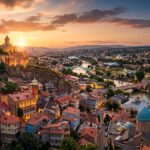
9. Tbilisi, Georgia — Wine, Dumplings, and Sulfur Baths
Georgia (the country, not the state — I’ve had to clarify this more times than I’d like) is having a moment, and Tbilisi is the beating heart of it. The city is a gorgeous mess of contradictions: crumbling Soviet blocks next to Art Nouveau mansions, ancient churches beside brutalist bridges, ultra-modern wine bars pouring natural wines from 8,000-year-old qvevri traditions.
The food alone is reason to go. Khinkali (giant soup dumplings), khachapuri (cheese-stuffed bread with a raw egg cracked on top), and endless platters of grilled meats and fresh herbs. A full supra feast with multiple bottles of wine ran me about twenty dollars. I also soaked in the sulfur baths in Abanotubani, which have been operating since the 13th century and smell exactly like you’d expect — but in the best possible way.

10. Faroe Islands — Dramatic, Remote, and Utterly Unforgettable
I saved the most dramatic for last. The Faroe Islands sit between Iceland and Norway in the North Atlantic, and they look like someone turned every landscape slider to maximum. Sheer cliffs dropping into churning seas, waterfalls that pour directly into the ocean, grass-roofed villages clinging to hillsides — it’s almost absurdly scenic.
Getting there takes effort (fly from Copenhagen or Reykjavik), and the weather is wild — I experienced sun, rain, hail, and fog in a single afternoon. But that’s part of the magic. Hiking the trail to Kallur Lighthouse on Kalsoy, with nothing but ocean and sky in every direction, was the closest I’ve ever felt to being on another planet. The islands have about 50,000 residents, 80,000 sheep, and an almost eerie stillness that stays with you long after you leave.

How to Find Your Own Hidden Gems
If this list has given you the itch, here are a few tricks I use to discover underrated destinations:
- Skip the first page of Google. The best travel recommendations live on forums, subreddits, and personal blogs — not on SEO-optimized listicles (yes, I see the irony).
- Talk to immigrants and expats. Some of the best tips I’ve received came from taxi drivers, coworkers, and random conversations at dinner parties. People love talking about home.
- Check flight deal newsletters. Scott’s Cheap Flights and Secret Flying regularly surface routes to places you wouldn’t have thought to visit. Let the deal choose the destination.
- Look at the neighbors. Whenever a country gets trendy, look at the ones next to it. They usually offer similar landscapes and culture at a fraction of the cost and crowds.
- Go in the shoulder season. April-May and September-October are magic months in most of the Northern Hemisphere. Lower prices, fewer crowds, better weather than you’d expect.

A Few Words Before You Pack
Travel doesn’t have to be expensive, Instagram-perfect, or planned down to the minute. Some of the best experiences I’ve had started with a wrong turn, a missed bus, or a conversation with a stranger who said, “You should really visit my hometown.” Every place on this list surprised me precisely because I arrived with low expectations and an open mind.
So the next time you’re staring at a booking screen and your finger is hovering over Paris or Barcelona for the fifth time, maybe consider taking a chance on somewhere you can’t quite picture yet. That uncertainty? That’s where the good stories come from. And trust me — you’ll have plenty of good stories.



Leave a Reply