
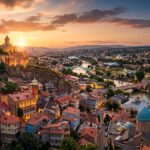
I fell in love with Tbilisi the way you fall in love with a person who’s a little rough around the edges — not despite the imperfections, but because of them. I was sitting on the crumbling balcony of my guesthouse in the old town, drinking homemade chacha (Georgian grape brandy) that my host Nino had poured without asking, watching the sun set over a skyline that made absolutely no sense. Medieval churches next to Soviet apartment blocks next to a glass-and-steel bridge shaped like a sea creature. A cable car floated overhead toward a hilltop fortress. Somewhere below, someone was singing polyphonic harmonies that echoed off the narrow streets. It was my first evening in Georgia, and I was already certain I’d come back.
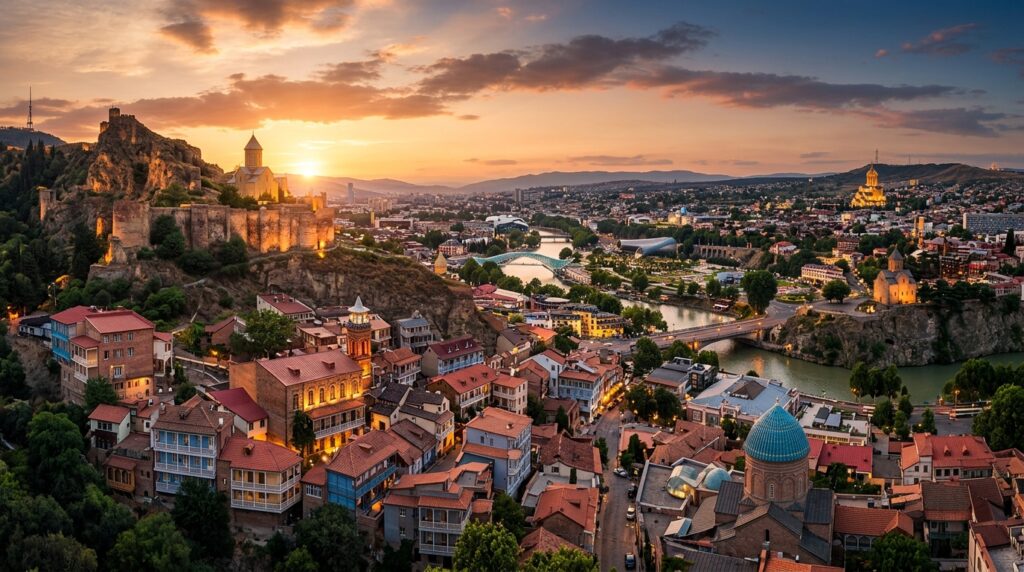
Tbilisi, Georgia
Famous for: Old Town, Narikala Fortress, sulfur baths, Georgian cuisine, wine culture, Holy Trinity Cathedral, Bridge of Peace
Tbilisi is one of those cities that travel writers have been calling “the next big thing” for a decade, and somehow it still feels undiscovered. Maybe that’s because Georgia doesn’t fit neatly into any category — it’s not quite Europe, not quite Asia, not quite the Middle East, but a little bit of all three. The food is unlike anything I’ve tasted. The wine is made in clay vessels buried underground, and it’s been made that way for eight thousand years. And the people — warm, hospitable, slightly wild — seem to live by a philosophy that can be summed up as: “Life is short, so let’s eat, drink, and sing.”
I arrived via the airport shuttle into the city center and checked into my guesthouse in the sulfur baths district, ready for five days of eating, drinking, and wandering. I was not disappointed.
Day 1: Old Tbilisi, Sulfur Baths, and Bread That Changed My Life
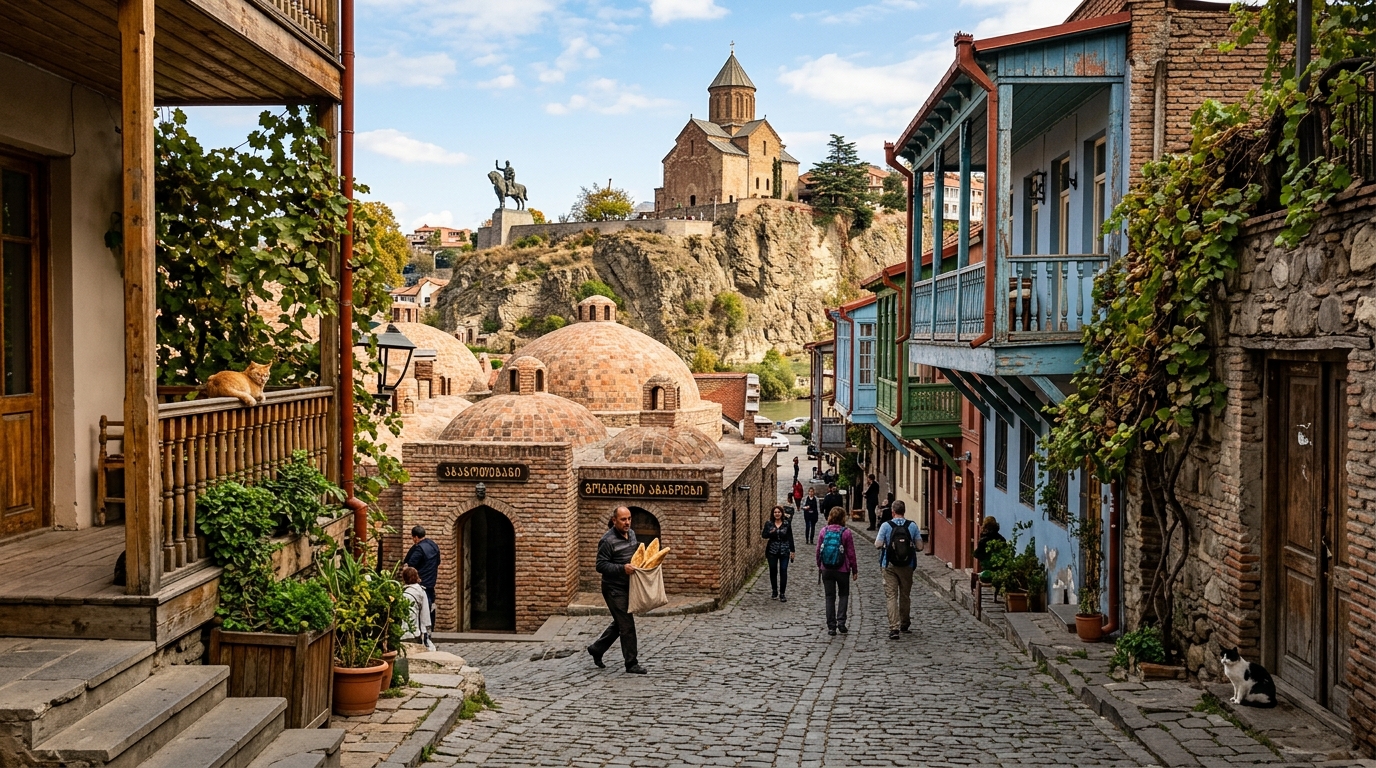
Old Tbilisi is a maze. Cobblestone streets wind between timber-balconied houses that lean into each other like old friends. Grapevines grow out of cracks in the walls. Cats lounge on every surface. I spent the morning on a walking tour of the old town, which took us through the Abanotubani bath district, past the Sioni Cathedral, through the winding streets of the Jewish quarter, and up to the clifftop Metekhi Church, where a massive statue of King Vakhtang Gorgasali on horseback overlooks the Mtkvari River.
After the tour, I did what every visitor to Tbilisi must do: I went to the sulfur baths. These domed brick bathhouses have been operating since the city’s founding — the name “Tbilisi” literally comes from the Georgian word for “warm,” referring to the natural hot springs. I paid for a private room at the Orbeliani Bathhouse (the blue-tiled one that looks like a mosque), and spent an hour soaking in water that smelled like rotten eggs but felt like liquid velvet. The optional scrub-down by a burly attendant with an exfoliating mitt was one of the most simultaneously painful and satisfying experiences of my life.
That evening, I had my first encounter with shotis puri — Georgian bread baked in a tandoor-like clay oven called a tone. The baker reached into the oven bare-handed, slapped the dough onto the inner wall, and pulled out a boat-shaped loaf with a blistered, chewy crust and soft interior. I ate it hot, standing on the street, and genuinely considered abandoning the rest of my trip to become a shotis puri apprentice.
Day 2: Narikala Fortress, Wine Bars, and the Art Scene
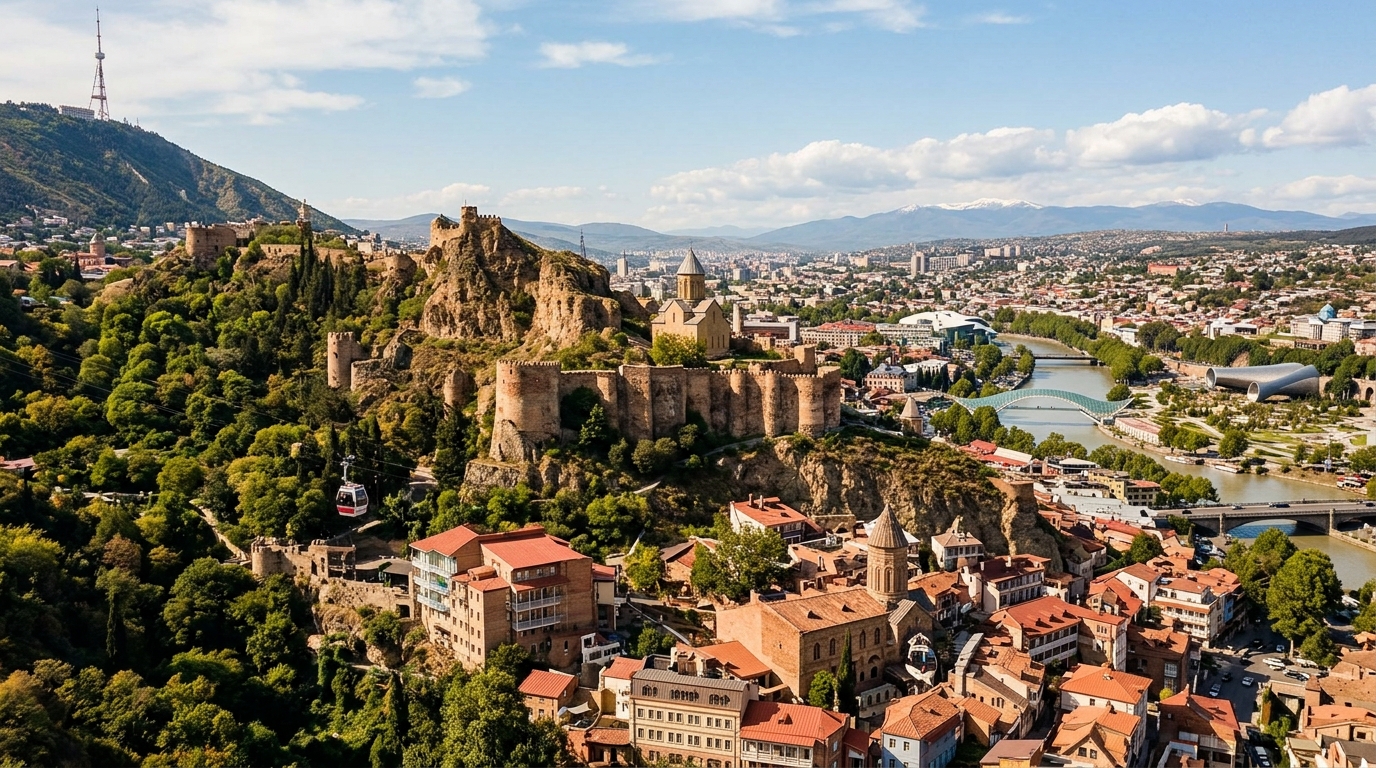
I took the cable car from Rike Park up to Narikala Fortress, the ancient citadel that watches over the old town. The fortress dates back to the fourth century and has been rebuilt, destroyed, and rebuilt again by Persians, Arabs, Mongols, Turks, and Georgians. The views from the ramparts are spectacular — the whole city spread out below, the river curving through the valley, the Caucasus Mountains white-capped in the distance.
On the way down, I walked through the botanical garden tucked behind the fortress — a surprisingly lush oasis with a waterfall, shaded paths, and almost no tourists. It’s one of Tbilisi’s best-kept secrets.
The afternoon was devoted to art and wine. Tbilisi’s gallery scene is thriving, centered around the Fabrika complex — a converted Soviet sewing factory that’s now a hostel, co-working space, and arts hub. From there, I wandered to Leghvtakhevi, a hidden waterfall in the middle of the old town (yes, a waterfall in the city center), and then did what Georgians do every evening: I went wine tasting.
Georgian wine is a world unto itself. The traditional qvevri method — fermenting grape juice with skins and seeds in clay vessels buried underground — produces amber wines unlike anything from France or Italy. I visited a natural wine bar in the old town where the owner poured me a flight of Rkatsiteli, Saperavi, and Mtsvane, explaining each grape’s story with the passion of someone discussing family members. I was converted.
For a deeper dive, I’d booked a Georgian wine tasting experience for the following day, but this informal bar session was the perfect introduction.
Day 3: Day Trip to Mtskheta, the Ancient Capital
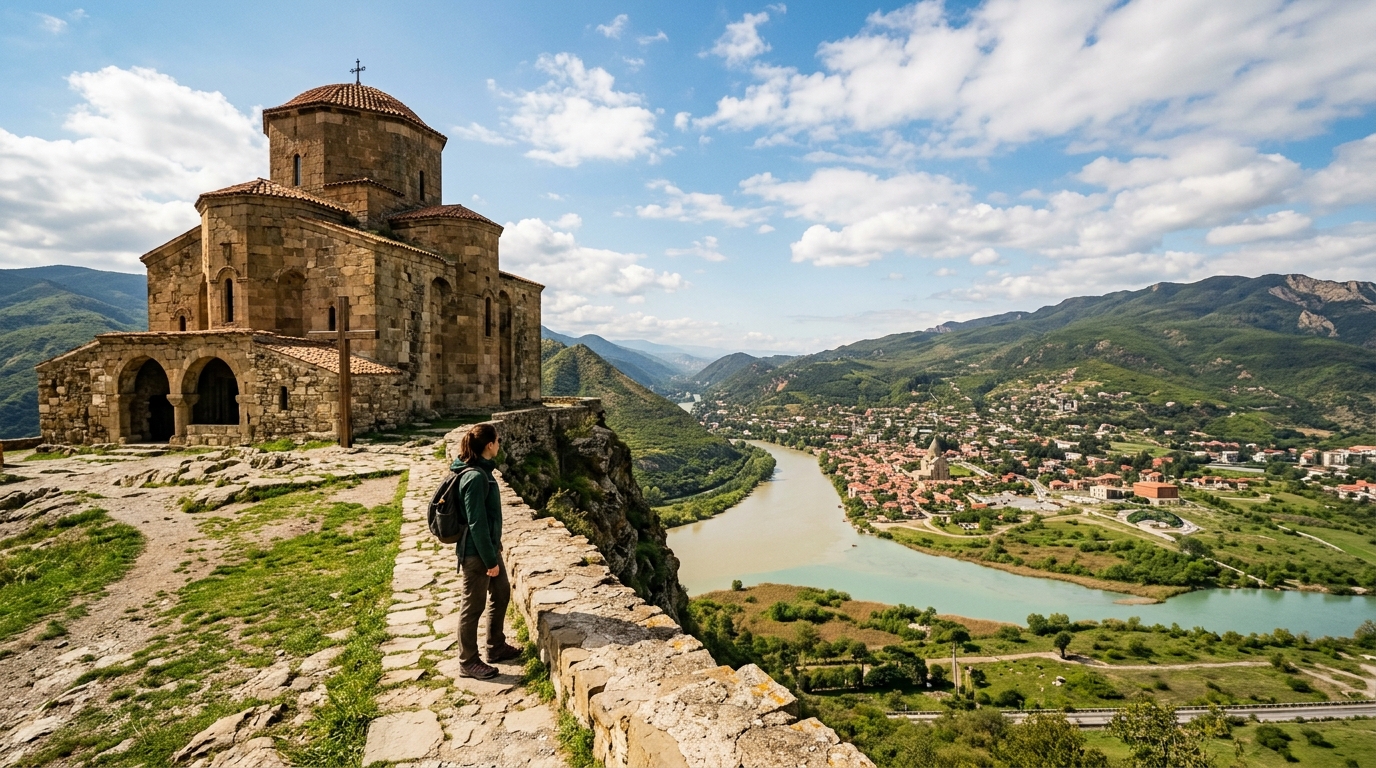
Mtskheta is only twenty kilometers from Tbilisi, but it’s three thousand years of history away. This was Georgia’s ancient capital and remains its spiritual heart — it’s where Christianity was first adopted in 337 AD, making Georgia one of the earliest Christian nations. I took a day trip to Mtskheta and Jvari Monastery that started with the hilltop Jvari Monastery, a sixth-century church perched on a cliff above the confluence of the Mtkvari and Aragvi rivers. The setting is biblical — and I mean that literally, since tradition holds this is where St. Nino erected the first cross in Georgia.
Down in the town, Svetitskhoveli Cathedral is jaw-dropping. Built in the eleventh century, its massive stone walls contain a fragment of Christ’s robe, according to legend. The interior is covered in frescoes, some faded to ghostly outlines, and the atmosphere is thick with incense and devotion. Even as a non-religious person, I found it deeply moving.
I spent the rest of the afternoon wandering Mtskheta’s small streets, buying churchkhela (walnut-studded grape candy shaped like a candle) from a roadside vendor, and drinking chacha at a family-run restaurant where the owner insisted I try his homemade cheese. Georgian hospitality is not optional — you will be fed, and you will enjoy it.
Day 4: Dry Bridge Market, Khinkali, and a Feast
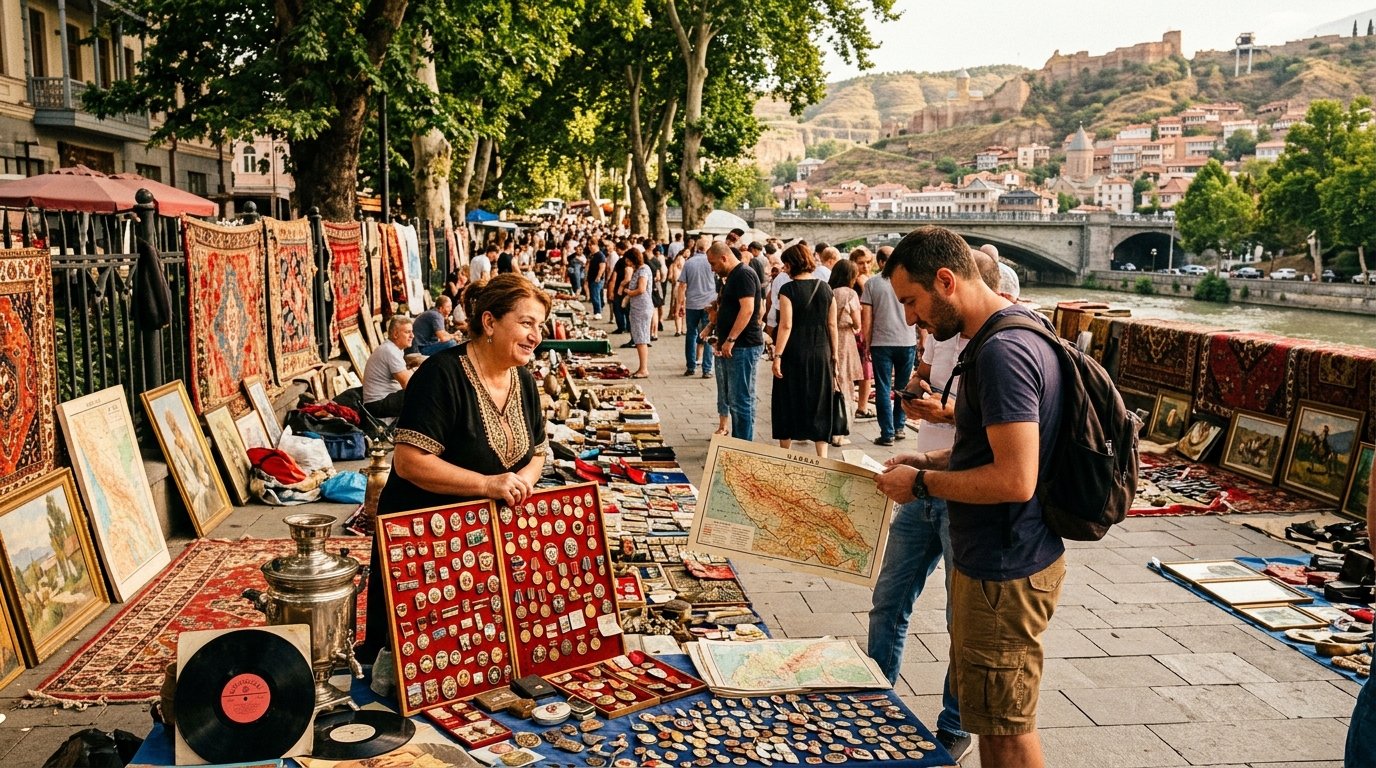
The Dry Bridge Market is Tbilisi’s legendary flea market — a sprawling, chaotic bazaar where Soviet-era memorabilia, antique carpets, old paintings, vinyl records, samovars, and Communist kitsch are spread on blankets along a shaded boulevard. I spent two hours here, bargaining for a vintage Georgian enamel pin and a Soviet-era map of the Caucasus. It’s the kind of place where you can find a genuine oil painting for twenty lari or a KGB badge for five.
For lunch, I went to a dedicated khinkali restaurant — one of those no-frills places where the only item on the menu is Georgia’s famous soup dumplings. Khinkali are eaten with your hands: you grab the twisted knob on top, take a small bite, sip the hot broth inside, then devour the rest. The knob gets left on your plate as a tally of how many you’ve eaten. I put away eight (a modest number by Georgian standards) and rolled out the door.
That evening was the trip highlight: a traditional Georgian supra, or feast. I’d arranged a traditional supra experience through a local host, and it was magnificent. The tamada (toastmaster) led elaborate toasts — to Georgia, to friendship, to the dead, to love, to the mountains. Wine flowed from a ram’s horn. Dishes kept appearing: khachapuri (cheese bread), pkhali (walnut-vegetable paste), badrijani (eggplant rolls with walnut filling), chicken in walnut sauce, grilled meats, fresh herbs by the fistful. We sang, we drank, we ate until it hurt. This is Georgian culture at its finest.
Day 5: Rustaveli Avenue, Gabriadze Theatre, and Farewells
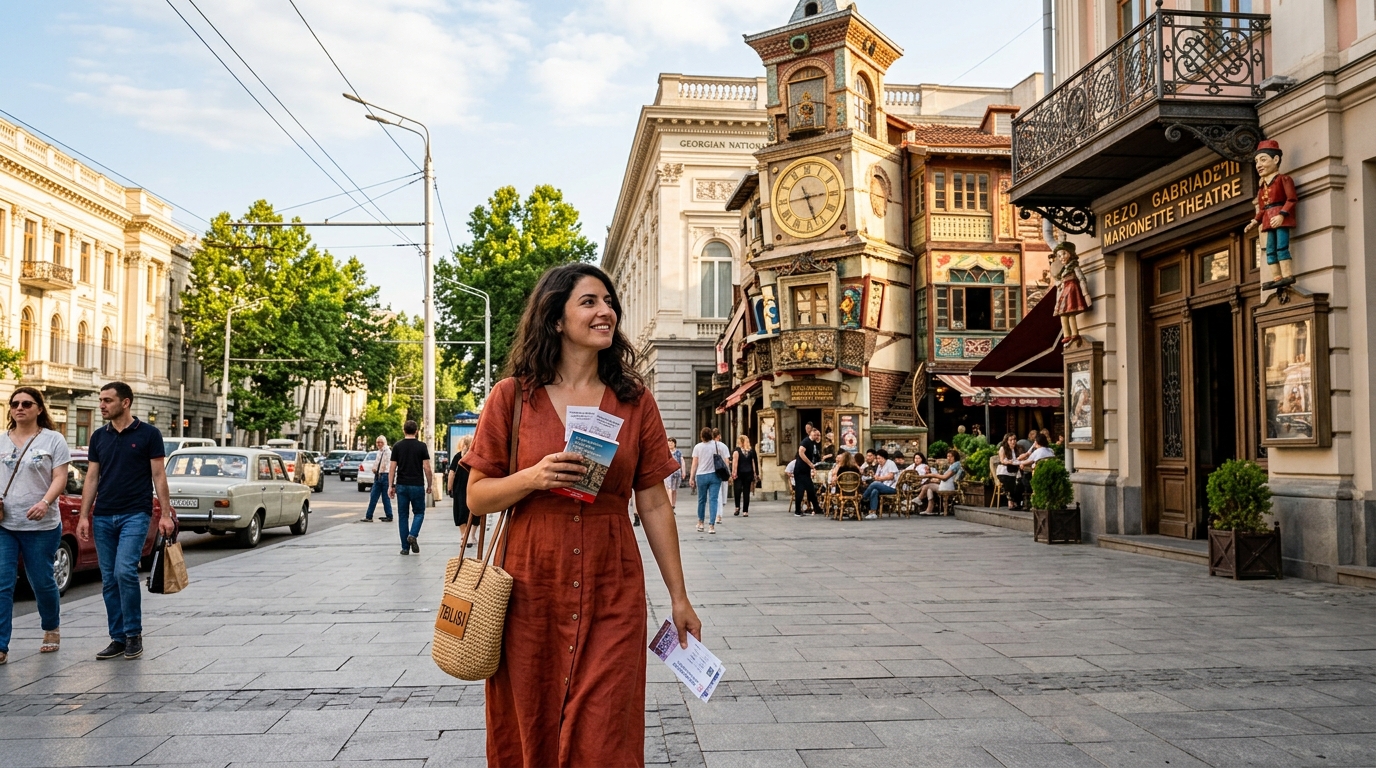
My last day was a leisurely wander through Tbilisi’s more modern side. Rustaveli Avenue is the city’s grand boulevard — think Champs-Élysées but with more character. The Georgian National Museum houses a stunning collection of medieval gold and enamel work, and I picked up tickets to the Georgian National Museum to see the Treasury, where the gold artifacts from Colchis (yes, where Jason went for the Golden Fleece) are worth the visit alone.
I stopped at the Gabriadze Theatre to admire its whimsical clock tower — every hour, an angel emerges and rings a bell, and at noon and 3 PM, a tiny puppet show plays out. The theater itself, founded by legendary puppeteer Rezo Gabriadze, is a Tbilisi institution. I was lucky enough to get a last-minute ticket for an afternoon performance, and even though it was in Georgian, the physical storytelling transcended language.
For my final afternoon, I crossed the Bridge of Peace — that futuristic glass-and-steel structure that looks like a giant maggot or a beautiful wave, depending on your mood — and explored the Rike Park side of the river. The concert hall and exhibition space here, designed by Massimiliano Fuksas, are architectural marvels.
I ended my trip the Georgian way: at a restaurant, with friends I’d made along the way, with too much food and too much wine. If you’re planning onward travel, renting a car in Tbilisi opens up the incredible Kazbegi highway and the wine region of Kakheti. Or take the bus to Yerevan — it’s just six hours to Armenia, and the contrast between the two Caucasus capitals is fascinating.
Practical Tips & Budget
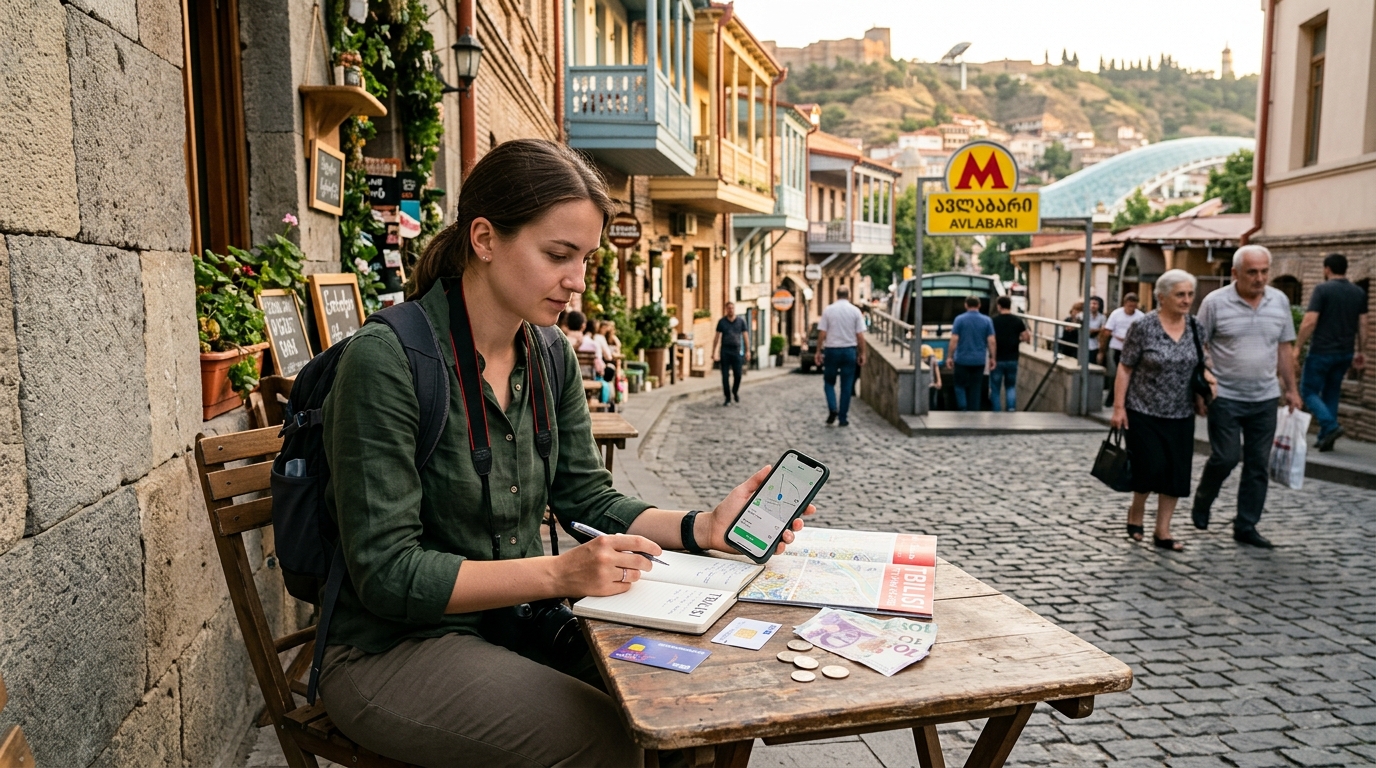
Everything you need to know before your Tbilisi trip:
Getting Around: The metro is clean, efficient, and costs 1 lari (about $0.35). Bolt and Yandex Go work for taxis and are very cheap — a ride across the city rarely exceeds 10 lari. Walking is the best way to explore the old town.
Where to Stay: The old town (Kala district) puts you in the heart of things. Vera and Sololaki are slightly quieter neighborhoods with great restaurants. Fabrika and the area around it are popular with younger travelers.
Budget Breakdown (per day):
- Accommodation: $15–45 (guesthouse to boutique hotel)
- Food: $10–20 (khinkali joints to supra feasts)
- Activities: $5–20 (most churches are free; museums are cheap)
- Transport: $3–8 (metro, taxis)
- Total: $33–93 per day
Money: Georgian lari (GEL). ATMs are everywhere and accept international cards. Many restaurants accept card, but carry cash for markets and small shops.
Best Time to Visit: May through June and September through October offer warm weather without extreme heat. I visited in late March and it was cool but pleasant, with spring flowers starting to bloom.
Language: Georgian is its own language with its own alphabet, and it’s beautiful but impenetrable. In Tbilisi, younger people speak good English. Russian is widely understood by the older generation. Learning “gamarjoba” (hello) and “madloba” (thanks) goes a long way.
Georgia doesn’t market itself as a luxury destination or an adventure hub or a cultural pilgrimage — it’s all three at once, wrapped in vine leaves and served with a side of wine from a clay pot that was buried before your grandparents were born. Tbilisi is where it all begins, and you should go before everyone else figures that out.



Leave a Reply