
Three years ago I counted seven honeybees in my entire backyard in the span of an afternoon. I only counted because a friend who kept bees was visiting and she mentioned, mid-conversation, that she hadn’t seen a single bee on any of the flowers I’d planted out front. I’d walked past those flower beds every day without noticing. She was right. There were almost no pollinators.
That conversation lodged in my head. Over the next season, I started paying attention, and the absence became impossible to un-see. The butterfly bush in the front, supposedly a pollinator magnet, was a ghost town. The row of ornamental flowers along the fence? Empty. The only reliable bee activity in the whole yard was around a patch of wild clover that had snuck into the lawn, which I was diligently mowing over every weekend.
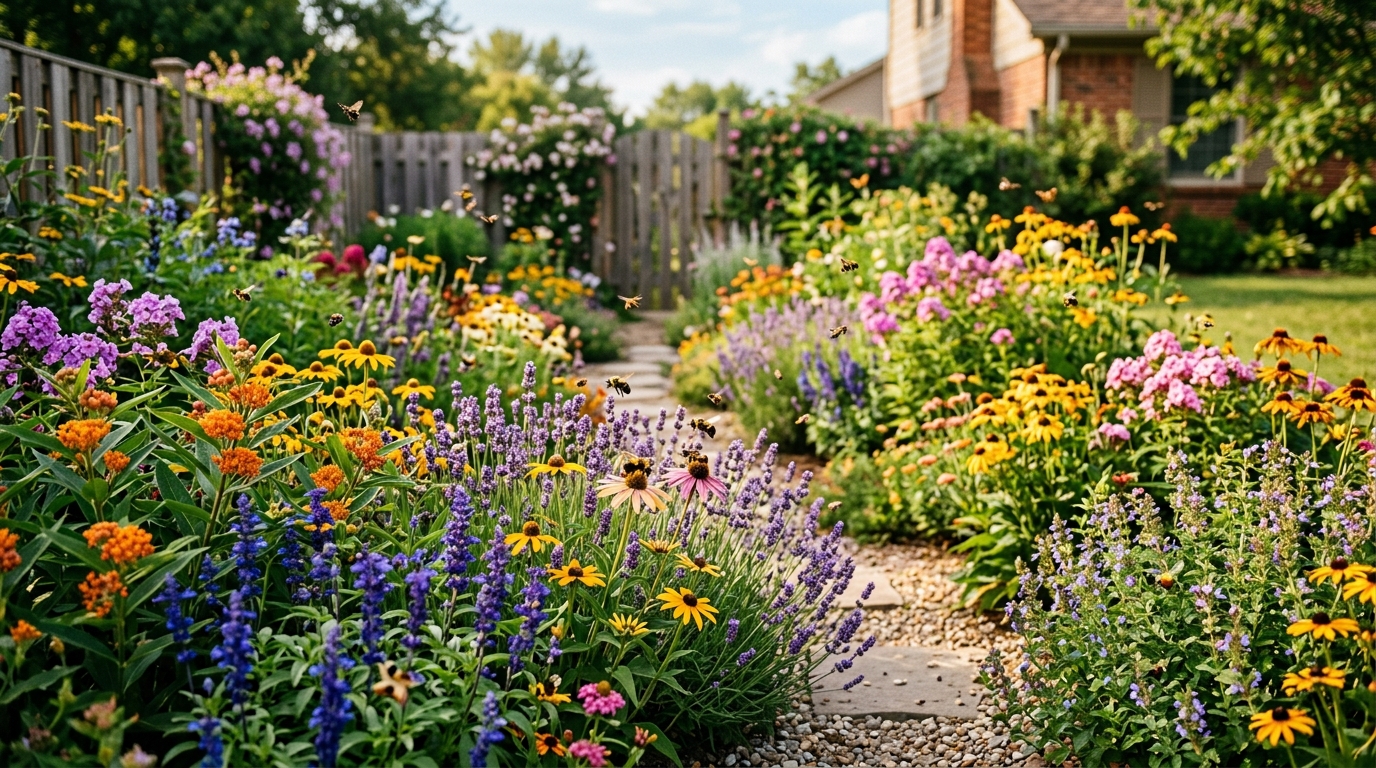
I started making changes that fall. Two years later, my backyard now gets so many bees, butterflies, and hummingbirds that my kids count species instead of individual insects, and my neighbors have started asking what I’m doing differently. I want to walk you through the practical steps, the ones that actually moved the needle, because almost every pollinator-garden article I’d read skipped the pragmatic parts.
The Empty Lawn That Started It All
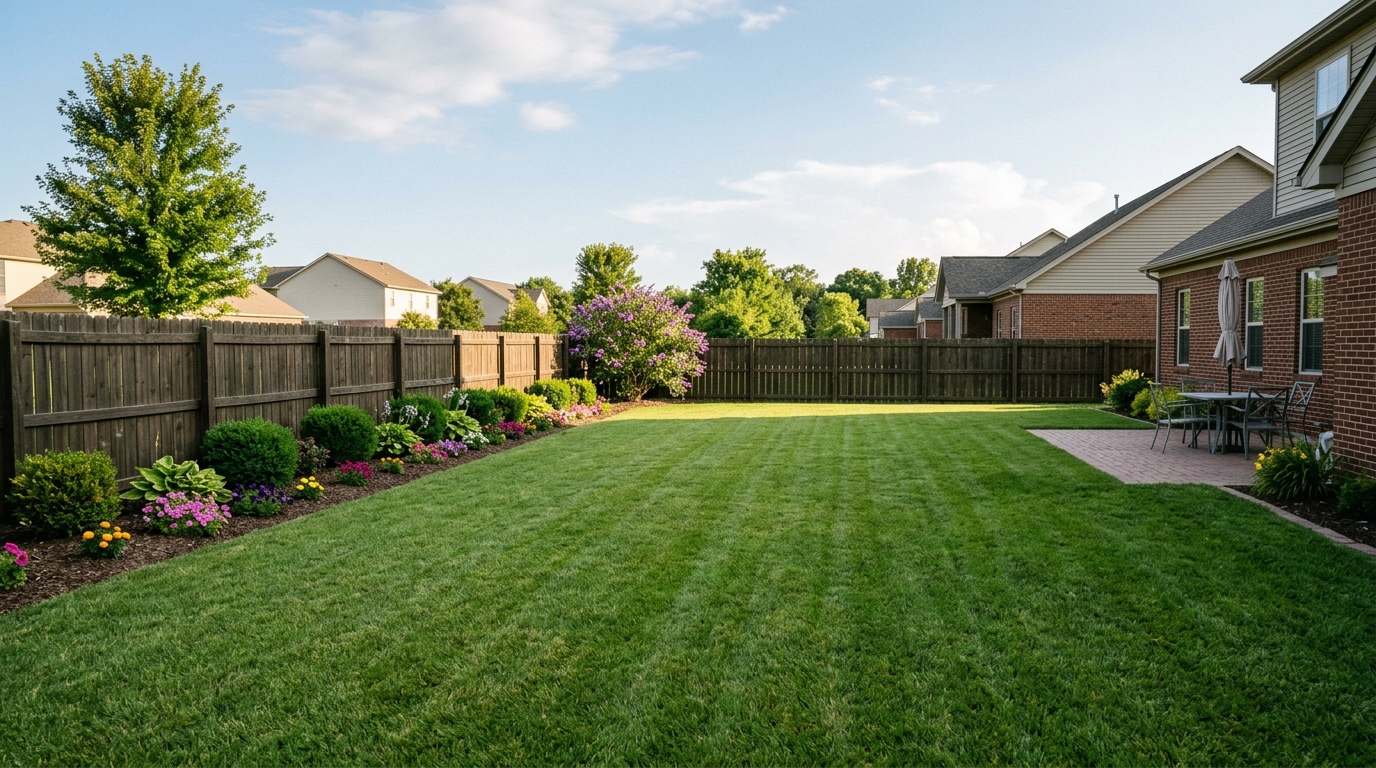
Before the shift, my backyard was the default American setup: a large rectangle of grass, a few ornamental shrubs along the fence, a butterfly bush in the middle of the border, and some annual flowers changed out seasonally. From a curb-appeal standpoint, it looked fine. From a biological standpoint, it was a desert.
The reason turned out to be simple: almost nothing I’d planted was actually useful to local pollinators. Pretty, and useful, are often two completely different plant selections. The stuff I’d picked up at the big-box garden center was bred for color, bloom duration, and deer resistance. It hadn’t been bred for nectar content, bloom timing, or compatibility with local pollinator species. Some of it, I learned later, was actively bad — the double-flowered varieties of supposedly “pollinator” plants often have so much bred-in petal that bees can’t physically reach the nectar.
The butterfly bush was the worst offender, which was ironic. Buddleia is a nectar source, yes, but in many regions it’s considered invasive, it supports adult butterflies but not caterpillars, and it does essentially nothing for native bee species. I’d planted what amounted to a pollinator junk-food dispenser for one specific class of pollinator, while the broader ecosystem got nothing.
The bigger insight came when I looked up what plants the local native bee species actually needed. In my region, it was a mix of plants I’d never heard of — a few asters, a couple of goldenrods, some native sunflowers, a specific milkweed. Most weren’t stocked at the garden center I’d been shopping. The ones that were, were shelved in the “wildflower” or “meadow” sections, not the flowering-plants aisle.
That was the moment I understood I’d been shopping at the wrong place, for the wrong reasons, using the wrong criteria. My yard wasn’t biologically dead by accident. It was dead because I’d never been pointed in the direction of plants that would make it otherwise.
Native Plants vs. Pretty Plants — What I Learned the Hard Way
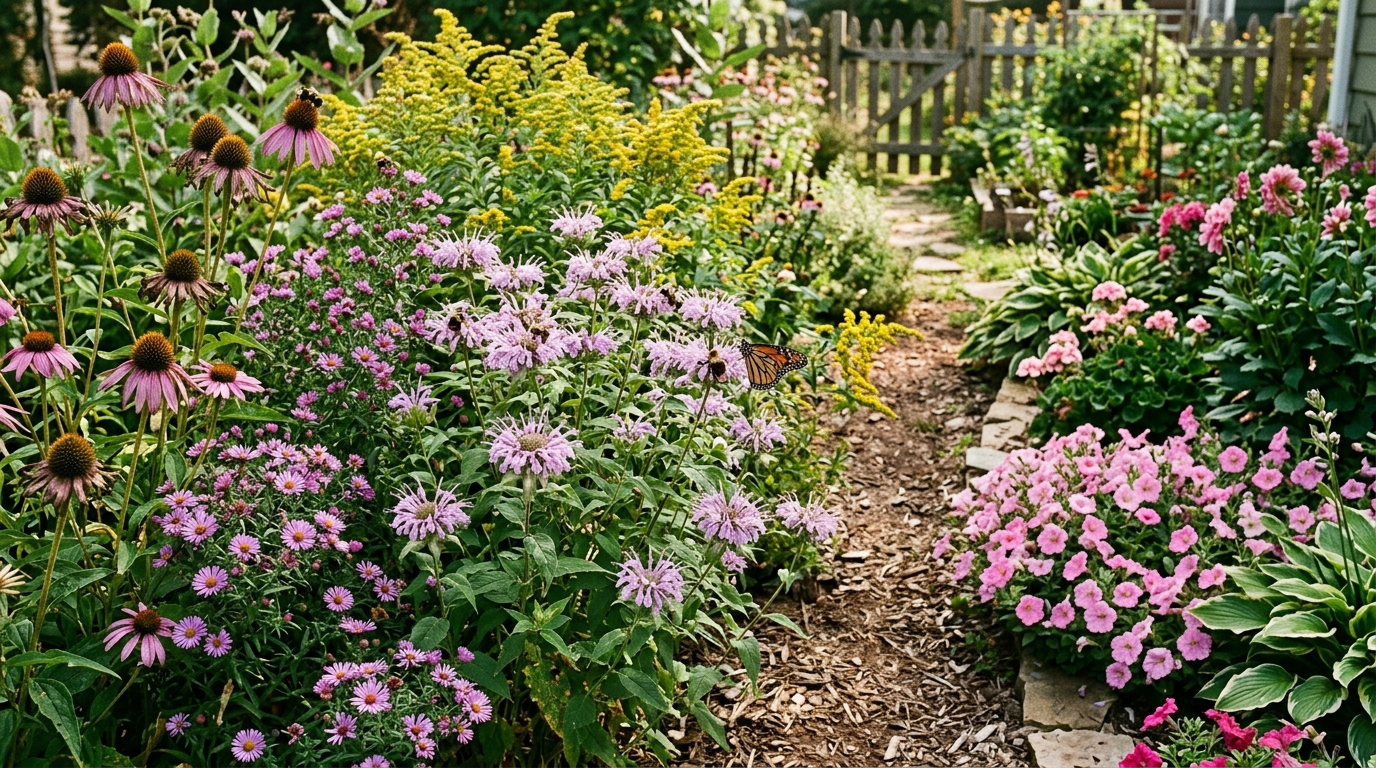
The single biggest conceptual shift I had to make: the plants that look best in a garden catalog are rarely the plants that pollinators need. And the plants that pollinators need often look, to a gardener’s eye, a little scruffy. Native plants are adapted to local conditions, which means they don’t always put on the showy bloom a cultivated hybrid will. They’re built for survival, not spectacle.
It helped to stop comparing my future yard to a magazine garden. A good pollinator garden is alive. There are always insects in it. The plants have leaves chewed by caterpillars (which is a feature, not a flaw — no chewed leaves, no butterflies). There are bare patches of dirt (ground-nesting bees need them). There are standing dead stems in winter (cavity-nesting bees and solitary wasps use them). A tidy garden, in the conventional sense, is mostly a dead garden.
My rule of thumb, after two years: if a plant comes with a label that mentions “pollinator-friendly” at a big-box store, double-check it. A lot of them are non-native species that provide nectar but displace native plants that support full lifecycles. The word “native” is the one to look for, not “pollinator.” A native aster is almost always better for your local ecosystem than a non-native “butterfly attractant.”
I spent about $60 on a mistake early on, when I bought a flat of English lavender because a label called it a pollinator magnet. It is, for a few honeybees. But English lavender blooms for a short window and supports almost no native specialist bees. That same $60 would have bought me six native perennials that, two years later, are still blooming and covered in insects. The lavender is still alive but it’s a fraction of what those other plants have become.
A practical tip: a package of a native wildflower seed mix matched to your region is the cheapest way to get a diverse starter garden. Most reputable mixes are regionally formatted (Northeast, Mid-Atlantic, West Coast, etc.) and will cover a wide timing range of blooms. I seeded a 6×10 patch along my back fence for under $15 and it’s now the most active single area in the yard.
The Three-Season Bloom Map
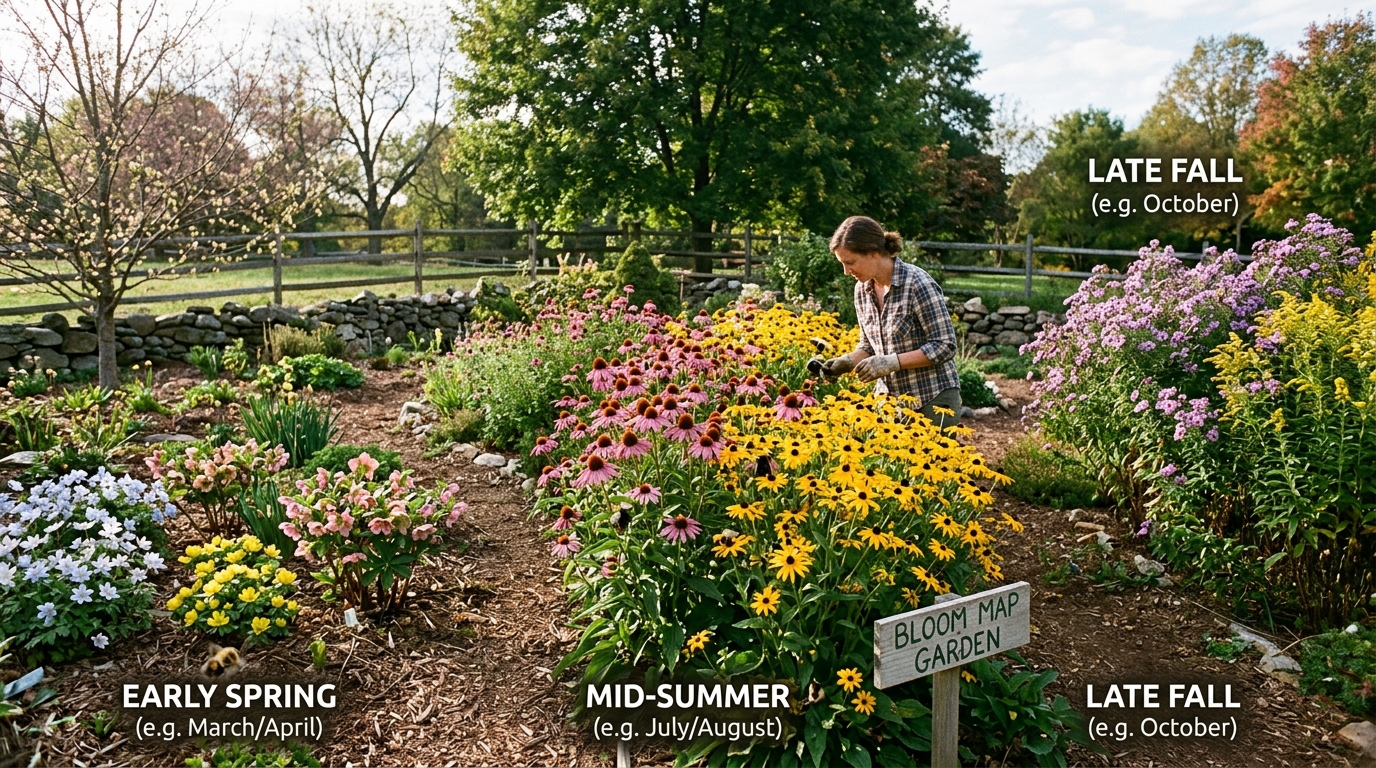
Here’s a thing nobody told me until year two: bees need food from early spring to late fall, and most gardens only feed them in mid-summer. If you plant only coneflowers and black-eyed Susans (both great, both summer bloomers), you’re feeding a subset of pollinators for a few weeks in June and July. The early bees emerging in March have nothing. The late ones trying to build winter stores in October have nothing.
I redesigned my yard around a bloom calendar. The goal: something in flower from roughly early April to late October, with no gaps longer than two weeks. Here’s the rough structure that worked for me:
- Early spring (April-May): Native willows, spring ephemerals, wild columbine, golden alexanders. These are the emergency rations for bumblebee queens coming out of hibernation.
- Late spring (May-June): Penstemon, baptisia, wild geranium, native azaleas. The “bridge” bloomers between spring and summer.
- Early summer (June-July): Coneflowers, bee balm, milkweed, native sunflowers.
- High summer (July-August): Joe Pye weed, mountain mint, blazing star. Mountain mint was an unexpected standout — it’s the single most productive pollinator plant I’ve ever grown.
- Late summer (August-September): Asters, goldenrods. These are the plants that carry late-season bees and migrating monarchs.
- Fall (September-October): New England aster, native witch hazel. The last meal before dormancy.
Once you’ve got the basic bloom calendar in place, you’ll notice which plants are earning their keep and which aren’t. Mountain mint is a monster in my garden; I’ve added three more clumps in the past year. A butterfly bush I left in has been gradually crowded out because nothing was visiting it compared to the native alternatives.
I keep my pruning shears in the shed, but honestly the tool I use most is a good pair of bypass pruners. Most pollinator garden work is cutting back, deadheading for a second flush, and harvesting seeds. Less dramatic than a grand planting plan, but it’s where the daily work lives.
Water, Shelter, and the Small Details That Matter Most
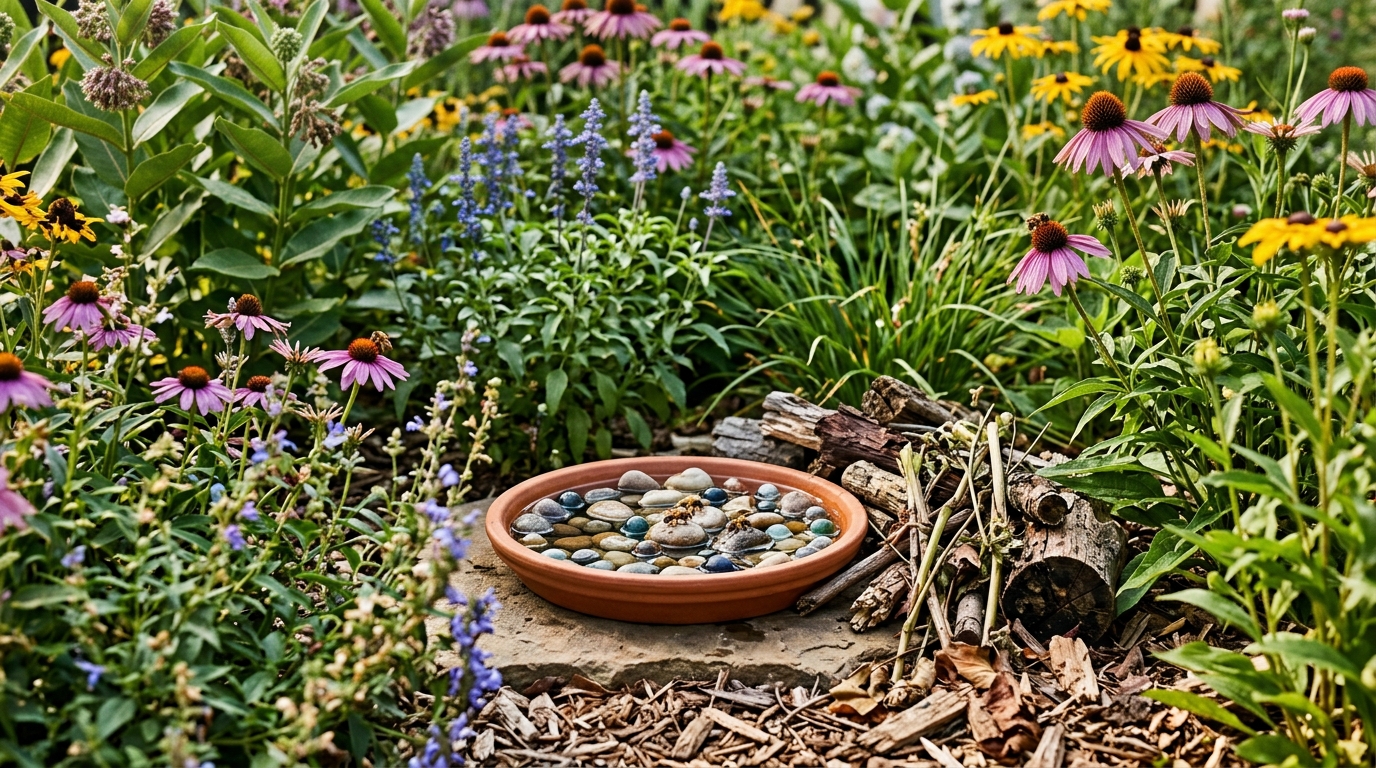
Plants are the foundation, but a pollinator garden isn’t just a bloom buffet. Insects need water and places to rest, lay eggs, and shelter over winter. The small additions I made, in order of impact:
A water source with landing surfaces. Bees drown easily in open water. What they need is a shallow pool with stones or marbles that break the surface. I made a simple bee-watering station out of a terracotta saucer, a handful of pebbles, and a daily top-up. The first summer, I watched a dozen bees at a time using it. A set of terracotta saucers cost me less than a decent takeout meal and is still hosting pollinators three years later.
A mason bee house. Most native bees are solitary, not hive-dwelling. They lay eggs in hollow stems, beetle-bored holes, or tunnels in wood. I installed a mason bee house on a south-facing fence post and within a month had solitary bees using it to raise young. The house is a fiddly thing — you’re supposed to clean the tubes every year to reduce parasites — but the payoff is a multiplying population of native bees in your yard.
Bare dirt patches. Roughly 70% of native bee species are ground-nesters. They dig into bare soil to lay eggs. An obsessively mulched garden — which I’d prided myself on — provides essentially no nesting habitat. I now leave a few sunny, well-drained bare patches in the corners of my beds. It looks a little untidy. It increased my solitary bee activity dramatically.
Leaving the garden up in winter. Cutting everything back in the fall is conventional wisdom that’s actively bad for pollinators. Many native bees overwinter as eggs or pupae inside hollow stems. If you cut the stems down, you take them to the compost pile. I now leave stems standing until late April, when overwintering insects have emerged. The aesthetic is “prairie in winter.” It’s grown on me.
One thing I deliberately don’t do: use any pesticides, including the “organic” ones. Most organic insecticides still kill pollinators; they just aren’t synthetic. The only garden intervention I’ll make against pests is physical — hand-picking beetles off of plants, hosing aphids off with water, accepting some leaf damage on mature plants.
The Neighborhood Effect I Didn’t See Coming
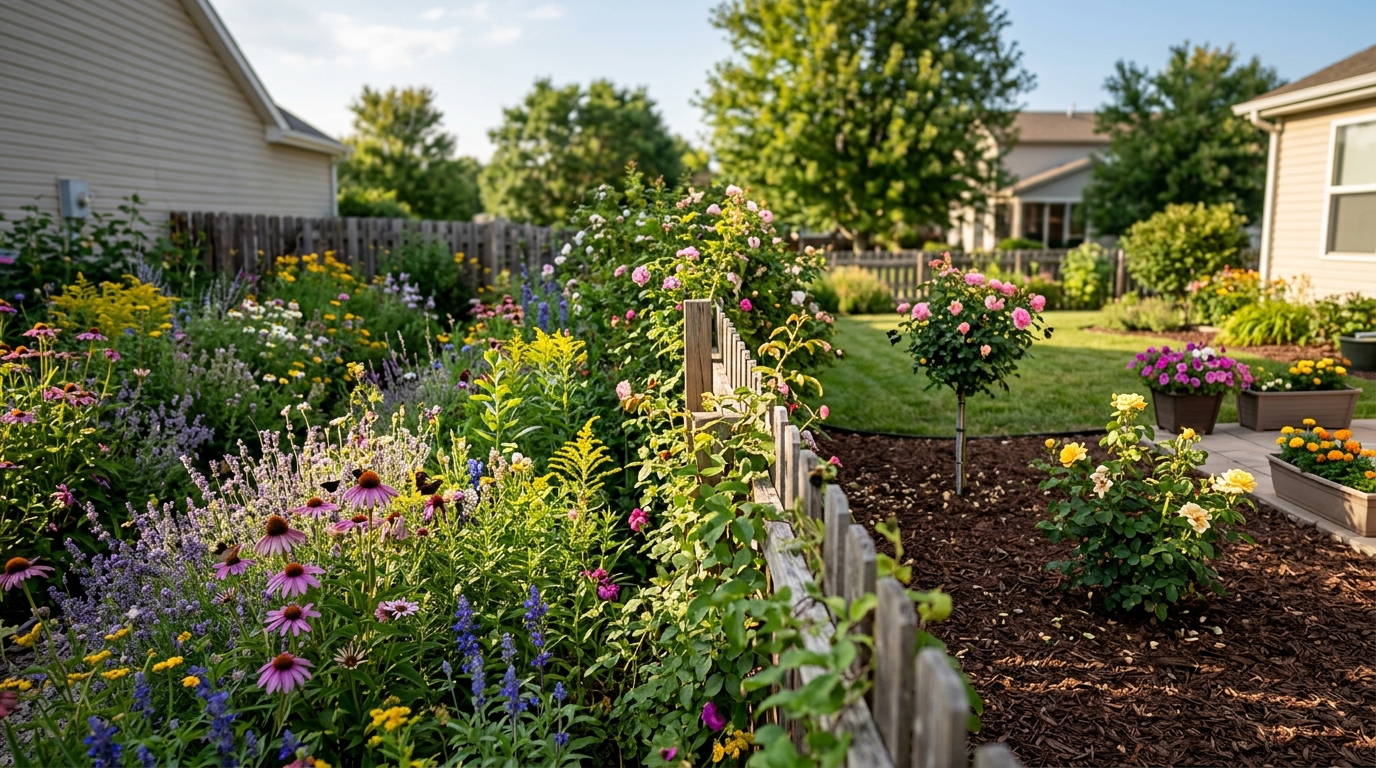
The thing I didn’t expect was what happened to the pollinator activity in the yards around mine.
My next-door neighbor has a conventional suburban garden — lots of mulch, a few hybrid roses, some annual color in planter boxes. In year two, she mentioned that her roses had been noticeably more attended by bees than ever before. She hadn’t changed a thing. What she was seeing was the spillover from my yard — once a pollinator corridor exists nearby, insects visit the adjacent areas more frequently.
That got two other neighbors interested. One added native plants along her back fence. Another converted a patch of unused lawn to wildflowers. A third (the original friend who’d noticed my empty yard) joked that I’d accidentally started a neighborhood movement. She wasn’t wrong. There are now at least four yards on my street with native plantings, and the overall pollinator activity in the area has noticeably increased in three seasons.
That effect matters more than any individual yard. Pollinators don’t care about property lines. A single native garden is a sandwich stop for a foraging bee. A neighborhood of them is an actual habitat. The ecosystem shift compounds across yards in a way no single yard could achieve alone.
A concrete piece of advice from this: if you’ve been doing the native-plant thing for a year or two, invite your neighbors into a garden. Give them cuttings. Share what you’ve learned. The ecological impact scales massively if you can turn even two other yards in your block.
Final Thoughts: A Yard That Does Something
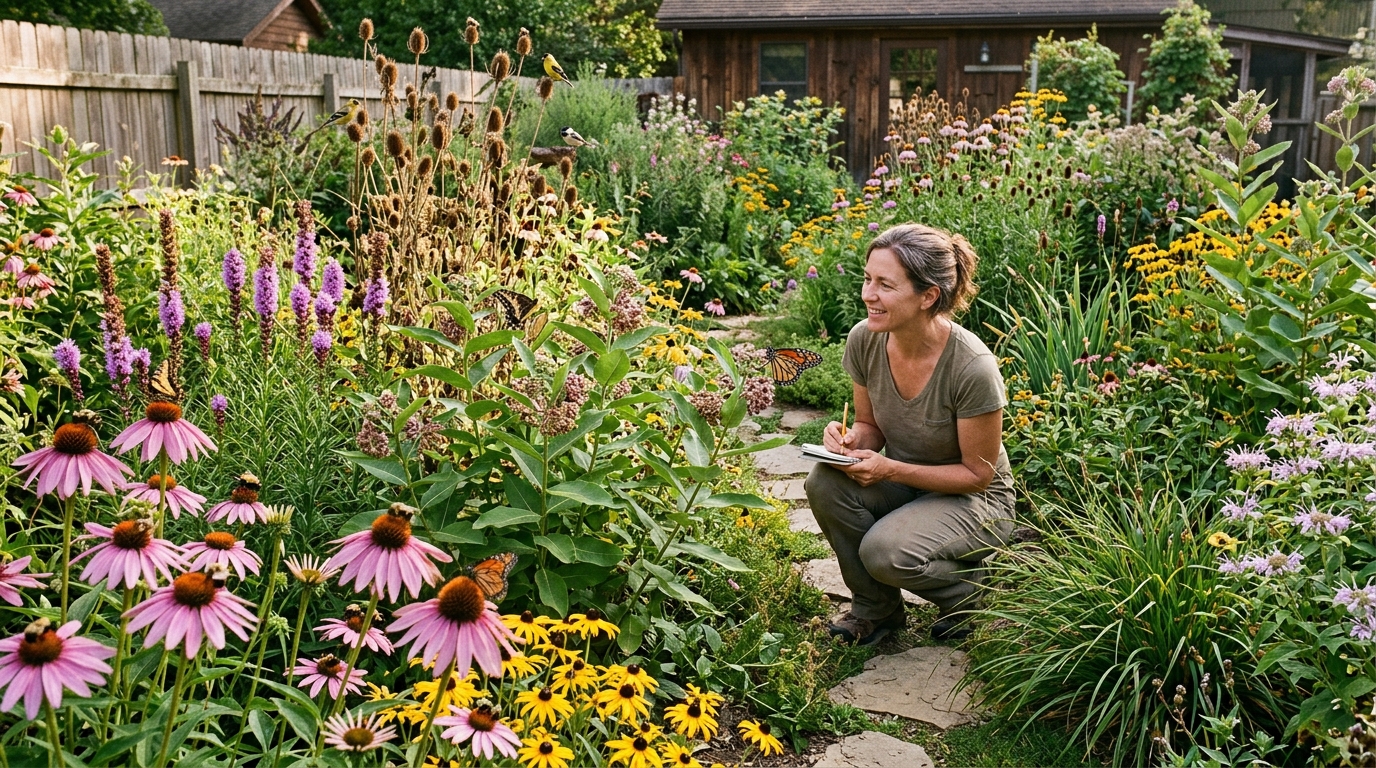
The difference between my yard today and my yard three years ago isn’t mainly aesthetic. It’s biological. My yard now does something. It supports bees. It hosts butterflies. It produces monarchs. It feeds songbirds in winter from the standing seed heads. It’s alive in a way my previous yard — which, by conventional measures, was more “beautiful” — was not.
I also underestimated how much joy this would bring me personally. I did not expect to become the kind of person who notices what’s in bloom each week and tracks which bees are around. I did not expect to care whether a monarch laid eggs on my milkweed this summer (one did, four chrysalises that I watched hatch; my kids were transfixed). I did not expect the yard to become a daily joy in a way my lawn never was.
A yard is an ecosystem whether you intend it to be or not. The question is whether it’s an ecosystem that supports life, or one that merely looks like it does.
If you’re starting, a few small suggestions. Don’t try to convert the whole yard at once. Pick a 6×8 patch, kill the grass with cardboard and mulch, and plant a regional native mix. See what shows up in year one. Expand in year two based on what worked. Don’t read too many lists; local native-plant societies have better information than any national source. And resist the urge to tidy. A tidy pollinator garden is a pollinator garden that’s slowly failing.
Three summers ago I counted seven honeybees. Last weekend I counted thirty bees, six butterflies, and a hummingbird in the space of fifteen minutes. I’m not doing anything unusual. I’m just growing the right plants in the right place and letting them do the rest of the work.



Leave a Reply