
The first thing that hits you in Colombo isn’t the heat, though the heat is aggressive. It’s the sound. Horns blaring, tuk-tuks weaving, street vendors shouting, crows cawing, temple bells ringing — all layered into a wall of noise so dense it feels physical. I stepped out of my hotel near Colombo Fort on my first morning and just stood on the sidewalk, blinking, trying to process the sensory assault. A man selling king coconuts from a cart caught my eye and grinned. “First time?” he asked. I nodded. He handed me a coconut with a straw and said, “You’ll love it. Everyone does.”
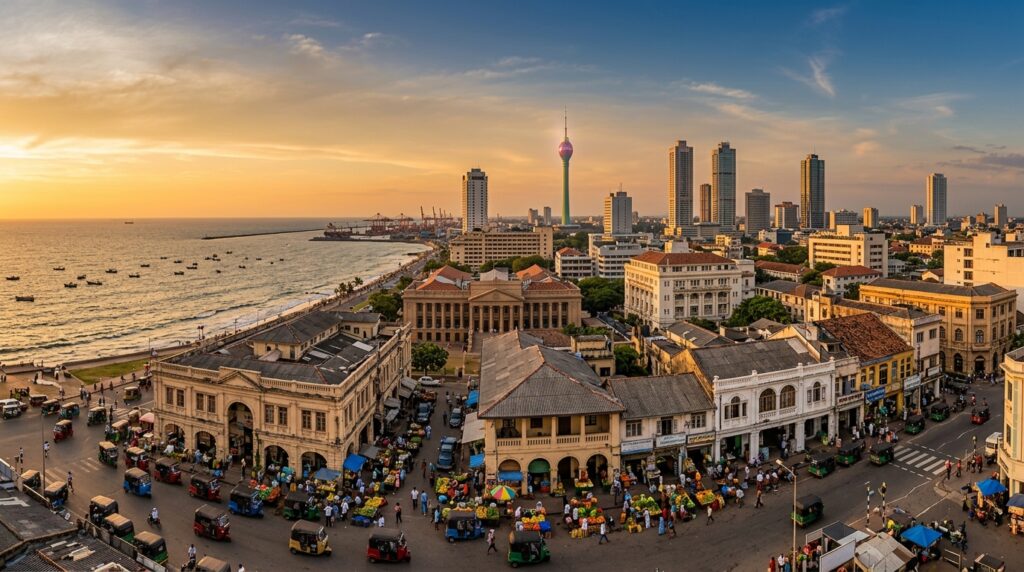
Colombo, Sri Lanka
Famous for: Gangaramaya Temple, Galle Face Green, Pettah Market, Independence Square, colonial architecture, Sri Lankan cuisine
He was right. Colombo is not the city most travelers come to Sri Lanka for — they want beaches in the south, temples in Kandy, safaris in Yala. But Colombo is where Sri Lanka’s past, present, and future collide, and spending five days here turned out to be one of the best decisions I made on this trip. It’s messy, loud, contradictory, and absolutely fascinating. Colonial mansions sit next to brutalist apartment blocks. Buddhist temples share streets with Hindu kovils, mosques, and churches. The food alone — oh, the food — is worth the plane ticket.
I arrived via the airport express from Bandaranaike, which was mercifully air-conditioned, and dove headfirst into a city that would challenge, charm, and occasionally confuse me for the next five days.
Day 1: Fort, Pettah, and the Art of Crossing the Street
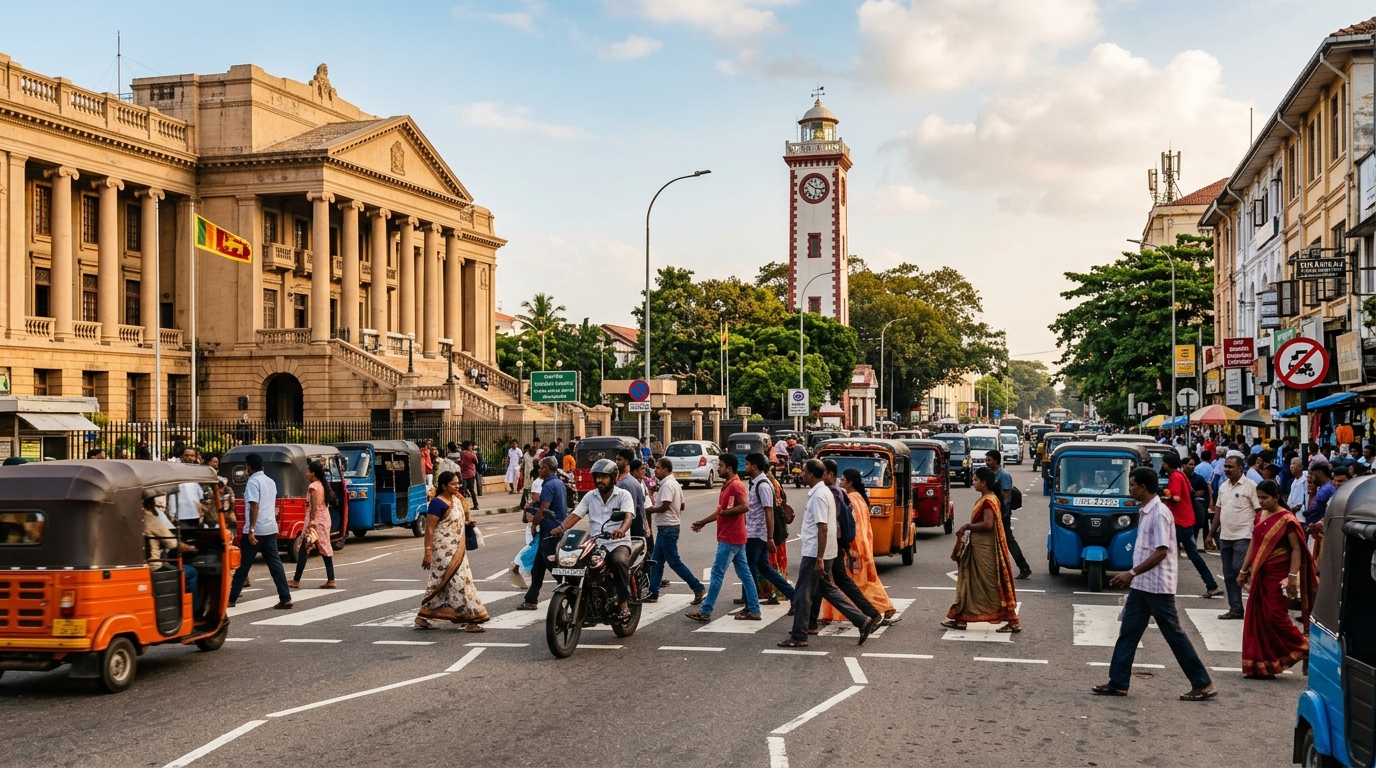
I started in Colombo Fort, the old colonial quarter, where grand Victorian-era buildings line wide boulevards. The Old Lighthouse, the Old Parliament Building (now the Presidential Secretariat), and the Colombo national museum‘s satellite gallery are all clustered here, and there’s a faded grandeur to the neighborhood that reminded me of Havana. I grabbed tickets to the Colombo National Museum a bit further south in Viharamahadevi Park, and spent a couple of hours absorbing Sri Lanka’s history — from ancient Sinhalese kingdoms to the colonial period to independence. The regalia of the Kandyan kings is extraordinary.
From Fort, I walked into Pettah, and the difference was like stepping through a portal. Pettah is Colombo’s oldest bazaar district — a heaving, chaotic grid of streets where each block specializes in something different. One street is all electronics, the next is fabric, then spices, then hardware. The spice section was my favorite: mountains of cinnamon bark, turmeric roots the size of my thumb, and chili powder in shades from orange to apocalyptic red. The smell was extraordinary.
Street crossing in Pettah is an extreme sport. There are no crosswalks, no traffic lights that anyone respects, and the tuk-tuks operate on a logic that seems to involve telepathy. I learned the local technique: walk at a steady pace, don’t make eye contact with drivers, and trust that they’ll go around you. It worked, somehow.
For dinner, I walked to the Galle Face Green, Colombo’s oceanfront promenade, where every evening a carnival of food stalls appears. I ate isso vadai (crispy lentil fritters studded with whole shrimp), kottu roti (chopped flatbread stir-fried with vegetables and egg — the sound of the metal scrapers is Colombo’s unofficial anthem), and washed it all down with a lime soda so tart it made my eyes water.
Day 2: Gangaramaya Temple, Street Food, and Cinnamon Gardens
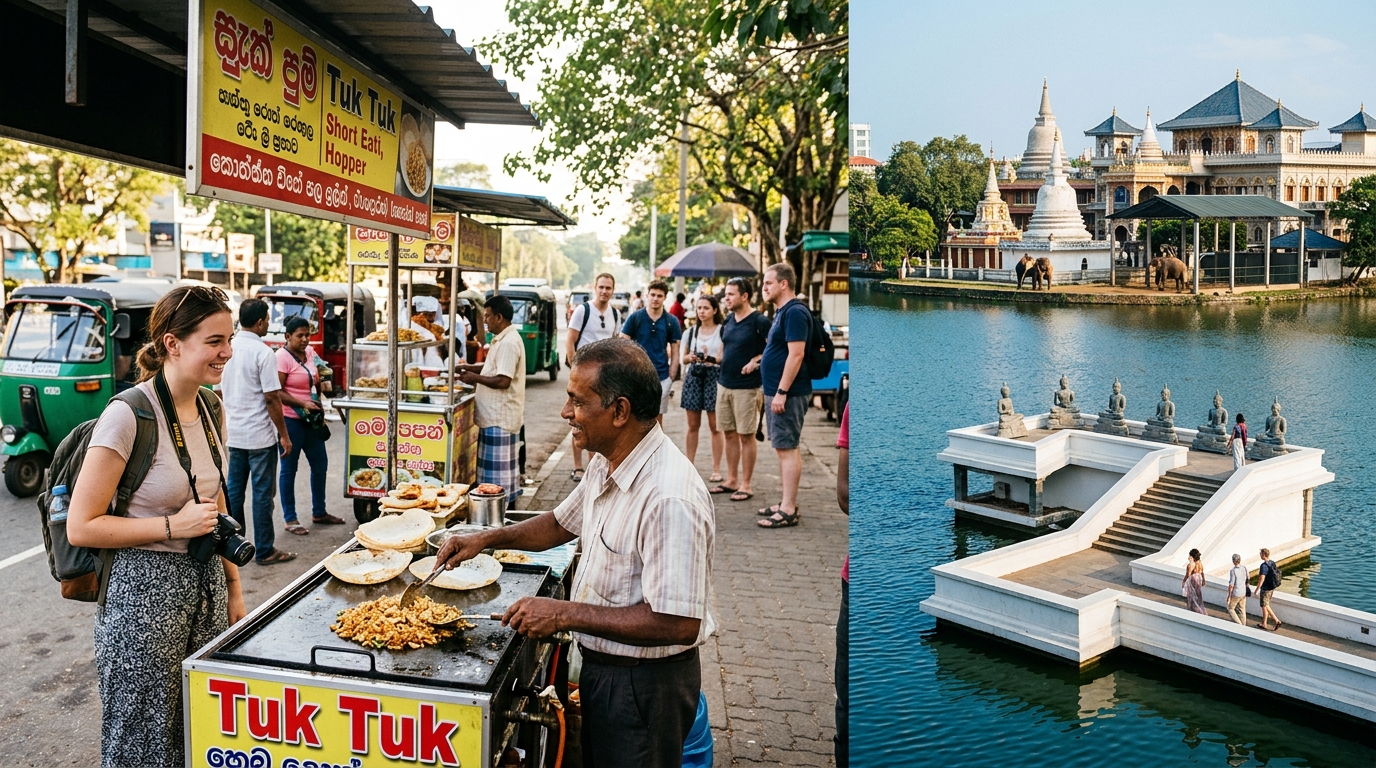
Gangaramaya Temple is unlike any Buddhist temple I’ve visited. It’s part shrine, part museum, part curiosity cabinet — there’s a room full of antique cars, another full of ivory carvings, a collection of Buddha statues from dozens of countries, and a resident elephant. The temple complex extends onto Beira Lake, where a modern floating platform called Seema Malaka, designed by the legendary Geoffrey Bawa, offers a serene counterpoint to the maximalist main temple. I joined a walking tour of Colombo’s highlights that morning, and our guide’s stories about Gangaramaya’s eccentric head monk had everyone laughing.
The afternoon was dedicated to the Cinnamon Gardens district — Colombo’s poshest neighborhood, now called Colombo 7. This is where you’ll find tree-lined avenues, colonial bungalows, and some of the city’s best restaurants and cafés. I visited the Geoffrey Bawa House (his former residence, now a museum), and the intimate scale of it — the courtyards, the clever use of light, the blurring of indoor and outdoor space — made me understand why he’s considered one of Asia’s greatest architects.
That evening, I booked a street food tour by tuk-tuk that zigzagged through neighborhoods I’d never have found on my own. We ate hoppers (crispy bowl-shaped rice pancakes) with egg in the center, string hoppers with coconut sambol, crab curry at a Tamil family’s home kitchen, and finished with watalappan — a coconut custard dessert spiced with cardamom and nutmeg. I was so full I could barely climb the stairs to my room.
Day 3: Day Trip to Galle Along the Coastal Railway
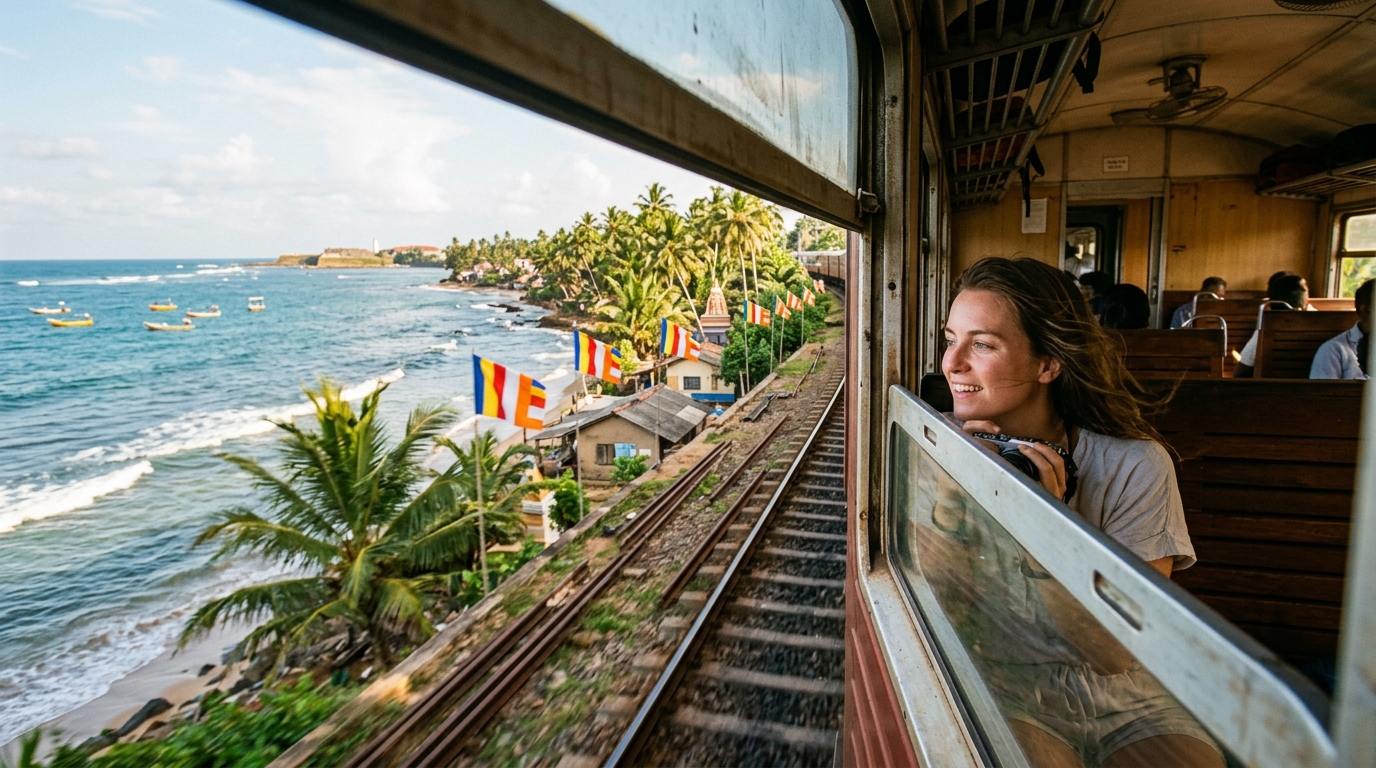
I’d heard that the coastal train from Colombo to Galle is one of the most scenic rail journeys in the world, and for once, the hype was justified. I booked a train ticket from Colombo to Galle for the early morning departure and spent three hours with my face pressed to the window as the train hugged the coastline — literally meters from the Indian Ocean at some points. Palm trees, fishing villages, Buddhist flags fluttering in the breeze, kids waving from backyards. It was pure cinema.
Galle Fort itself is a Dutch colonial gem — a walled city on a peninsula, with cobblestone streets, boutique shops, art galleries, and cafés in converted colonial buildings. I walked the fort walls at sunset, watched cricket being played on the pitch inside the walls, and explored the lighthouse area. For history buffs, I’d recommend a guided tour of Galle Fort — there are layers of Portuguese, Dutch, and British history here that you’d miss on your own.
I took the train back in the late afternoon, arriving just in time to catch the sunset at Galle Face Green again. There’s something about watching the sun drop into the Indian Ocean from that crowded promenade — families flying kites, couples taking selfies, vendors grilling corn — that captures Colombo’s spirit perfectly.
Day 4: Markets, a Cooking Class, and Mount Lavinia
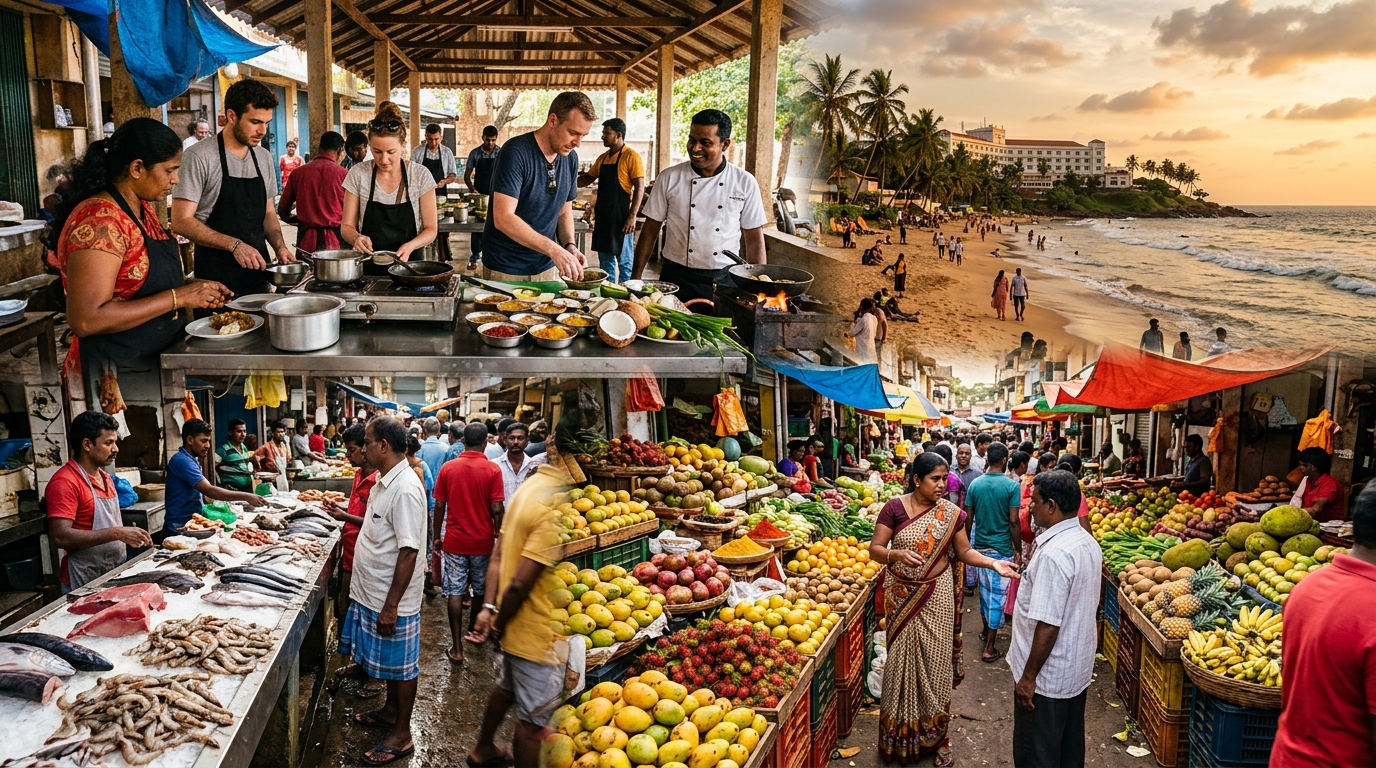
I spent the morning at Manning Market, Colombo’s wholesale fruit and vegetable market, which is an experience in organized pandemonium. Mountains of mangoes, papaya, rambutan, wood apple, jackfruit — fruits I’d never seen before piled in Technicolor abundance. The fish section next door was intense — swordfish, tuna, prawns, crabs, all glistening on beds of ice while auctioneers shouted prices. Bring a strong stomach and wear shoes you don’t care about.
The cooking class I’d booked for the afternoon was one of my trip highlights. A Sri Lankan home cooking class taught me the fundamentals: how to make a proper coconut milk curry base, how to temper spices in hot oil without burning them, and why Sri Lankan cinnamon (actually cassia’s gentler cousin) is considered the world’s finest. We made chicken curry, dhal, pol sambol, parippu (lentil curry), and fried eggplant moju. Every dish hit differently when I’d made it myself.
In the late afternoon, I took a tuk-tuk south to Mount Lavinia, a beach suburb about twelve kilometers from the city center. The beach isn’t paradise — this isn’t the Maldives — but it has a scrappy, local charm. Families were picnicking, fishermen were hauling in nets, and the legendary Mount Lavinia Hotel, a colonial-era beauty built by a British governor for his Eurasian mistress, loomed on the headland. I had a sunset beer on the hotel terrace and felt like I’d time-traveled to the Raj era.
Day 5: Red Mosque, Independence Square, and Final Flavors
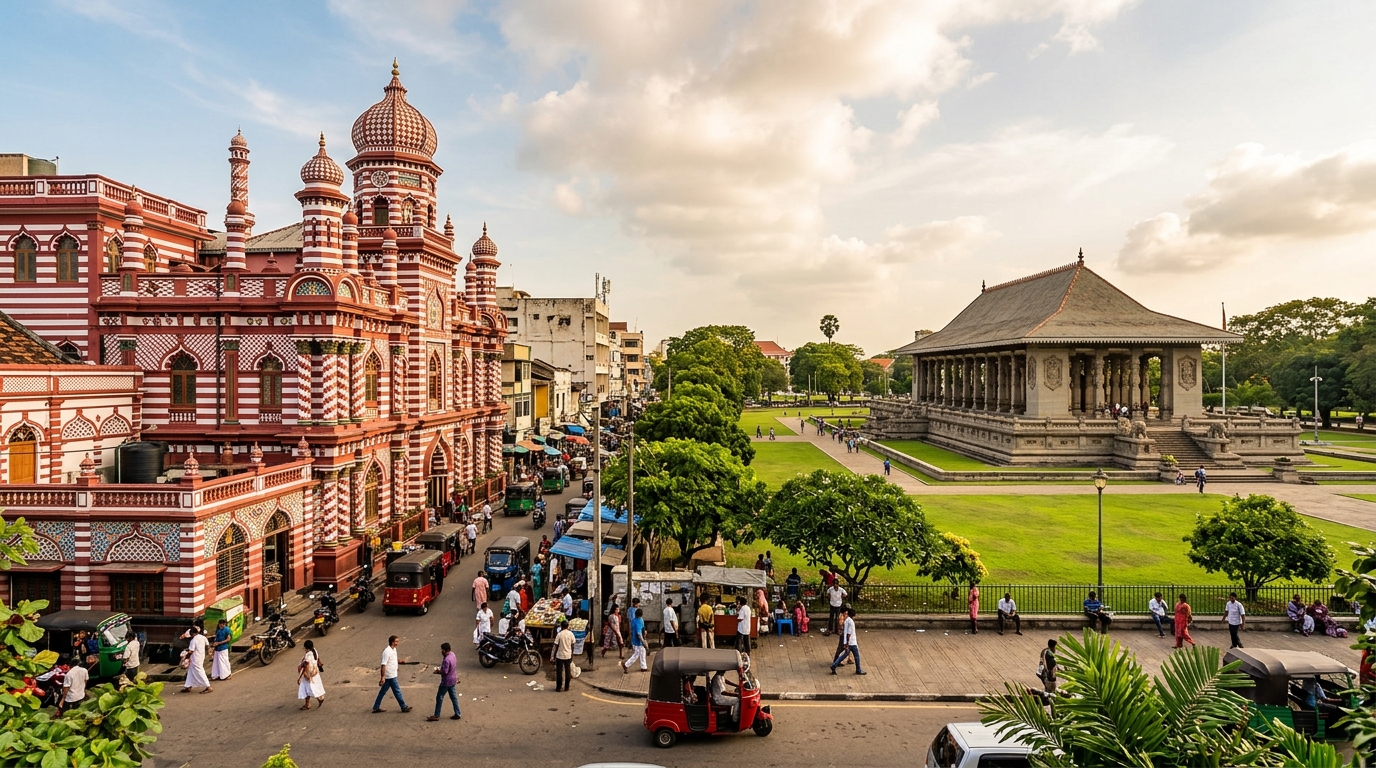
My last day was a greatest-hits compilation. I started at the Jami Ul-Alfar Mosque in Pettah — the “Red Mosque” — whose red-and-white candy-striped facade is one of Colombo’s most photographed landmarks. Non-Muslims can visit outside of prayer times, and the interior is peaceful and beautiful. Then I walked to Independence Square and its Memorial Hall, a grand civic space modeled on the Kandyan king’s audience hall, where Sri Lanka declared independence in 1948.
I spent the middle of the day in the Colombo 7 gallery scene — the Saskia Fernando Gallery and the Barefoot Gallery (attached to the famous Barefoot textile store, a Geoffrey Bawa favorite) both had excellent exhibitions. Sri Lanka’s contemporary art scene is vibrant, political, and deeply engaged with the country’s complex post-war identity.
For my farewell meal, I went all out at the Ministry of Crab, one of Asia’s most famous restaurants, housed in a Dutch colonial building. A massive Sri Lankan mud crab prepared in garlic-chili sauce, mopped up with garlic bread — it was obscenely good and obscenely messy. Worth every rupee.
If you’re heading onward from Colombo, the options are rich. Many travelers take the bus to Kandy to see the Temple of the Tooth, or head south for beaches. For a deeper dive into Sri Lanka’s interior, consider a day trip to Sigiriya and Dambulla — it’s a long day but the ancient rock fortress is breathtaking. And if you want to explore the coast at your own pace, renting a car gives you the freedom to stop at every beach town and tea stall along the way.
Practical Tips & Budget
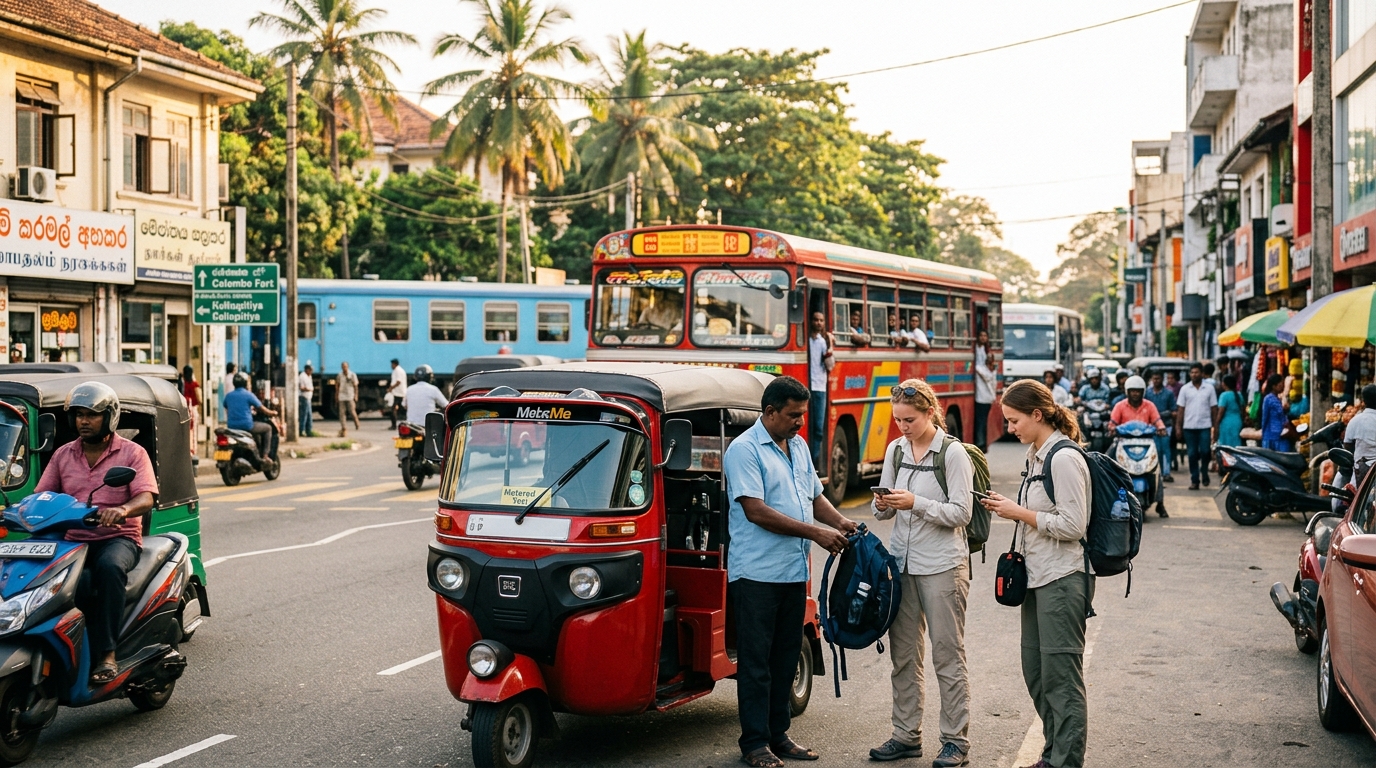
Here’s what I learned the hard way (and the easy way) about navigating Colombo:
Getting Around: Tuk-tuks are everywhere. Use the PickMe app (Sri Lanka’s Uber) to avoid haggling — it sets a fair meter price. For longer distances, Colombo’s bus system is extensive and absurdly cheap, though crowded. The train network is excellent for day trips.
Where to Stay: Colombo Fort and Colombo 3 (Kollupitiya) put you closest to the action. Colombo 7 (Cinnamon Gardens) is quieter and leafier. Mount Lavinia is good if you want beach access.
Budget Breakdown (per day):
- Accommodation: $20–50 (guesthouse to midrange hotel)
- Food: $8–20 (street food to sit-down restaurants)
- Activities: $10–20 (entrance fees, tours)
- Transport: $5–12 (tuk-tuks, buses, trains)
- Total: $43–102 per day
Safety: Colombo is generally safe for tourists, but keep an eye on your belongings in Pettah and crowded areas. Traffic is the biggest danger — look both ways, then look again.
Best Time to Visit: December through March is the driest period for the west coast. I visited in February and had mostly clear skies with occasional afternoon showers.
What to Pack: Lightweight, breathable clothing (it’s hot and humid year-round), modest attire for temples and mosques, a rain jacket for surprise downpours, and antacids if you’re not used to spicy food. I’m only half joking about the antacids.
Colombo isn’t a city that tries to seduce you — it’s too busy being itself for that. But if you give it five days and an open mind, it’ll reward you with the kind of raw, unfiltered travel experiences that polished tourist destinations can never offer.



Leave a Reply