
I never expected to cry at 5:30 in the morning, but there I was, standing barefoot on a dusty sidewalk in Luang Prabang, watching a silent procession of saffron-robed monks glide past in the half-light of dawn. The air smelled like sticky rice and frangipani. A woman beside me knelt with her offering basket, and something about the whole scene — the stillness, the devotion, the soft shuffle of bare feet — cracked something open in my chest. I’d been traveling through southeast asia for three weeks at that point, chasing waterfalls and eating my weight in noodle soup, but this was the moment that made me stop rushing.
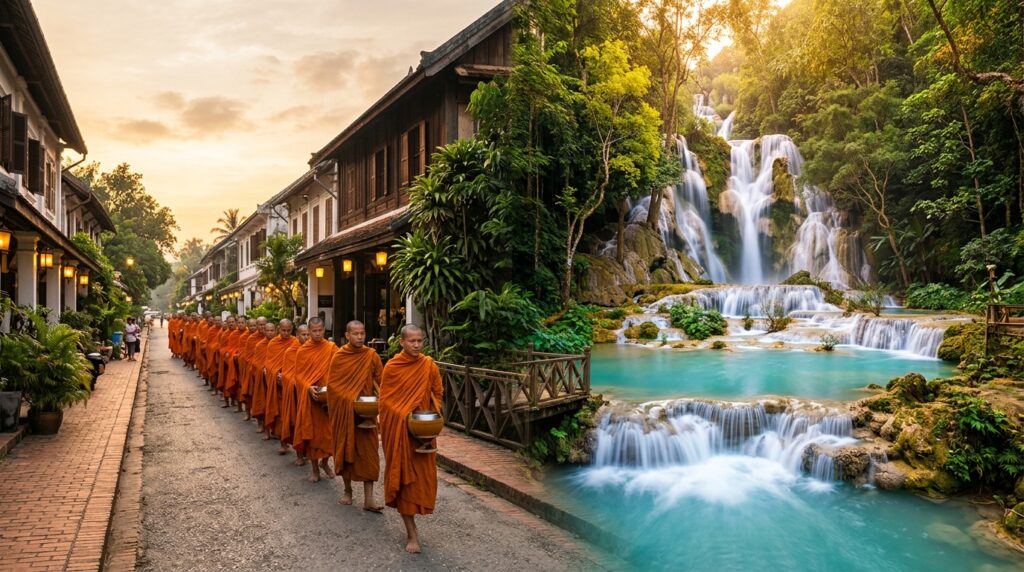
Luang Prabang, Laos
Famous for: monk alms giving, Kuang Si Falls, Royal Palace Museum, night market, Pak Ou Caves, Mekong River cruises
Luang Prabang does that to people. Tucked into a peninsula where the Mekong and Nam Khan rivers meet, this UNESCO-listed town in northern Laos moves at a pace that makes even slow travelers feel like they’re in a hurry. I’d arrived the day before on a bumpy but scenic bus from Vientiane, and within an hour of checking into my riverside guesthouse in the old town, I knew five days wouldn’t be enough. But five days is what I had, and I squeezed every last drop of magic out of them.
If you’re the kind of traveler who wants temples without the tourist circus, street food that costs less than a dollar, and nature so beautiful it looks AI-generated (it’s not — I checked), Luang Prabang is your place. Here’s how I spent my five days, and how you can make the most of yours.
Day 1: Temples, the Mekong, and That First Bowl of Khao Piak Sen
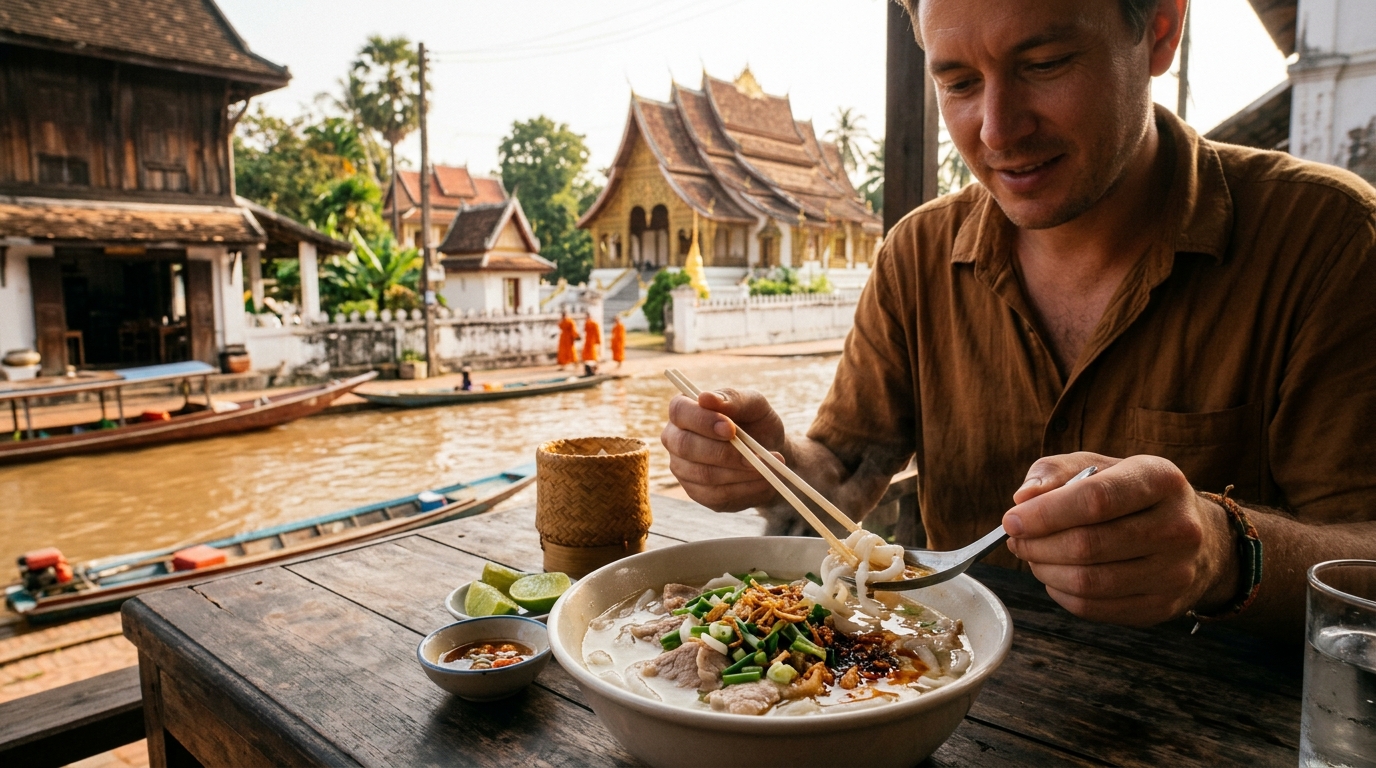
I started my first full day the way every visitor should: by getting gloriously lost in the old town. The peninsula is compact enough to walk end to end in twenty minutes, but I took three hours because I kept ducking into temples. Wat Xieng Thong, the crown jewel, is worth every minute — the mosaic tree of life on the rear wall is one of the most stunning things I’ve seen in all of Southeast Asia. I’d grabbed tickets to the Royal Palace Museum for mid-morning, and spent a good hour wandering through the former king’s residence, marveling at the throne room and the collection of Buddha images from around the region.
By noon, the heat was brutal, so I ducked into a shophouse restaurant and ordered khao piak sen — Lao chicken noodle soup with thick, hand-rolled rice noodles. It was transcendent. The broth was cloudy and rich, the herbs piled high, and the whole bowl cost me 25,000 kip, roughly a dollar fifty. I would eat this soup every single day of the trip and never get tired of it.
The afternoon was for the Mekong. I walked down to the riverbank and just sat there, watching the long-tail boats putter past, the fishermen casting nets, the sun turning everything gold. As evening rolled in, I headed to the famous night market on Sisavangvong Road, where hill-tribe women sell handwoven textiles, mulberry paper lanterns, and the most addictive coconut pancakes you’ll ever taste. I joined a street food tour through the night market that took us to stalls I would have walked right past, including one grandmother selling jaew bong — a smoky chili paste made with buffalo skin that sounds terrifying and tastes incredible.
Day 2: Kuang Si Falls and the Bear Rescue Centre
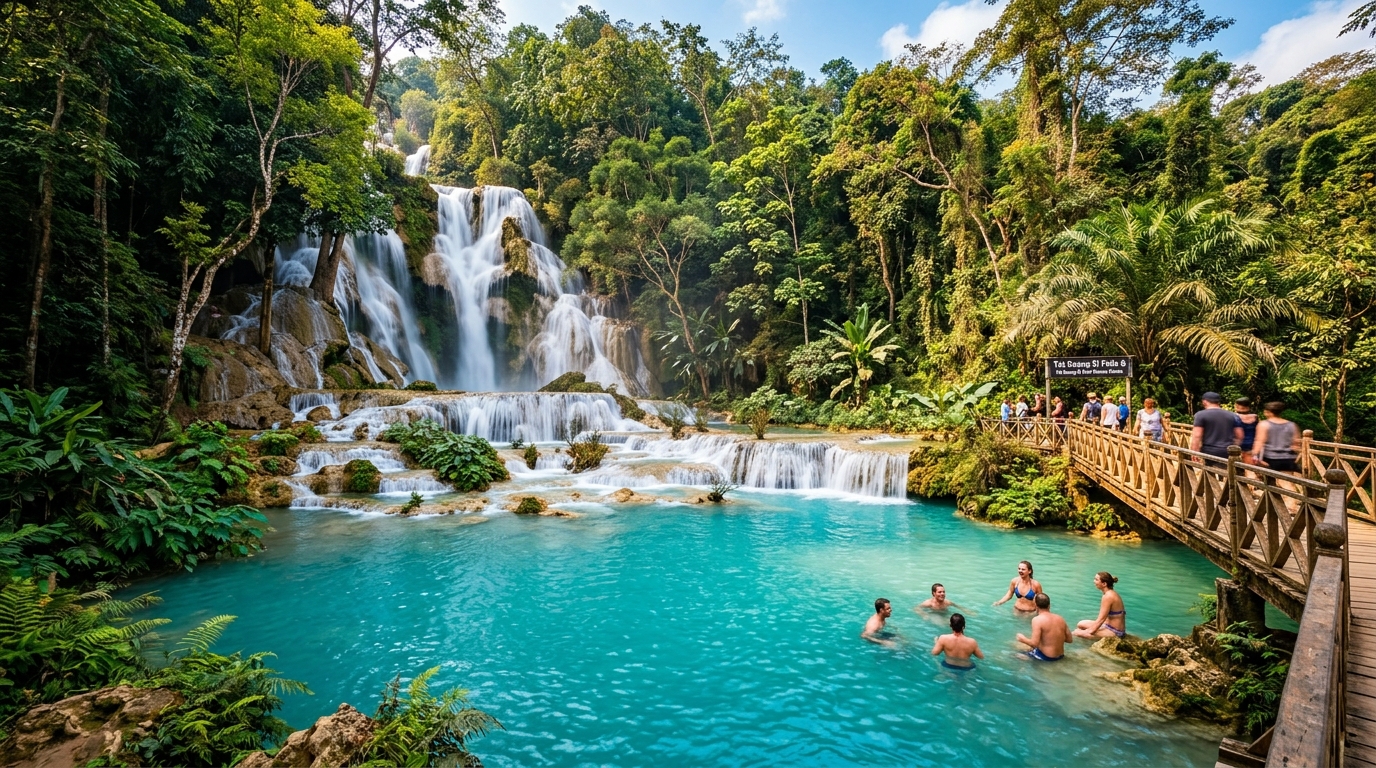
If there’s one image that defines Luang Prabang for most travelers, it’s Kuang Si Falls — those impossibly turquoise cascades tumbling through the jungle like something out of a fantasy novel. I booked a half-day tour to Kuang Si Falls that picked me up at eight in the morning, and the thirty-kilometer drive through rice paddies and small villages was almost as good as the destination.
The falls themselves are everything the photos promise and more. The water really is that blue — it’s caused by calcium carbonate deposits — and there are multiple tiers with natural pools where you can swim. I spent two hours climbing to the top, swimming in the lower pools, and just staring at the main cascade like a hypnotized tourist. The key is to arrive early; by eleven, the place gets crowded with tour buses.
On the way in, I stopped at the Tat Kuang Si Bear Rescue Centre, which houses Asiatic black bears saved from bile farms. It’s free to visit (included with falls admission) and genuinely heartwarming — the bears were lounging in hammocks and splashing in pools, living their best rehabilitated lives.
Back in town by early afternoon, I rented a bicycle for 20,000 kip and pedaled along the Nam Khan river, crossing the rickety bamboo bridge (rebuilt every dry season) to the other side, where a few quiet cafés serve excellent Lao coffee. I ended the day at Utopia, the legendary riverside bar where you lounge on cushions overlooking the Nam Khan and wonder why you ever thought you needed anything more than this.
Day 3: Pak Ou Caves and a Whisky Village Detour
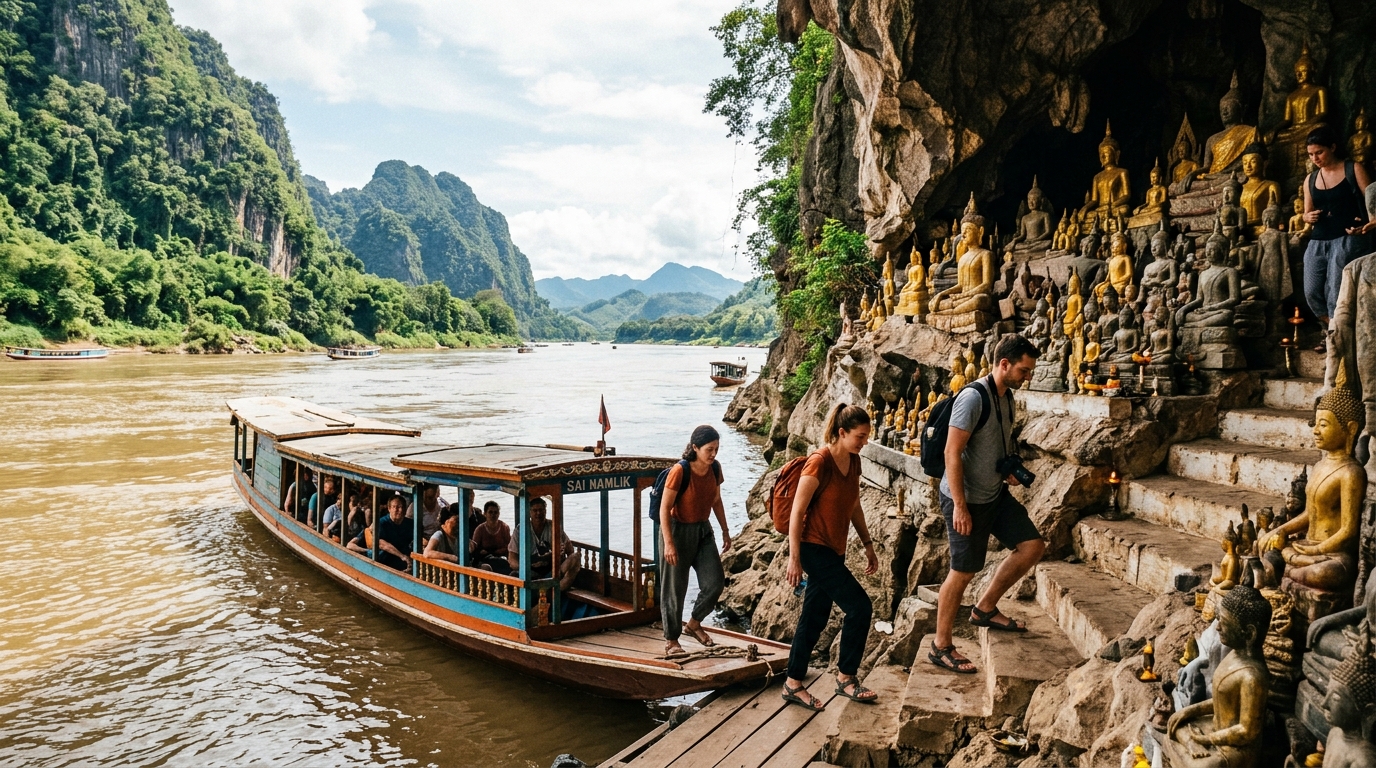
Day three was all about the Mekong. I’d booked a boat trip to Pak Ou Caves, and the two-hour upstream journey was pure magic. The river was wide and slow, the limestone karsts rose like green cathedrals on either side, and our wooden boat chugged along with a kind of meditative rhythm that put half the passengers to sleep.
Pak Ou Caves sit at the confluence of the Mekong and Nam Ou rivers, and inside you’ll find thousands of Buddha statues — big ones, tiny ones, ancient ones, new ones — all placed there over centuries by devoted Buddhists. The lower cave (Tham Ting) is the more impressive one, with natural light filtering in and hundreds of statues in every conceivable pose. The upper cave (Tham Theung) requires a climb but rewards you with a spooky, atmospheric chamber full of dusty wooden Buddhas.
On the way back, we stopped at Ban Xang Hai, the so-called “Whisky Village,” where locals produce lao-lao — Lao rice whisky. I tried a shot infused with a scorpion (yes, an actual scorpion in the bottle) and lived to tell the tale. It tasted like gasoline mixed with regret, but the experience was priceless. I bought a small bottle of the herbal version for my dad back home, which turned out to be an excellent souvenir.
That evening, I treated myself to a proper dinner at a French-Lao fusion restaurant overlooking the Mekong. Luang Prabang’s colonial heritage means the food scene blends Lao flavors with French technique in surprisingly delicious ways — think Mekong river weed tempura with aioli, or laap served on freshly baked baguette.
Day 4: Weaving Villages, Cooking Class, and a Sunset Climb
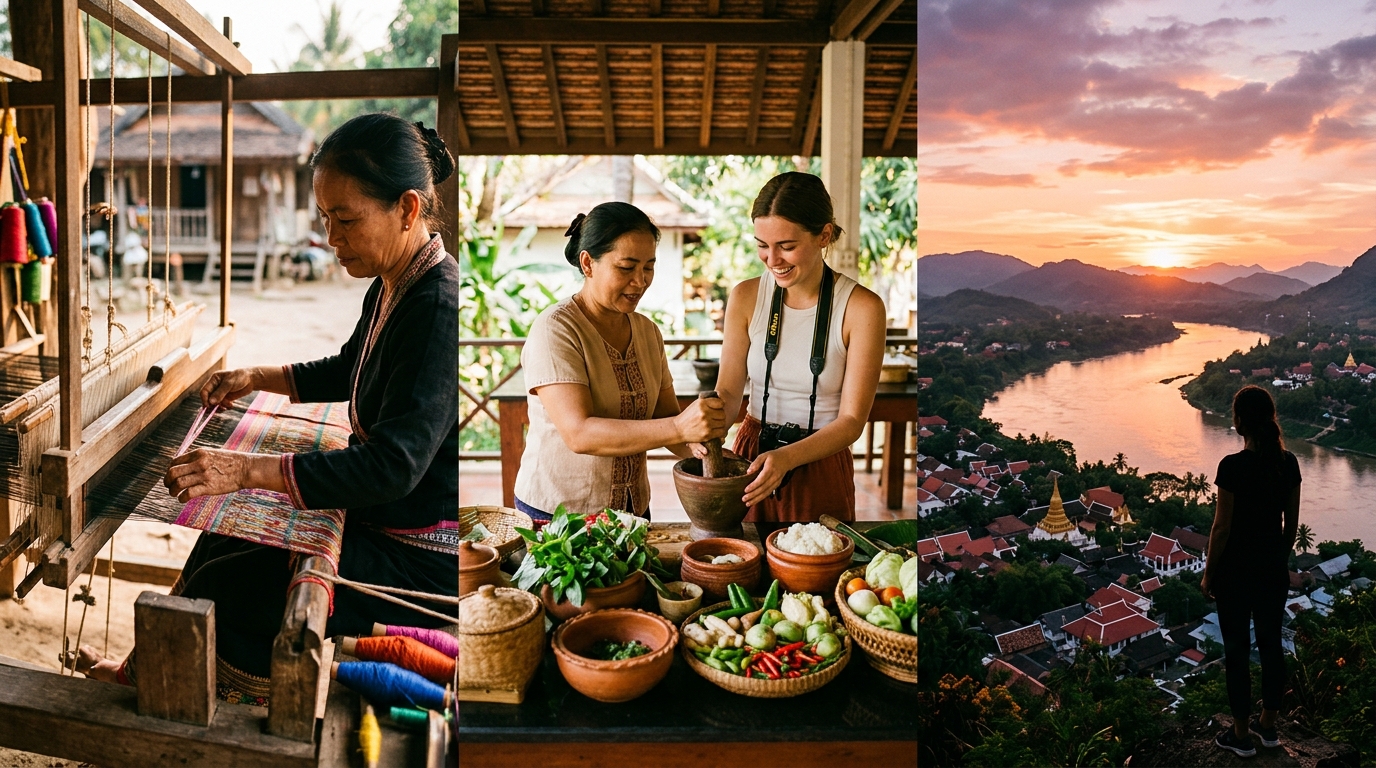
I wanted day four to be about learning, so I started with a visit to the Traditional Arts and Ethnology Centre, a small but excellent museum dedicated to Laos’s diverse ethnic groups. Then I hired a tuk-tuk to visit the weaving villages across the river, where Tai Lue women create intricate silk textiles on wooden looms. Watching them work — fingers flying, patterns emerging from what looked like chaos — was mesmerizing.
The highlight of the day was a Lao cooking class that started with a market tour. Our instructor, a warm woman named Kham, walked us through the morning market identifying ingredients I’d never heard of — padaek (fermented fish paste), yanang leaves (used to make a bright green broth), buffalo skin for orlam stew. Then we went to her outdoor kitchen and cooked five dishes: laap (minced meat salad), ping kai (grilled chicken), mok pa (steamed fish in banana leaves), tam mak hoong (papaya salad), and khao niew (sticky rice). Everything was extraordinary, and I walked away with recipes I still cook at home.
For sunset, I climbed Phousi Hill — 328 steps to the golden stupa at the top, where you get a 360-degree panorama of the town, both rivers, and the mountains beyond. I was dripping with sweat by the time I reached the summit, but the view was worth every step. Watching the sun sink behind the Mekong mountains while the temple spires below caught the last light is a memory I’ll carry forever.
Day 5: Morning Alms, Last Wandering, and a Slow Goodbye
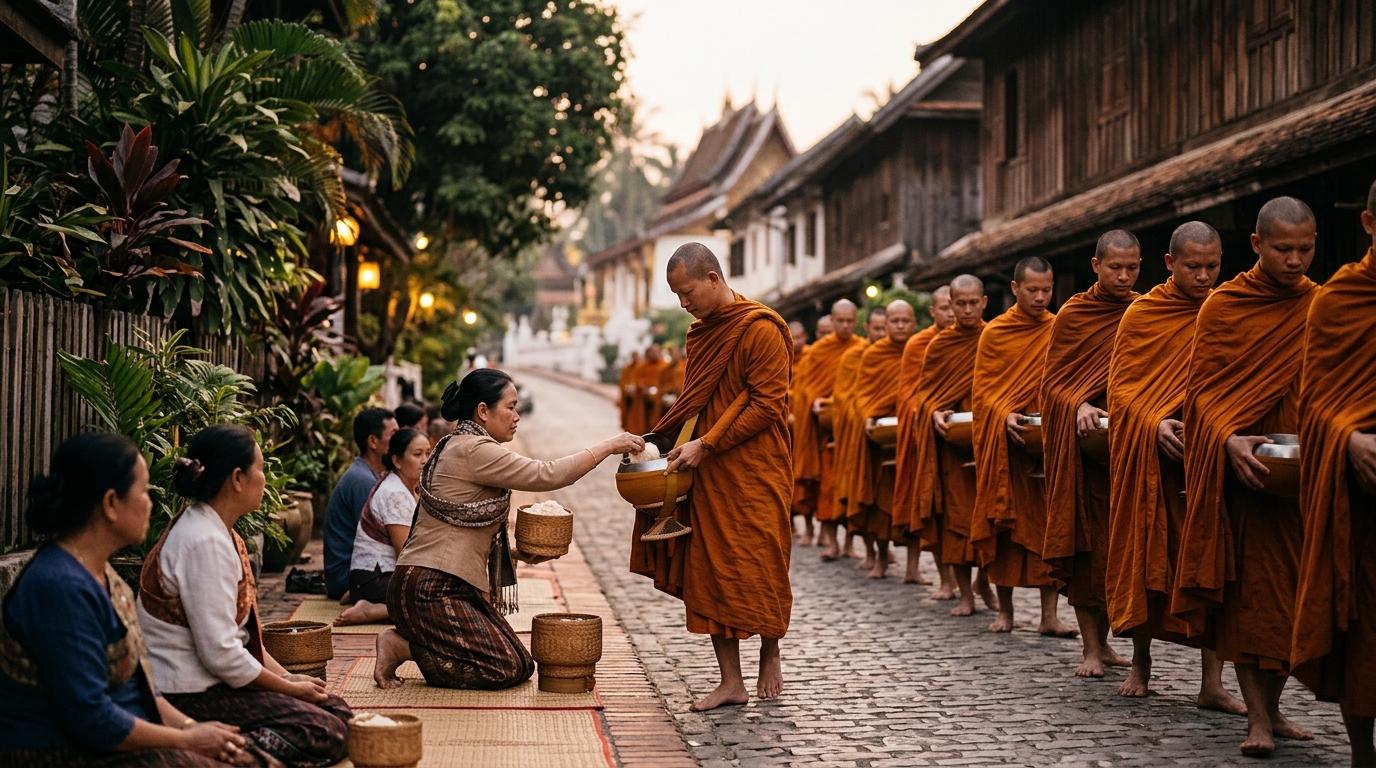
On my last morning, I woke before dawn to witness the alms-giving ceremony properly. This time I knew the etiquette: sit quietly, don’t use flash photography, and if you want to give, buy sticky rice from the local women rather than the tourist vendors (who sometimes sell stale rice). The procession lasted about thirty minutes, with monks from different temples walking in separate groups, and it was every bit as moving as the first time.
I spent the rest of the morning revisiting my favorite spots — one last bowl of khao piak sen, one last coffee by the Nam Khan, one last wander through the temple grounds. I picked up some hand-woven scarves at the morning market for friends back home and got a traditional Lao massage that somehow cost only eight dollars for an hour.
If you’re considering extending your trip, you could easily take a day trip to Nong Khiaw, a stunning riverside village a few hours north, or visit the lesser-known Tad Sae waterfalls. I also met travelers who had come from the north via the two-day slow boat from Huay Xai on the Thai border, which they called one of the best travel experiences of their lives.
As my airport shuttle pulled away from the old town, I pressed my face to the window like a kid leaving summer camp. Luang Prabang had given me exactly what I didn’t know I needed: permission to slow down.
Practical Tips & Budget
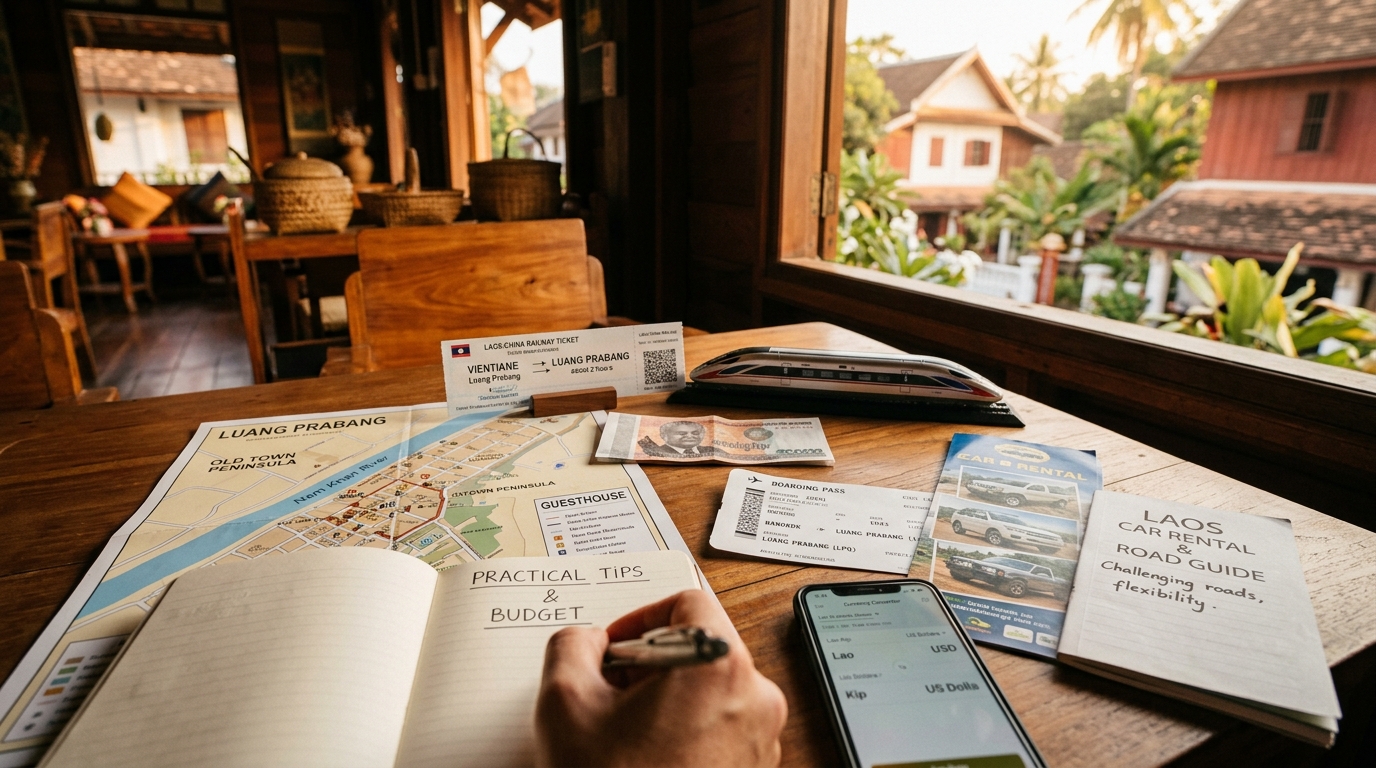
Here’s everything I wish I’d known before arriving in Luang Prabang:
Getting There: Luang Prabang International Airport has flights from Bangkok, Hanoi, and Siem Reap. Overland, you can take the Laos-China Railway from Vientiane, which takes about two hours and is spectacularly scenic. If you want flexibility for day trips to the countryside, consider renting a car, though the roads can be challenging.
Where to Stay: The old town peninsula is where you want to be. I loved my guesthouse on the Mekong side, but the Nam Khan side tends to be quieter and slightly cheaper.
Budget Breakdown (per day):
- Accommodation: $15–40 (guesthouse to boutique hotel)
- Food: $8–15 (street food to sit-down restaurants)
- Activities: $10–25 (entrance fees, tours, rentals)
- Transport: $5–10 (tuk-tuks, bicycle rental)
- Total: $38–90 per day
Best Time to Visit: November through March offers cool, dry weather. I visited in February and it was perfect — warm days, cool evenings, no rain. April is the Lao New Year (Pi Mai) and a fantastic time to visit if you don’t mind getting drenched in water fights.
What to Pack: Modest clothing for temples (shoulders and knees covered), a quick-dry towel for swimming at Kuang Si, insect repellent, and a good pair of walking sandals. The old town is walkable but uneven.
Luang Prabang taught me that the best travel experiences aren’t about checking off a list — they’re about being present enough to notice the way morning light hits a temple wall, or the way sticky rice tastes when you eat it with your hands by a river that’s been flowing for millennia.





Leave a Reply