
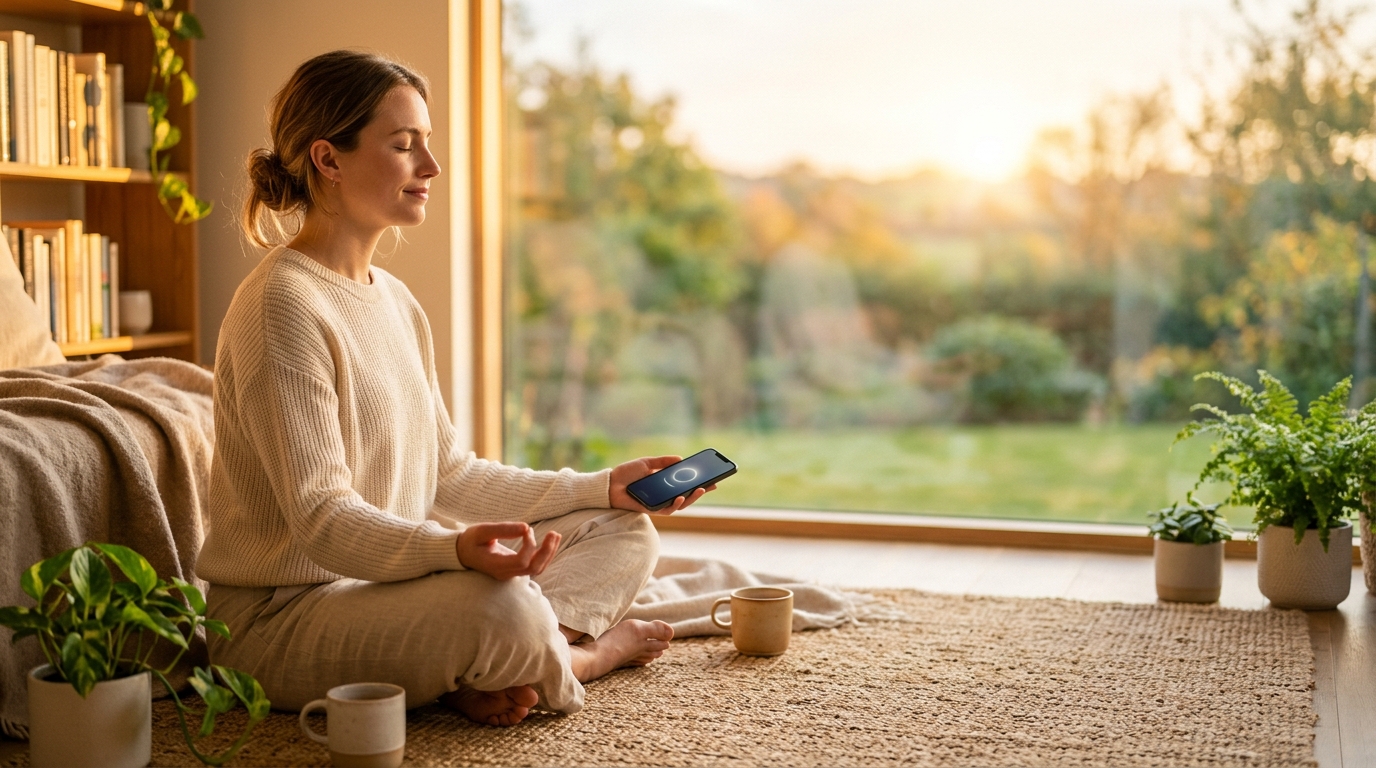
I almost deleted the app on day three. My mind was racing, I couldn’t sit still for more than ninety seconds without thinking about my grocery list or that awkward thing I said at a work meeting six months ago, and the soft-voiced narrator kept telling me to “simply let thoughts pass like clouds.” My thoughts weren’t passing like clouds. They were crashing like freight trains. And I was sitting on my bedroom floor at 6 a.m., genuinely wondering if meditation was just something that worked for other people — calmer people, people who didn’t have the kind of anxiety that makes you re-read a sent email seventeen times to make sure it didn’t sound rude.
But I stayed with it. Sixty days, almost every single morning, sometimes at night when the anxiety spiked. I used one specific app — Headspace, if you want the full picture — and I tracked everything obsessively in a daily journal. Moods, sleep quality, how many times I checked my phone before 8 a.m., whether I snapped at anyone. I wanted data, not vibes. I wanted to know if this thing actually worked or if millions of people were just collectively participating in a very expensive placebo.
What I found surprised me. Not in a dramatic, life-changed-overnight way. More in a slow, quiet, slightly unsettling way — like realizing your posture has been improving for weeks and you only notice when someone points it out. Here’s the honest account of what sixty days of daily meditation actually did to my anxiety.
Why I Started — and What My Anxiety Actually Looked Like Before
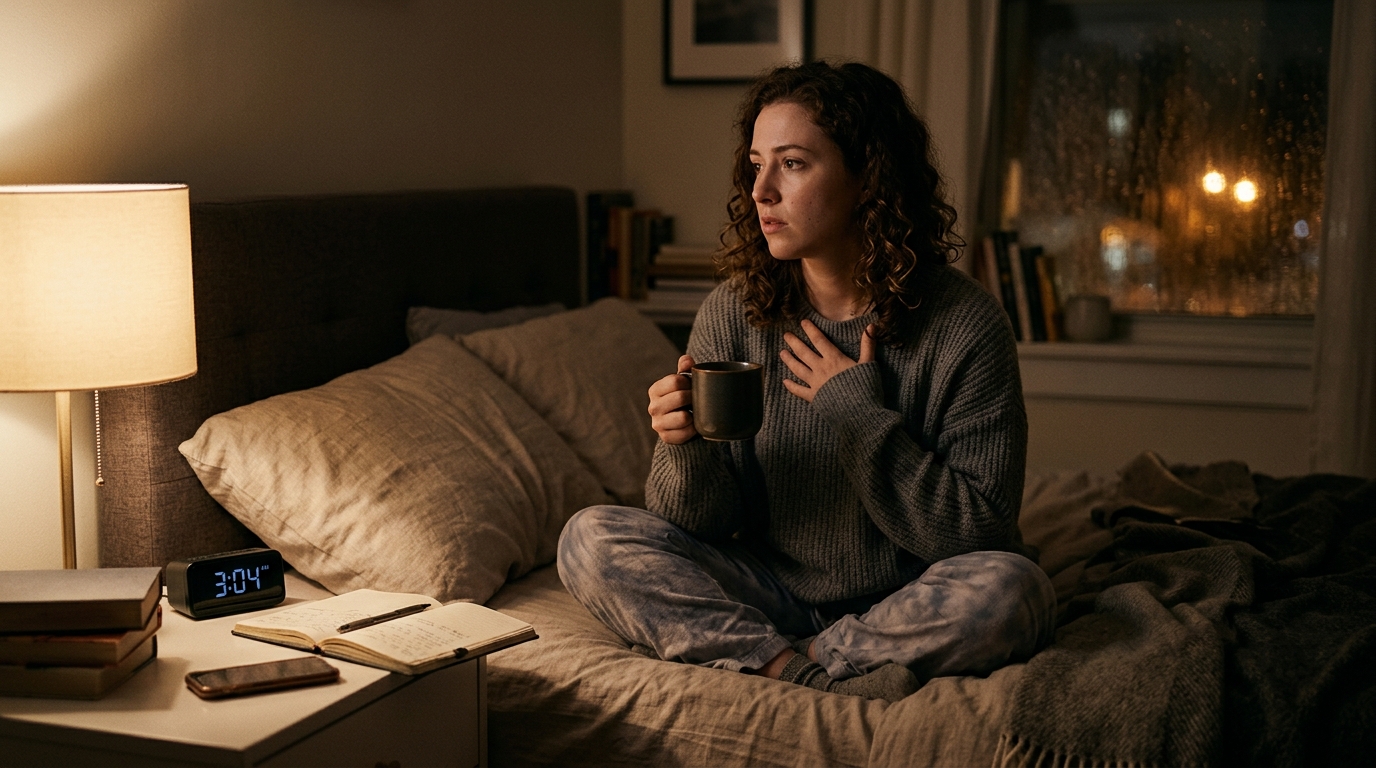
Let me be specific, because “anxiety” is one of those words that gets used so broadly it starts to mean nothing. My anxiety isn’t the kind that stops me from functioning. I go to work, I make plans, I look perfectly fine from the outside. It’s the other kind — the persistent, low-grade hum of dread. The kind where you wake up at 3 a.m. with your heart pounding for no identifiable reason. Where you spend twenty minutes rehearsing a phone call before making it. Where relaxing on a Sunday afternoon somehow produces guilt about not being productive enough.
My doctor called it generalized anxiety disorder, which I’d had for about eight years by the time I started this experiment. I wasn’t on medication (I’d tried one type and hated how it made me feel). I’d done some therapy, which helped with the big stuff but hadn’t touched the constant background noise. A friend who’d been meditating for two years kept telling me I should try it, and I kept nodding and not doing it, because sitting quietly with my own thoughts sounded like the last thing an anxious brain would enjoy.
What finally pushed me was a particularly bad week in January. Three nights of broken sleep, a work deadline that felt unsurvivable, and a panic response to a minor scheduling conflict that embarrassed me. I downloaded Headspace the same way people make New Year’s resolutions — desperately, with low expectations. I bought a meditation cushion so I’d have a dedicated physical space, which sounds small but mattered more than I expected. And I committed to sixty days before judging results, because everything I’d read said the first two weeks would be rough.
They weren’t kidding. But here’s what I want you to understand going in: the discomfort of early meditation is not a sign it isn’t working. It’s often the opposite.
The First Two Weeks: Why It Gets Worse Before It Gets Better
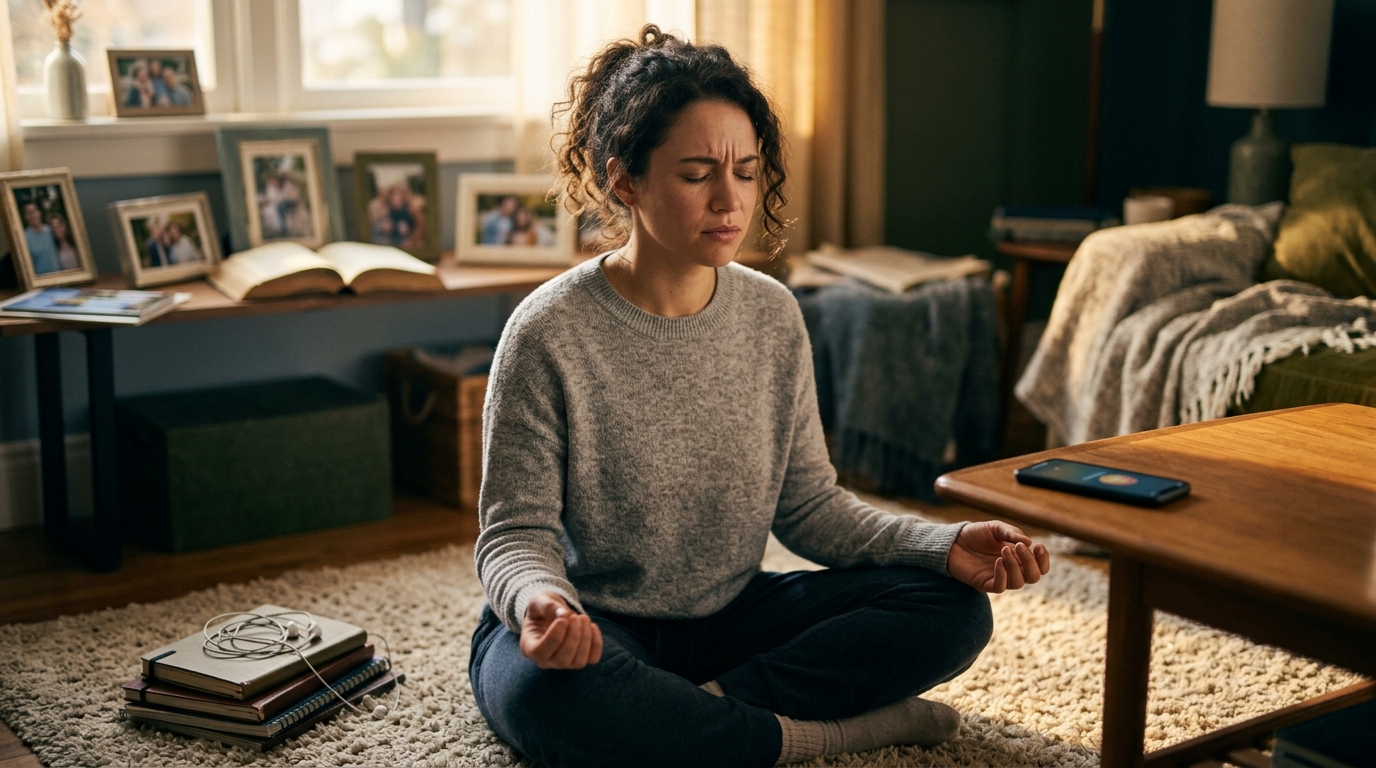
Days one through fourteen were, honestly, uncomfortable in a way I hadn’t anticipated. Not painful — just strange. Sitting for ten minutes with nothing to do, no screen, no task, no distraction, forced my brain to surface every thought it had been successfully burying under busyness. Old arguments. Unresolved worries. That particular flavor of shame that shows up when you’ve been running from something long enough.
I learned something important from the app during this phase: the goal is not to empty your mind. That’s a myth that keeps a lot of people from meditating, or makes them give up early. The actual practice is noticing that your mind has wandered — to the grocery list, to the argument, to the existential dread about climate change — and then gently, without judgment, returning your attention to the breath. That’s it. That’s the whole exercise.
At first, I was redirecting my attention every four seconds. I know, because I started counting the redirections in my mindfulness journal. Forty-seven redirections in one ten-minute session. I felt like I was failing at something very simple. But the reframe that actually helped me was this:
“You don’t go to the gym to demonstrate how strong you already are. You go to build strength. Every time you notice your mind has wandered and bring it back, that’s a rep. You’re training attention, not proving it.”
By day ten, something subtle shifted. I wasn’t calmer exactly — but I was slightly faster at catching my own spiraling. I’d start down a what-if rabbit hole and notice it maybe thirty seconds sooner than before. Which, if you know anxiety, you know that thirty seconds is enormous. Catching a thought before it gains momentum is the entire ballgame.
I still almost quit on day twelve. The morning session felt pointless and I was running late. I did it anyway, five minutes instead of ten, sitting on my kitchen floor because I hadn’t made it to my cushion. It counts. It all counts.
What Actually Changed Around Week Four

By week four, something that I can only describe as a slight lag appeared between stimulus and response. A stressful email would arrive, and instead of immediately feeling my chest tighten and my brain sprint toward worst-case scenarios, there was a beat — maybe half a second, maybe a full second — where I just… registered it. The email exists. The email is stressful. I don’t have to react to it right now.
This sounds small. It is not small. For someone whose nervous system had spent years treating mild inconveniences as emergencies, that pause was revolutionary. My therapist, when I described it to her, said this is exactly what long-term meditators describe — a widening of the space between stimulus and response. Viktor Frankl wrote about it as the foundation of human freedom. I was just hoping to stop catastrophizing before noon.
A few specific things I noticed in my journal from this period:
- I was waking up less frequently at 3 a.m. — down from four or five times a week to once or twice.
- The Sunday dread I described earlier had softened. It was still there, but quieter, like a TV in another room instead of one right in front of me.
- I was checking my phone less obsessively in the first hour of the morning — partly because the morning meditation routine was filling that slot.
- Two separate people at work asked if I seemed “different lately” in a positive way. I didn’t tell them I was meditating because I was still embarrassed by how earnest it sounded.
I also started using noise-cancelling headphones for my sessions after week three. This was a game-changer for focus, particularly on days when the apartment was noisy. If you’re meditating at home and struggling to settle, the physical environment matters more than any technique.
The Hardest Part Nobody Talks About: Sitting With What Comes Up
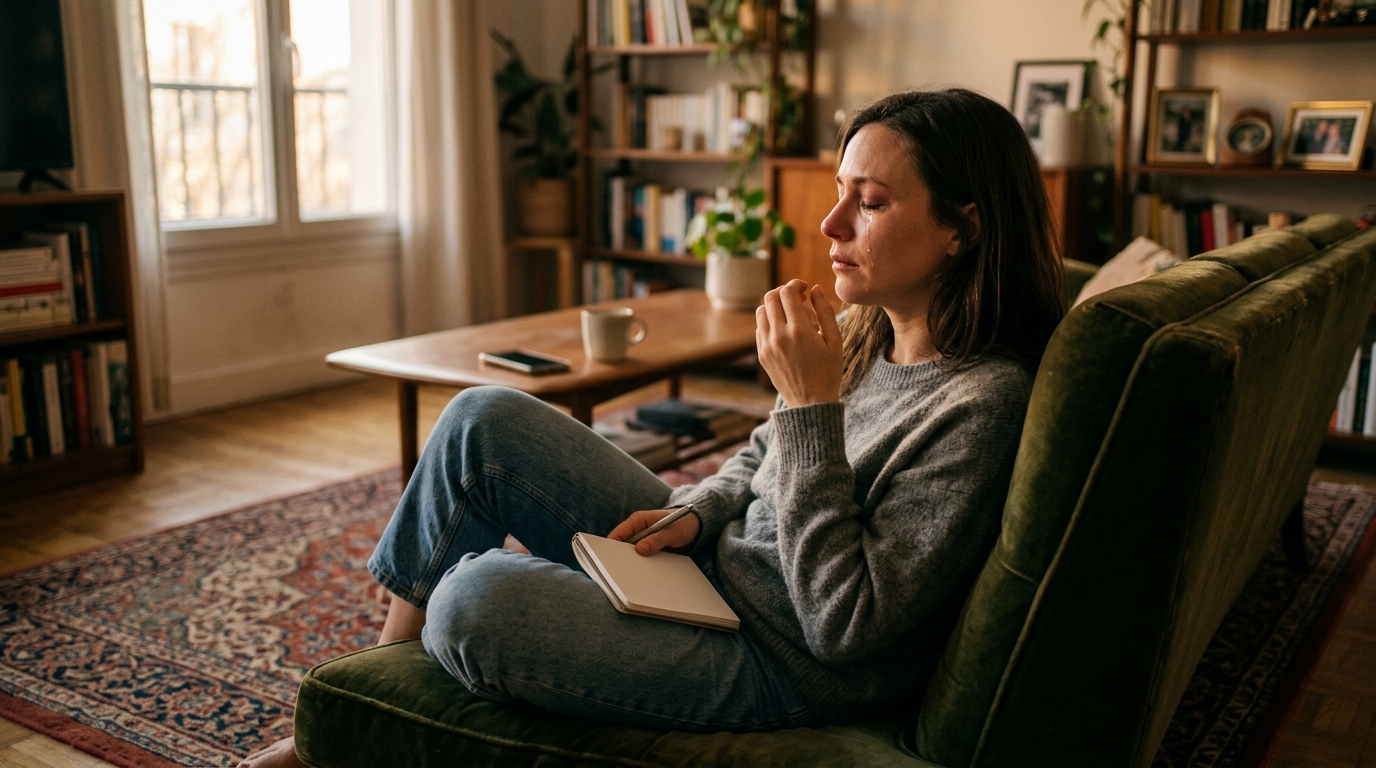
Here’s the part of the meditation conversation that tends to get skipped in the wellness content: sometimes meditation surfaces things you’ve been avoiding. Real things. Grief. Anger. Loneliness. The stuff you’ve been successfully outrunning with your phone and your Netflix queue and your relentless scheduling of social obligations.
Around week five, I had three sessions in a row where I cried. Not dramatically — just the quiet, inevitable kind of crying that happens when you stop moving long enough for something real to catch up with you. I’d been carrying anxiety about a family relationship that I’d been labeling as “fine” for about two years. Sitting still gave it room to be not-fine for ten minutes, and then, oddly, it felt more manageable. Not resolved — just acknowledged. Anxiety often isn’t free-floating fear. It’s specific things we haven’t given ourselves permission to feel.
I want to be honest: if you’re dealing with significant trauma or serious clinical anxiety, meditation alone is not sufficient treatment and sitting quietly with unprocessed material without therapeutic support can sometimes be counterproductive. This is where I’d say working with a therapist alongside a meditation practice is worth the investment. The app helped me notice; therapy helped me process.
But for the ambient, chronic, modern-life variety of anxiety — the kind millions of us carry as our default setting — there is something genuinely useful about the simple act of learning to be with yourself. Not fixing. Not analyzing. Just being present with whatever’s there. It’s uncomfortable and it gets easier and the discomfort is actually the medicine.
The Results at Sixty Days: Real Numbers, Real Limits
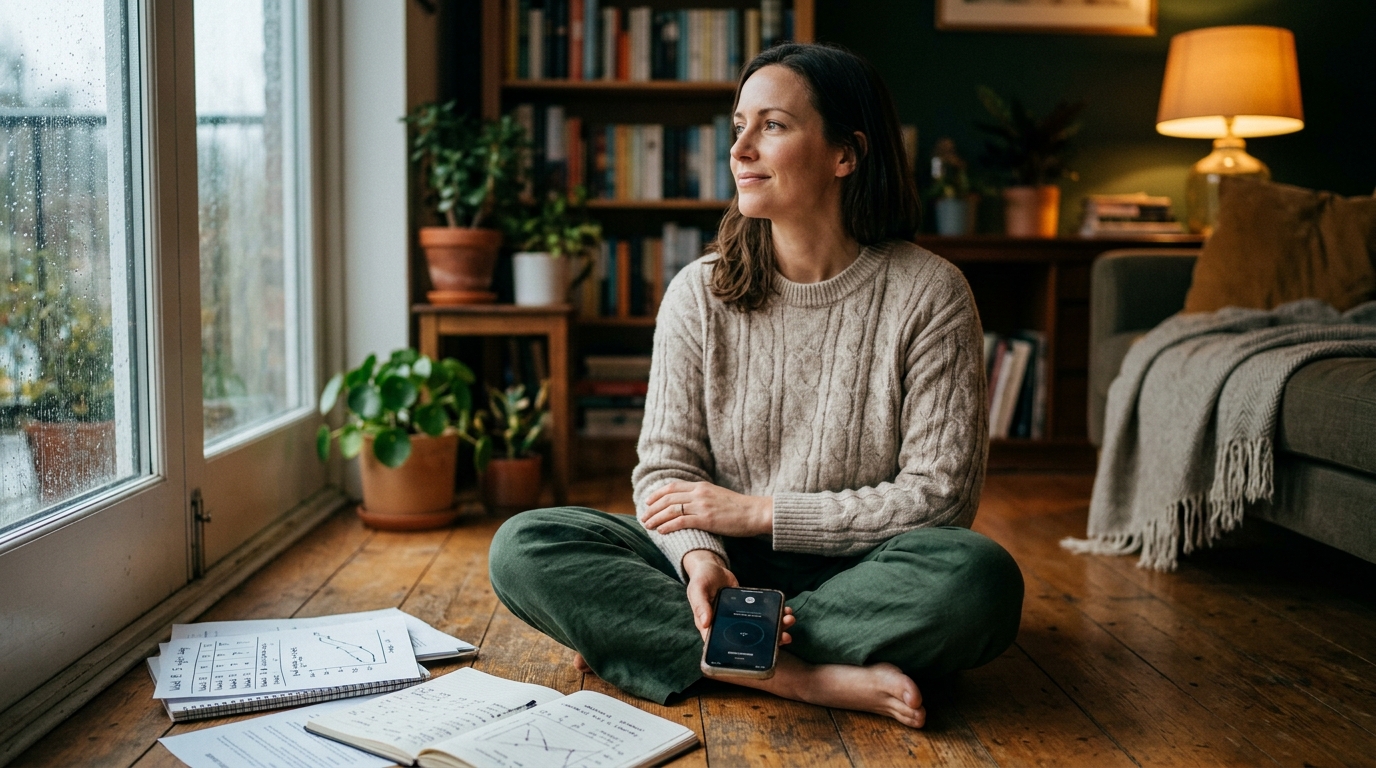
I want to be careful here because wellness content has a habit of turning into before-and-after narratives that oversimplify things. So let me be direct about what changed, what didn’t, and what I’m not sure about.
What clearly improved:
- Sleep quality — I was sleeping through the night roughly five out of seven nights by week eight, compared to two or three before.
- Reactive anxiety — the immediate physical response (tight chest, racing heart) to minor stressors decreased noticeably. My body was less hair-trigger.
- Morning mood — I stopped waking up in a state of low-grade dread most mornings. This alone justified the sixty days.
- Focus at work — the attention training seemed to transfer. I was less scattered, more able to work in sustained blocks.
What didn’t change:
- The underlying disposition. I’m still an anxious person. Meditation didn’t rewire my personality.
- Big-trigger anxiety. When genuinely difficult things happened — a health scare, a difficult conversation I’d been avoiding — the anxiety was still real and still hard. Meditation is not a shield against hard things.
- Social anxiety in specific contexts. This improved slightly but remained basically intact.
I also want to acknowledge the privilege layer here. I had forty minutes a day to dedicate to this practice. I had a quiet space, a meditation cushion, a journal, decent headphones. Not everyone has these conditions, and the wellness industry’s tendency to present meditation as universally accessible ignores the reality that presence and stillness are harder to access when you’re in survival mode. If ten minutes feels impossible because of your life circumstances, five minutes counts. Two minutes counts. You don’t need any equipment at all.
What I’d Do Differently — and Whether I’m Still Doing It
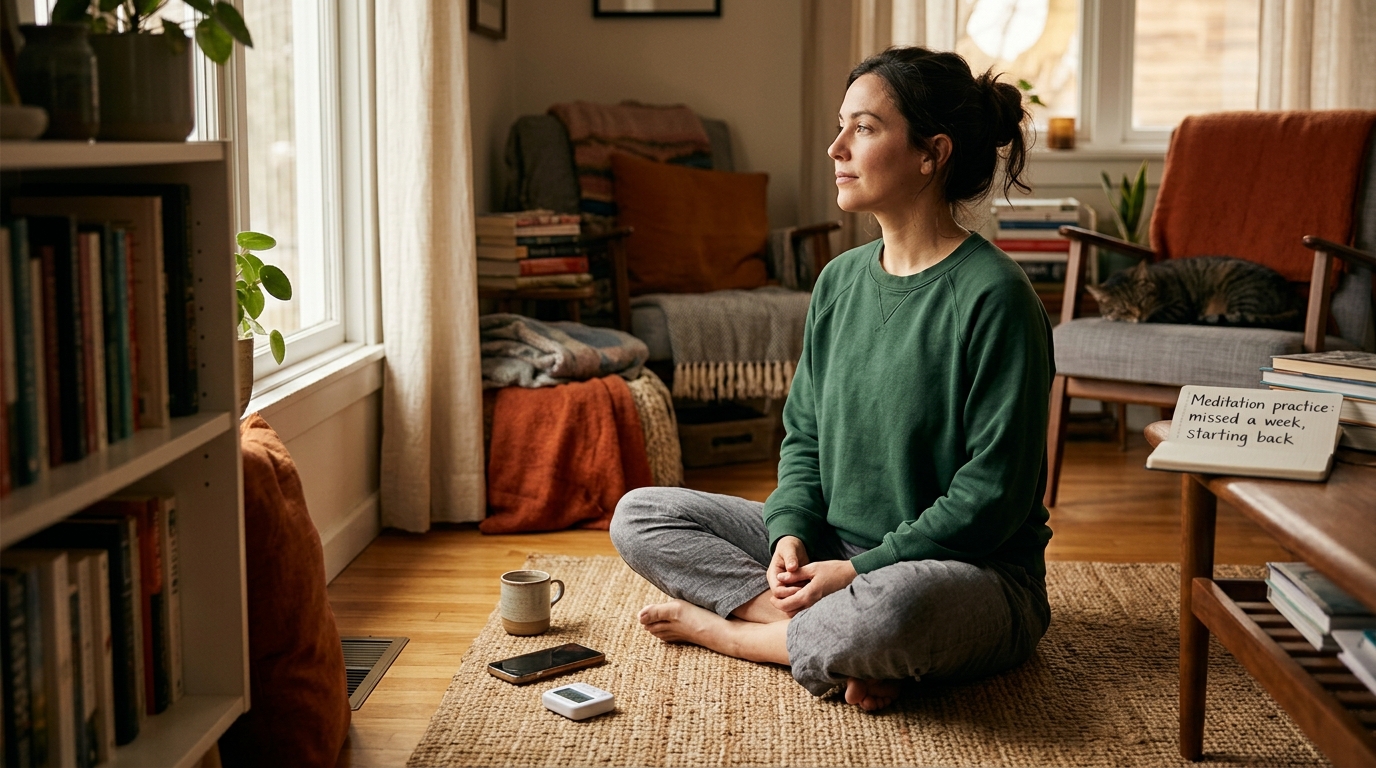
Yes, I’m still meditating. Not sixty days in a row anymore — I’ve missed days, sometimes a week when life went sideways, and I stopped treating that as failure. The all-or-nothing thinking that makes people abandon habits after one missed day is, ironically, a thought pattern that meditation is supposed to help with. I came back when I came back. The practice was still there.
If I were starting over, here’s what I’d do differently:
- Start with five minutes, not ten. The psychological barrier of “I have to sit still for ten whole minutes” kept me from starting earlier. Five minutes is enough to build the habit, and you’ll naturally extend it when it starts working.
- Journal from day one. The journaling practice gave me evidence when my brain was telling me it wasn’t working. Being able to look back at week two and see documented improvement was genuinely important for staying with it.
- Lower expectations for the first month. I went in hoping to feel calmer within a week. That’s not how it works. Think of the first month as infrastructure work — you’re building something that will pay off, but you probably won’t feel it immediately.
- Pair it with one other small habit. I attached meditation to my first cup of coffee. The established habit anchored the new one. This is basic habit science but it made a real difference in consistency.
- Get the headphones earlier. Environment really matters for early practice. If external noise breaks your concentration every session, you’ll quit. Eliminating that friction is worth it.
The honest answer to “did meditation help my anxiety” is: yes, meaningfully, but not completely, and not quickly. It’s not a cure. It’s a skill that changes your relationship to your own mind — and for anxiety that lives in the mind, that relationship matters enormously. The freight trains are still there some mornings. But I’ve gotten better at watching them pass instead of climbing aboard.
If you’ve been on the fence about this, hovering somewhere between curiosity and skepticism, I’d say: give it sixty days before you judge it. Not because sixty is a magic number, but because real change is slow and you owe yourself the chance to actually find out. The worst case is that you spent ten minutes a day sitting quietly. There are worse ways to spend your mornings.






Leave a Reply